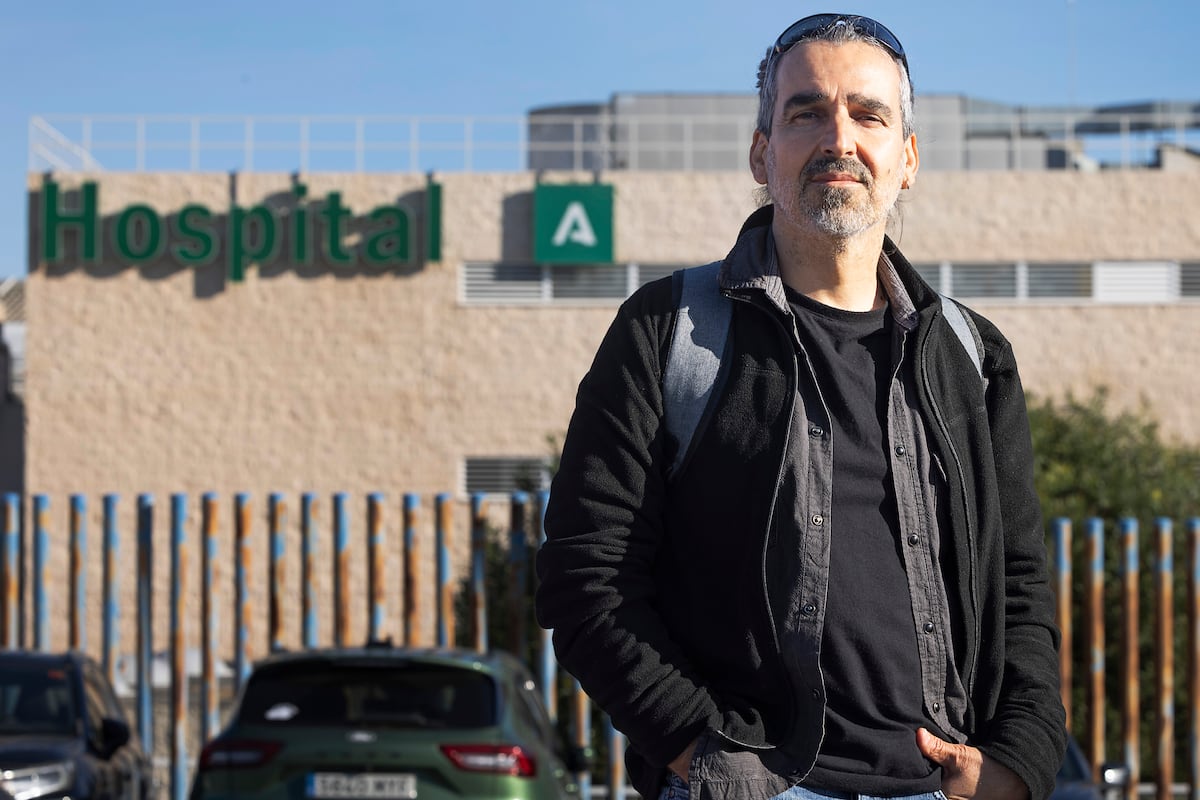
Huelva Patient Develops Metastatic Prostate Cancer After Seven-Month Preferential Appointment Delay
A cancer patient in Huelva developed metastatic prostate cancer after a preferential specialist appointment, meant for urgent cases, was delayed by seven months, EL PAÍS reported.
Antonio Abad, a former teacher, blames the delay on a combination of factors including medical strikes, summer staffing shortages, and disorganization at the Hospital Juan Ramón Jiménez, according to El País.
- Antonio Abad’s prostate cancer diagnosis was delayed by seven months for a specialist appointment.
- He blames medical strikes, staffing shortages during summer, and a lack of a necessary drug.
- By the time he was diagnosed, his cancer had metastasized, making surgery impossible.
- Abad will file a complaint with the Andalusian Health Service to prevent future cases.
Doctor Ordered Blood Tests Showed High Psa
Abad’s ordeal began on November 4, 2025, when his primary care doctor ordered routine blood tests. The results, received on December 18, showed a prostate-specific antigen (PSA) level of 6.64 nanograms per milliliter, significantly above the normal range of 0.0 to 3.
His doctor referred him for a preferential appointment with a urologist at the Hospital Juan Ramón Jiménez, a category designed to limit wait times to a maximum of two months. Despite the priority, Abad did not receive a call. By May 6, 2026, concerned by the delay, he had a private blood test that showed his PSA had soared to 17.48.
When Abad finally had a hospital appointment scheduled for May 21, all urologists at the hospital were on strike, EL PAÍS reported. He was then rescheduled for June 10, but by then he had begun to feel pain in his lower left abdomen.

A Chain of Obstacles
During his June 10 consultation, a urologist scheduled a magnetic resonance (MRI) for the end of August, citing summer vacation staffing issues, EL PAÍS reported. Abad sought a private clinic, which performed the MRI in five days. The results, reviewed by a friend who is a nephrologist, revealed a tumor in his prostate and three swollen lymph nodes.
Abad returned to the public hospital with his private MRI report on June 20, only to find the urologists were on strike again. He managed to speak with a doctor on the ward, who expedited a new MRI for July 2, a CT scan for July 6, and a biopsy for July 9.
The urologist also scheduled a PET-CT scan for July 20 to check for metastasis, followed by a consultation two days later to discuss the diagnosis and treatment plan. However, when Abad arrived for the PET-CT on July 20, the hospital did not have the necessary radiopharmaceutical drug to perform the test.
Specialist Diagnoses Aggressive Prostate Cancer Metastasis
Abad finally received his diagnosis on July 30: prostate cancer with metastasis. “As you know, you have a Gleason 9 prostate cancer,” a specialist told him. The high Gleason score indicates an aggressive tumor. “My blood ran cold,” Abad recalled, as it was the first time he had been officially informed he had cancer, seven months after requesting his preferential appointment.
The metastases made surgery impossible. Doctors began him on a hormonal treatment, which has lowered his PSA levels but not the increasing pain. “The values of the PSA have remitted, but the pains are getting worse. This is for life,” he said, resigned.
Seeking Accountability
Frustrated by what he calls a “brutal lack of organization” and “dangerous disorganization,” Abad plans to file a formal complaint with the Servicio Andaluz de Salud, according to Echoharbor.
“I want to do it for others, I no longer have a solution,” he told EL PAÍS. “If I had been called in time, I would not have metastasis and the problem would have been very different.”
Internal sources at the Hospital Juan Ramón Jiménez highlighted issues with urology delays, describing the system as “desorganización.” The problem is part of a broader issue in Andalusia, where prostate cancer accounted for 10.7% of all cancer diagnoses in men in 2023, according to the Andalusian School of Public Health’s Cancer Registry.
Abad insists his complaint is not just for himself. “Of course, I want to know why there has been such a delay, but my destiny I am not going to change with the complaint, I am going to have to take medication for life, but other people can,” he said.