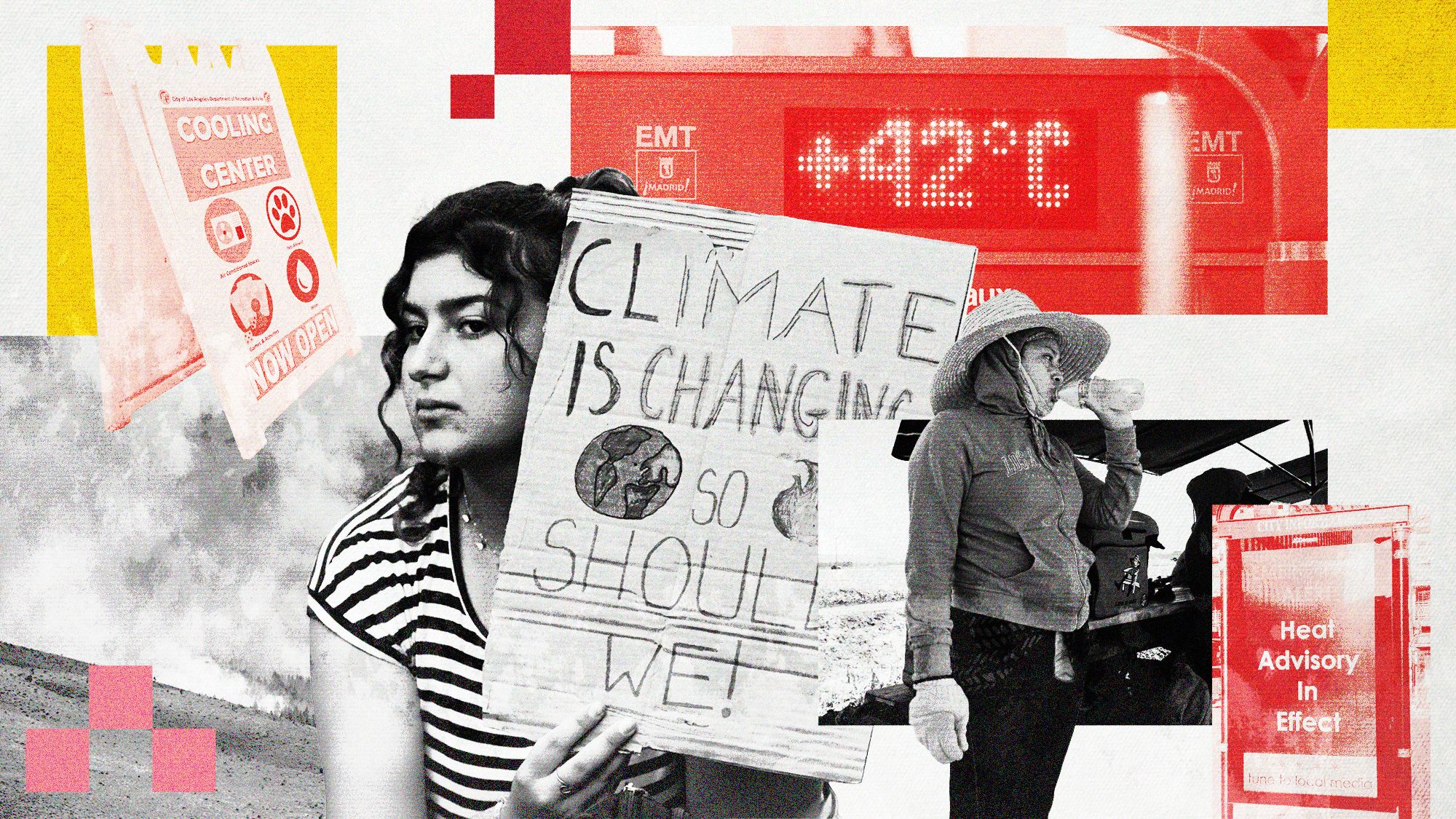
How to Protect Human Health From Extreme Heat and Wildfire Smoke in a Warming World
As global temperatures rise, public health infrastructure faces unprecedented challenges driven by extreme heat waves, multiplying wildfire smoke events, and shifting infectious disease vectors. According to the Centers for Disease Control and Prevention (CDC), a changing climate significantly influences human health and disease by disrupting physical, biological, and ecological systems, leading to heightened respiratory and cardiovascular morbidity, trauma from extreme weather, and altered geographical distributions of vector-borne illnesses. Evaluating scientifically proven interventions is essential for mitigating clinical risks.
- Lowering municipal heat alert thresholds—as successfully demonstrated in New York City—correlates with a more than 50% reduction in heat stroke hospitalizations on hot days, according to epidemiological data.
- While air conditioning and mandated workplace hydration and rest breaks show strong population-level evidence for reducing heat illness, traditional cooling centers demonstrate weak utilization and efficacy on a societal scale.
- Advanced mechanical air filtration systems and widespread N95 respirator deployment during high-pollution events offer substantial protection against fine particulate matter (PM2.5) exposure linked to cardiovascular and pulmonary decline.
Extreme Heat Adaptation and Population-Level Interventions
Extreme heat remains a primary environmental hazard, accelerating systemic strain and exacerbating chronic conditions. Evaluating which interventions reduce actual hospitalizations and mortality rather than merely lowering intermediate markers is vital for clinical planning. Charles Leonard, an associate professor of epidemiology at the University of Pennsylvania, emphasized in findings reviewed by Live Science that the strongest evidence supports approaches demonstrably reducing illness, hospital visits, or death.
Mechanical air conditioning and heat pumps provide strong population-level protection. Data published across studies in California and Texas prisons tie air conditioning to reduced hospital admissions and lower heat-related mortality. Furthermore, during a severe heat wave in Portugal, patients admitted to AC-supported hospital wards experienced a 40% lower risk of mortality compared to those in uncooled wards, per clinical observations. However, Shweta Arya, senior project manager for smart surfaces at the American Public Health Association’s Center for Climate, Health and Equity, notes that no single intervention is sufficient on its own. Systems remain vulnerable to power outages, and lower-income households frequently face the “heat or eat” dilemma, sacrificing dietary needs to afford operating costs.
For outdoor laborers—who represent nearly one-third of the U.S. workforce—staying indoors is not feasible. Rigorous occupational interventions implemented by organizations such as La Isla Network in Central America demonstrate that mandated rest, shade, and hydration breaks successfully reduce heat-related kidney failure and acute physiological strain.
Passive Infrastructure and Warning Systems
To reduce dependence on mechanical cooling, municipal planners are turning to passive cooling strategies.

Mitigating Wildfire Smoke and Fine Particulate Exposure
As prolonged droughts fuel larger conflagrations, wildfire smoke has emerged as a rapidly growing environmental threat, releasing dense concentrations of fine particulate matter known as PM2.5. Alexander MD, a pulmonologist and clinical associate professor of pulmonary and critical care medicine at the University of Michigan in Ann Arbor, notes that wildfire smoke penetrates deep into the lungs and aggravates respiratory disease more intensely than standard urban pollution, immediately triggering asthma and chronic obstructive pulmonary disease (COPD) exacerbations while placing acute strain on the cardiovascular system.
Mitigating indoor particulate infiltration requires targeted commercial and residential air filtration. Studies indicate that upgrading building HVAC systems to MERV 16 filters or utilizing high-efficiency portable air cleaners reduces indoor PM2.5 levels effectively. For individuals who must venture outdoors during smoky conditions, modeling studies demonstrate that N95 respirators reduce particulate exposure significantly, potentially decreasing smoke-linked hospitalizations.
Infectious Disease Expansion and Clinical Preparedness
Beyond thermal stress and particulate inhalation, rising global temperatures and shifting precipitation patterns expand the geographical range of vector-borne pathogens. Linda Rudolph, MD, MPH, director of the Center for Climate Change and Health at the Public Health Institute, observes that warmer temperatures make environments increasingly hospitable to disease vectors such as mosquitoes and ticks, accelerating the spread of Lyme disease, dengue fever, and malaria into previously unaffected regions. Furthermore, elevated ambient heat alters pathogen replication rates, compounding food-borne bacterial contamination risks.

Addressing these converging public health crises requires robust cross-disciplinary coordination between environmental epidemiologists, clinical practitioners, and institutional planners. As predictive models project further environmental transformation, maintaining proactive surveillance and rapid clinical intervention remains the cornerstone of modern preventative medicine. Patients displaying early symptoms of respiratory distress, vector-borne infection, or heat-related physiological strain should find verified local healthcare clinics and diagnostic centers to receive immediate, evidence-based medical evaluation.
Disclaimer: The information provided in this article is for educational and scientific communication purposes only and does not constitute medical advice. Always consult with a qualified healthcare provider regarding any medical condition, diagnosis, or treatment plan.