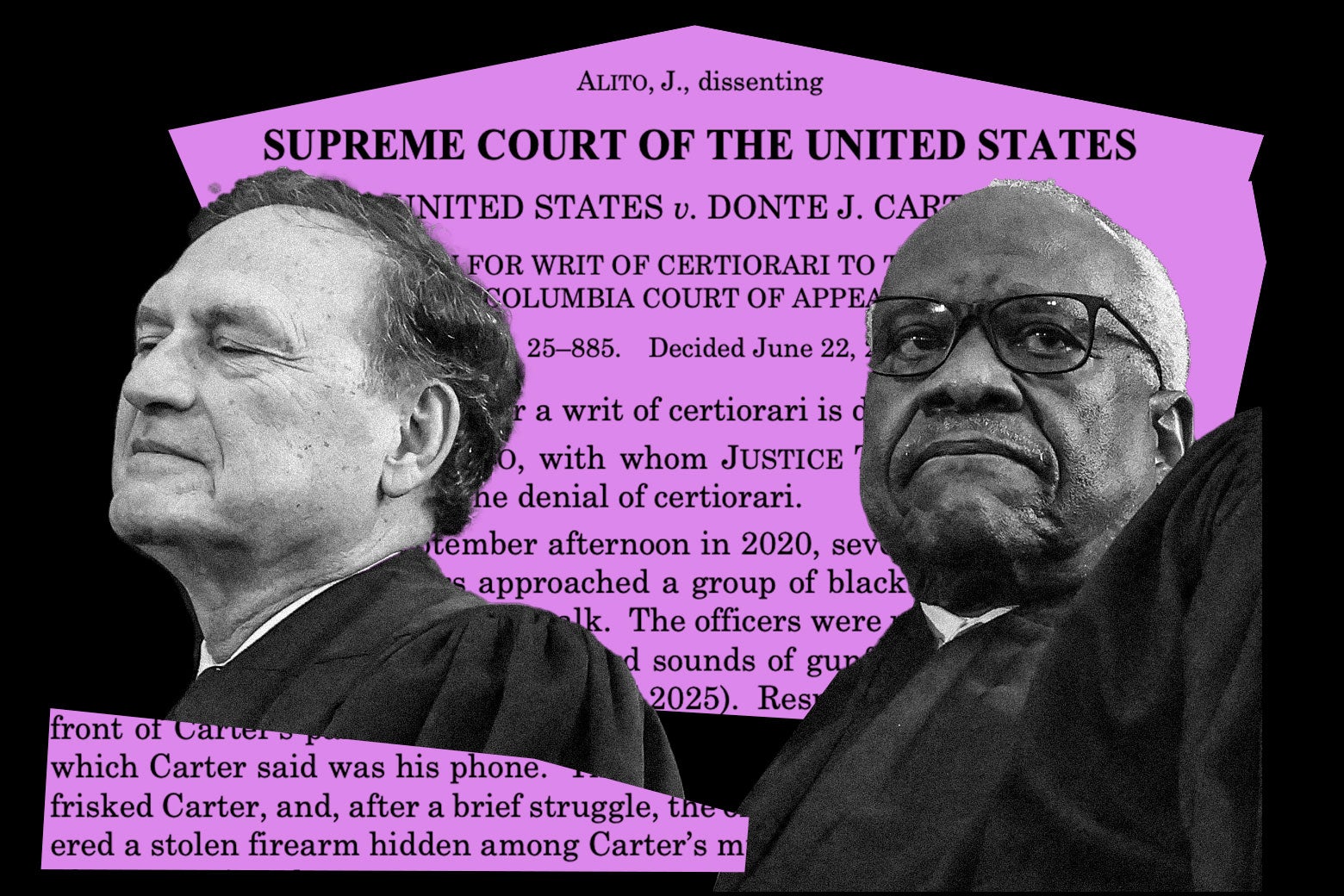
How the Push to Constitutionalize Colorblindness Could Reshape U.S. Law
The United States Supreme Court is increasingly adopting a strict “colorblind” constitutional doctrine championed by Justice Clarence Thomas, fundamentally altering how federal agencies and private entities address systemic inequality. This shift, accelerated by recent jurisprudence, restricts the use of race-conscious policies in public contracting, educational admissions, and municipal hiring practices across the country.
The Constitutionalization of Colorblindness
The current legal environment stems from a long-standing judicial philosophy held by Justice Thomas, which asserts that the 14th Amendment’s Equal Protection Clause forbids all government-sponsored racial classifications, regardless of their intent. According to the Supreme Court’s decision in Students for Fair Admissions v. Harvard, race-based initiatives are now subject to “strict scrutiny,” a standard that is nearly impossible for most institutional policies to survive.
This pivot marks a departure from decades of precedent that allowed for “narrowly tailored” programs designed to remedy historical discrimination. Legal scholars note that this doctrine is not limited to higher education; it is bleeding into corporate diversity, equity, and inclusion (DEI) mandates and federal procurement.
The Court has effectively moved from a model of substantive equality to a formalistic interpretation that ignores the structural realities of the American landscape. This isn’t just about college admissions; it’s a wholesale restructuring of how we define public interest.
— Dr. Elena Rodriguez, Constitutional Law Scholar and Policy Analyst.
Immediate Impacts on Municipal and Regional Operations
The ripple effects are hitting city halls and local infrastructure projects with immediate force. Municipalities that previously utilized “set-aside” programs to assist minority-owned businesses in public works bidding are now facing intense litigation threats. In jurisdictions such as Atlanta and Chicago, city attorneys are currently reviewing municipal codes to strip race-conscious language before they become targets for high-profile lawsuits.
The transition is creating a regulatory vacuum. As established programs face dissolution, administrators are struggling to maintain compliance with federal mandates while avoiding the legal crosshairs of activist groups. For organizations struggling to interpret these shifting standards, securing professional civil rights and compliance attorneys is becoming the primary defense against catastrophic loss of institutional funding.
Comparative Analysis: The Shifting Legal Standard
| Legal Era | Framework | Primary Focus |
|---|---|---|
| Pre-2023 | Grutter v. Bollinger Precedent | Narrowly tailored race-conscious remedies permissible. |
| 2026 | Colorblind Constitutionalism | Strict prohibition on racial classification in public action. |
The Logistical Minefield for Private Enterprise
Beyond the public sector, private corporations are being forced to dismantle their internal diversity pipelines. The fear of litigation, specifically under the Civil Rights Act of 1866, has led many boards to freeze recruitment programs that explicitly consider race. According to the U.S. Equal Employment Opportunity Commission (EEOC), the volume of inquiries regarding the legality of internal affinity groups has reached an all-time high as of June 2026.
This creates a significant operational risk. Companies that fail to adapt their hiring documentation face potential class-action lawsuits. Businesses are increasingly turning to human resources management firms to re-audit their internal policies to ensure they remain competitive without inviting state-level regulatory or private legal scrutiny.
What Happens Next: A Landscape of Uncertainty
The long-term impact of this doctrine remains to be seen, but the trend line is clear. We are moving toward a period where the burden of proof for any disparity in outcomes rests entirely on the claimant, rather than the institution.

Local governments are already pivoting toward “socioeconomic-based” initiatives as a proxy for race, attempting to bypass the Supreme Court’s new restrictions. However, these programs are also expected to face legal challenges as conservative legal foundations continue to monitor municipal spending. The Department of Justice has signaled that it will continue to enforce existing non-discrimination statutes, but the interpretation of what constitutes “discrimination” has been fundamentally rewritten.
If you are a business owner or municipal administrator navigating this new, unforgiving legal architecture, you are likely facing a surge in compliance complexity. The ability to distinguish between legally permissible community outreach and prohibited racial categorization is now a professional necessity.
The era of broad-based social engineering through public policy is effectively over. In its place, we find a rigid, atomized legal system that demands extreme caution. Professionals and organizations that fail to consult with specialized regulatory compliance experts risk losing the infrastructure they have spent decades building. The law has changed, and those who do not adjust their strategies to match this new reality will undoubtedly find themselves on the losing side of the next major court ruling.