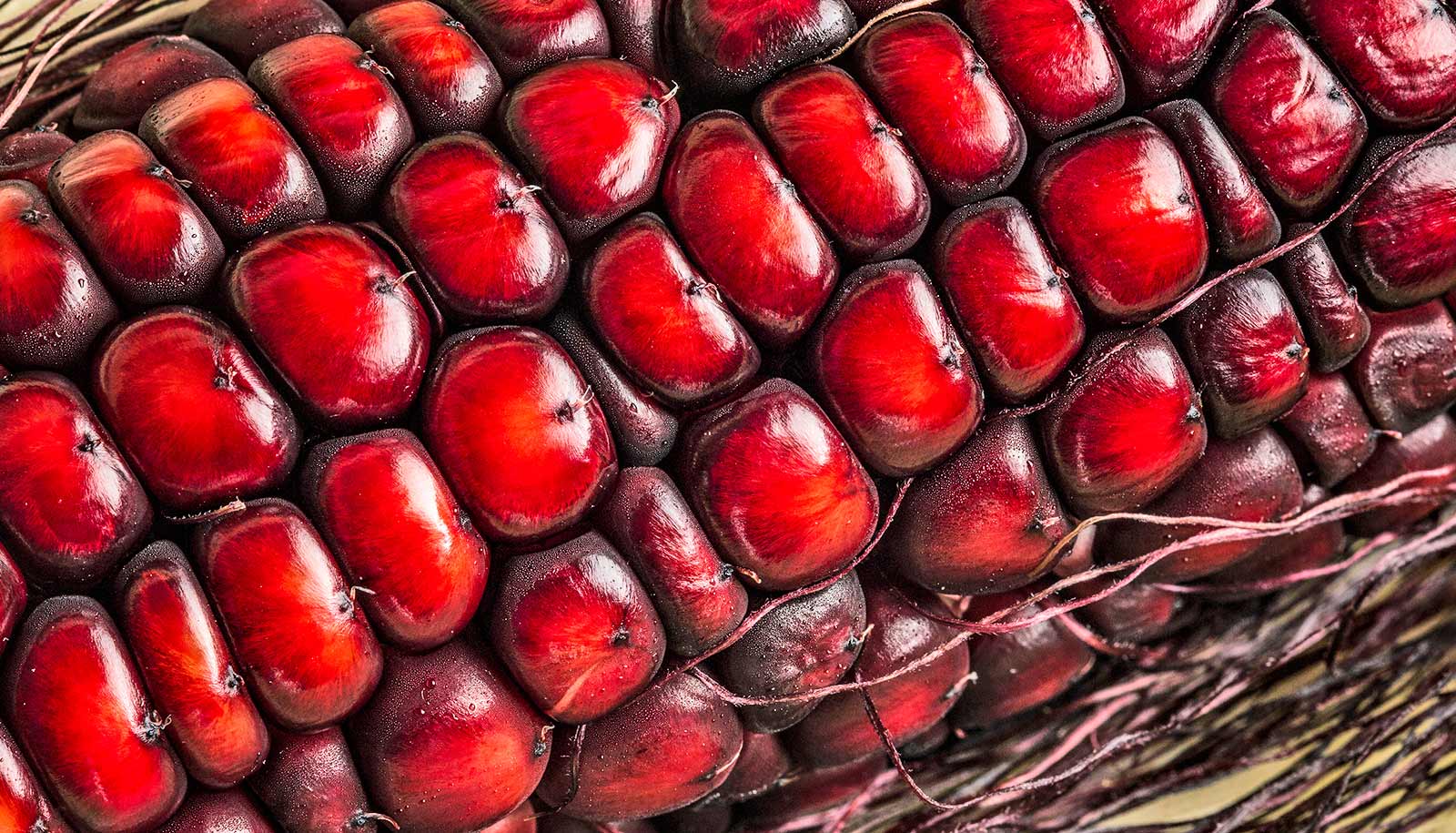
How Purple Corn Could Replace Artificial Food Dyes
Researchers at the University of Missouri are transforming a unique variety of South American purple corn into a stable, natural alternative to petroleum-based synthetic food dyes. The study appears in NPJ Science of Food, detailing how scientists successfully stabilized the corn’s natural pigments to withstand harsh food processing conditions without degrading.
Key Clinical Takeaways:
- Scientists at the University of Missouri’s College of Agriculture, Food, and Natural Resources utilized anthocyanins from South American purple corn to create natural food colorants.
- When coated in protective food-grade materials and exposed to elevated temperatures, color compound retention reached nearly 97 percent.
- The purple corn colorants demonstrated minimal color loss after seven weeks in acidic and basic beverage systems during refrigerated storage.
Overcoming the Fragility Barrier of Plant-Based Pigments
For decades, food manufacturers have relied on synthetic petroleum-based dyes like Red No. 40 and Red No. 3 to achieve vibrant product appearances. Transitioning to natural options has proven difficult because plant-based pigments are chemically fragile. These natural compounds typically break down when exposed to heat, light, and oxygen, presenting a major barrier for an industry where ingredients must withstand processing temperatures reaching up to 250 degrees Fahrenheit and remain stable on store shelves for extended periods.
The research team focused on anthocyanins, the same natural pigments that give blueberries, red cabbage, and grapes their distinct colors. In purple corn, these valuable antioxidant-rich compounds are densely concentrated in the pericarp, the thin outer layer of the kernel that frequently sticks in teeth during consumption. Pavel Somavat, holding joint appointments in Mizzou’s College of Agriculture, Food, and Natural Resources and the College of Engineering, noted the strategic advantage of targeting this specific cellular layer for extraction.
Thermal Stability and Acidic Environment Testing
To evaluate industrial viability, the research team exposed the purple corn colorants to elevated temperatures typically utilized during commercial food manufacturing. Approximately 75 percent of the primary color compounds remained structurally intact after one hour of thermal exposure. When researchers coated the pigments in protective, food-grade materials, retention increased to nearly 97 percent for select compounds, enabling the creation of shelf-stable powders suitable for storage and transport.
The team also tested the colorants in beverage systems, representing one of the most chemically demanding environments for natural color additives due to acidity, light exposure, and prolonged storage intervals. According to Somavat, the purple corn-based colorants held up well across both acidic and basic environments, positioning the ingredient as a strong candidate for fruit juices, flavored waters, and sports drinks. Minimal color degradation was observed even after seven weeks of refrigerated storage.
Adapting South American Varieties to the American Corn Belt
Missouri currently ranks among the leading national producers of standard yellow corn. Over a five-year period, Mizzou researchers have worked to adapt purple corn strains to the growing conditions of the Corn Belt to expand domestic production capabilities and diversify agricultural revenue streams for local farmers.
This agronomic effort involves a direct collaboration with Sherry Flint-Garcia, a research geneticist with the United States Department of Agriculture’s Agricultural Research Service. The team is actively crossbreeding highly pigmented, exotic varieties with corn types already thriving in regional climates like Missouri. Flint-Garcia explained that this crossbreeding strategy allows farmers to cultivate purple corn successfully while capturing its associated health properties, which include reducing inflammation and supporting cardiovascular health.