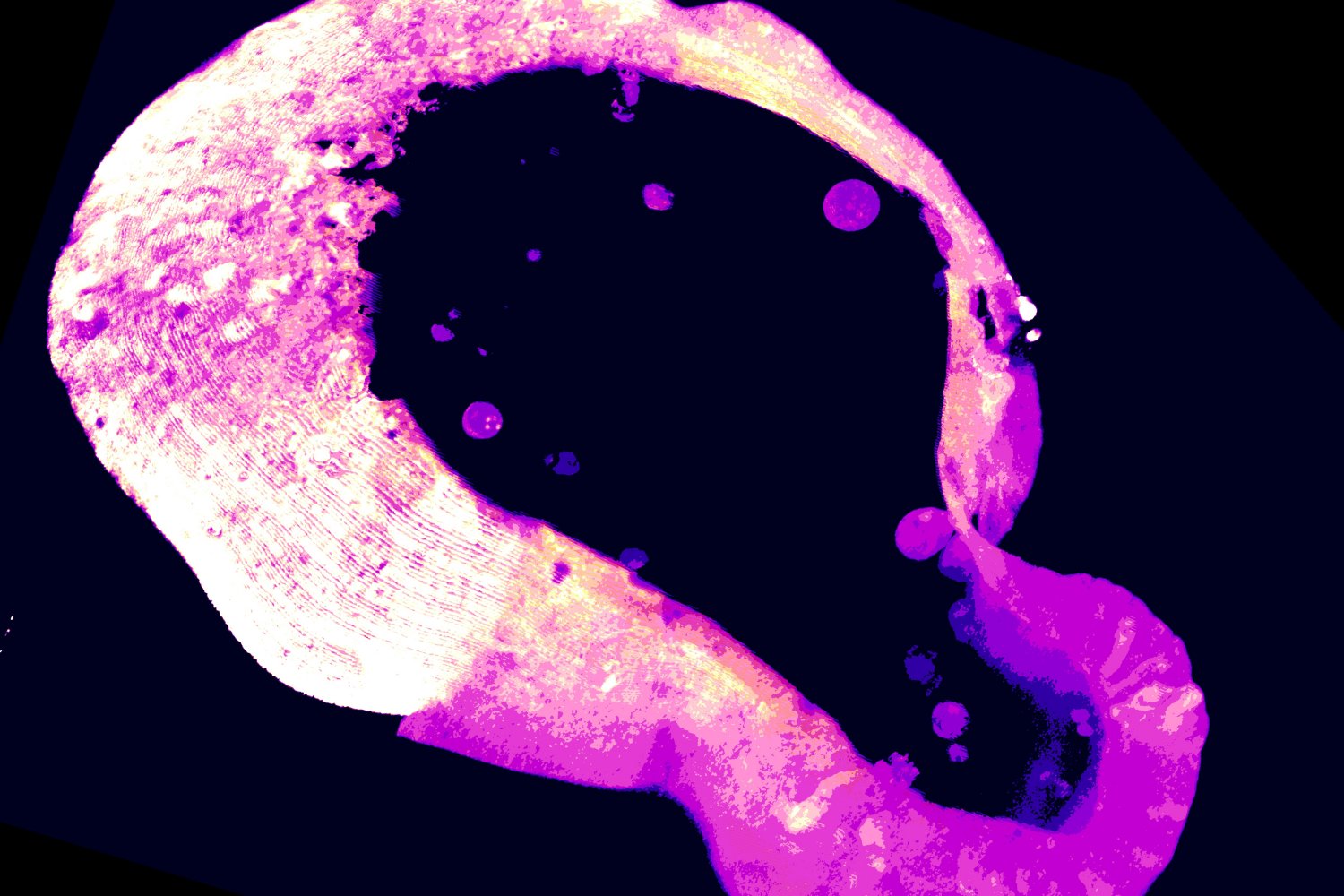
How Polyamines Protect Cells from Toxic Iron Overload
Cells Deploy Rare Molecules to Shield Against Iron Overload
As biological data architectures process cellular homeostasis, researchers have uncovered an unexpected defense mechanism against heavy metal toxicity. According to findings published on August 14 in the journal Cell by MIT associate professor of biology Ankur Jain, MIT assistant professor of biology Whitney Henry, and Pushkal Sharma PhD ’26, cells rely on small molecules known as polyamines to act as molecular storage lockers for iron, keeping the metal safely contained in a non-reactive state until needed.
The Tech TL;DR:
- Core Discovery: Polyamines function as high-capacity cellular storage lockers for iron, neutralizing the metal to prevent DNA and membrane breakdown.
- Experimental Methodology: Researchers utilized a genome-wide screen alongside real-time fluorescent sensors to track reactive iron levels relative to polyamine depletion.
- Downstream Applications: The findings establish new avenues for cancer therapeutics and shed light on neurodegenerative pathologies like early-onset Parkinson’s disease.
Decoding Cellular Iron Toxicity and Architectural Threat Models
Iron remains essential for cellular respiration, energy production, and oxygen transport. Yet, free iron inside the cytoplasm introduces severe systemic risks. Unbound iron triggers destructive Fenton reactions that systematically shred DNA strands, unfold proteins, and rupture lipid cell membranes. For decades, molecular biologists faced a persistent anomaly: cells maintain extraordinarily high concentrations of polyamines—levels directly comparable to ATP, the primary energy currency—even though basic biological growth requires only a fraction of that pool. As detailed in reporting from MIT News, this fundamental paradox remained unsolved until researchers applied large-scale genomic screening to map downstream systemic failures.
“We’ve known that without polyamines, cells stop growing and dividing,” notes Ankur Jain, pointing out that standard growth requirements account for only a small portion of the total polyamine load. To isolate the hidden utility of these molecules, the research team screened entire genomes simultaneously. When polyamine levels dropped experimentally, survival immediately depended on the presence of GPX4, a critical protein tasked with preventing lipid peroxidation in cell membranes. Concurrently, cells with depleted polyamines accumulated higher amounts of a protein acting as an iron sponge, locking the metal into a mineralized state. These combined metrics pointed squarely toward iron sequestration as the missing variable.
Real-Time Diagnostics and Fluorescent Sensor Implementation
Validating this hypothesis required high-resolution, real-time tracking of chemically reactive iron inside live cellular environments. The team engineered a novel fluorescent sensor that shifts luminescence based on the concentration of reactive iron. By pairing this optical sensor with a previously developed polyamine-tracking biosensor, researchers monitored real-time fluctuations under confocal microscopes. The resulting telemetry captured a consistent, inverse correlation: as polyamine concentrations diminished, reactive iron spiked precipitously.
# Conceptual telemetry monitoring loop for iron-polyamine sensors
import numpy as np

def evaluate_cellular_stress(polyamine_level, threshold=0.15):
    reactive_iron = 1.0 / (polyamine_level + 1e-5)
    if reactive_iron > threshold:
        return "CRITICAL_OVERLOAD_WARNING"
    return "HOMELEOSTASIS_STABLE"
Implications for Oncology Protocols and Neurodegenerative Research
Beyond resolving a long-standing biochemical mystery, the discovery of polyamines acting as iron shields opens new strategic vectors for oncology and neurobiology. Cancer cells notoriously hijack high polyamine levels to fuel rapid replication cycles. Therapeutic interventions designed to deplete polyamines to halt tumor growth have historically faced clinical hurdles.

Conversely, in neurological tissues, the breakdown of this regulatory system has severe implications. Mutations impacting polyamine levels within neurons directly correlate with pathologies such as early-onset Parkinson’s disease.
Forward Architectural Trajectory
As computational biology integrates genomic screens with real-time fluorescent microscopy, the boundaries between wet-lab biology and deterministic software design continue to blur. Uncovering how cells deploy small molecules as metabolic storage lockers proves that cellular architecture relies on multi-layered redundancy.