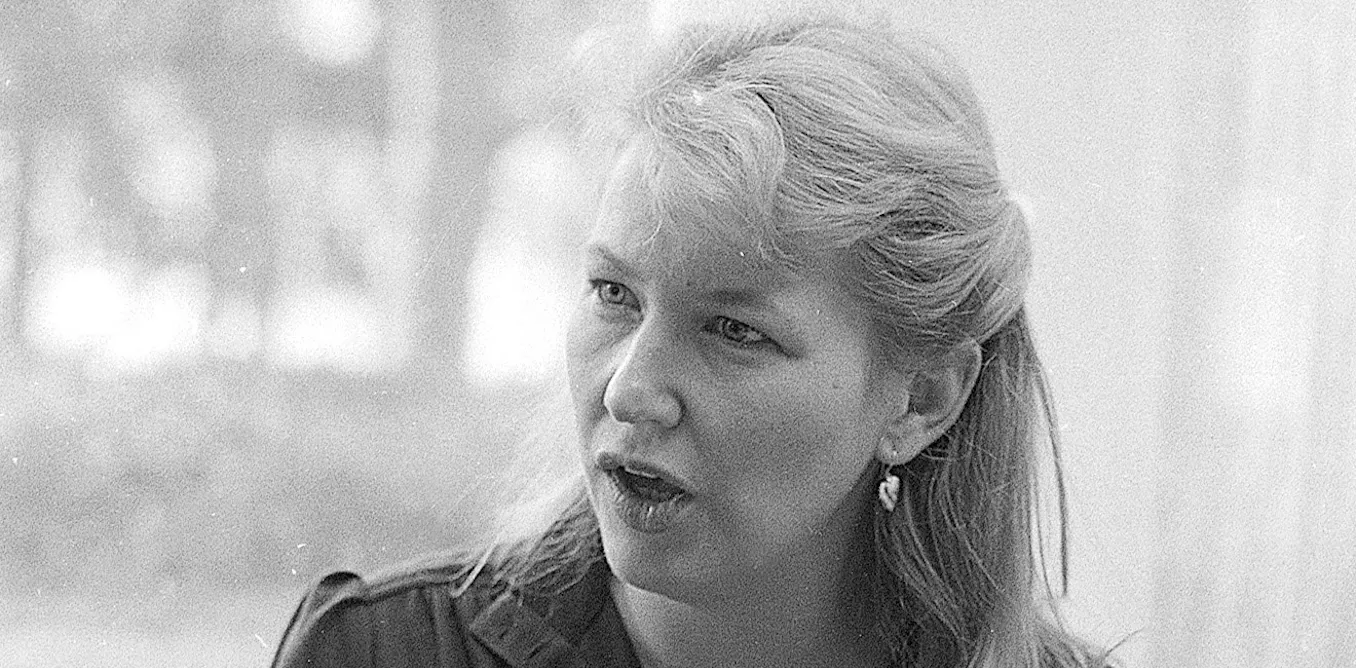
How Poetry Shaped Annie Dillard’s Prose and Pioneering Nonfiction
Author and pioneer of creative nonfiction Annie Dillard died on Sept. 15, 2026, at age 81, leaving behind a literary legacy defined by her Pulitzer Prize-winning 1975 masterpiece, Pilgrim at Tinker Creek. Her work permanently blurred the boundary between poetry and prose by applying the sonic density, heightened imagery, and mystical theological gaze of verse to the observation of the natural world.
Annie Dillard Dies at 81
A Blueprint for Nature and Divinity
Dillard published her groundbreaking exploration of nature and divinity at age 28. The book established a distinctive literary blueprint that she would carry through later essay collections and full-length works, including Teaching a Stone to Talk, Holy the Firm, and For the Time Being. According to her obituary in The New York Times, her nonfiction consistently possessed the distinct shape and intensity of a poem.
Sonic Density and Literary Lineage
The formal architecture of Dillard’s prose reflects a deliberate intellectual lineage. She frequently cited Henry David Thoreau and the transcendentalists as foundational influences. Yet her technical approach relied heavily on the acoustic properties of poetry. In The Writing Life, Dillard details how she sustained her creative focus on difficult books by reading Conrad Aiken’s poetry aloud as pure sound unencumbered by sense. She also spent hours repeating single lines of Wallace Stevens like a song while writing, channeling the sonic density of poetry straight into her paragraphs.
Divided Critical Reception
This stylistic choice drew mixed reactions from contemporary critics. Novelist Eudora Welty praised Pilgrim at Tinker Creek while simultaneously admitting that she did not always know what Dillard was talking about. Welty pointed to a lack of straight narrative, missing the clarity of point, direction, and shape more conventionally demanded of prose. Cultural critic William Deresiewicz similarly argued that Dillard’s hermetic perspective lacked an economic and social framework, likening her mix of cultural disengagement and theological concern to spiritual snobbery.
Celestial Events and Cosmic Vision
Defenders and fellow writers, however, saw her narrow, intense lens as an intentional poetic feature. In a 2007 review of Dillard’s novel The Maytrees for The Washington Post, Marilynne Robinson observed that Dillard’s books function like celestial events, reminding readers that the reality they inhabit is itself a cosmic occurrence rather than mere self or thought. This alignment of the intimate with the grand scale links Dillard to visionary poets such as Gerard Manley Hopkins, Wendell Berry, and Mary Oliver.

An Enduring Testament
As the literary community reflects on Dillard’s passing and her enduring contributions archived at institutions like Yale University’s Beinecke Rare Book and Manuscript Library, her work remains a permanent testament to the power of language that refuses to stay inside conventional generic boundaries. The enduring resonance of her prose proves that poetry was never merely an ornament to her writing, but the very engine of her perception.