
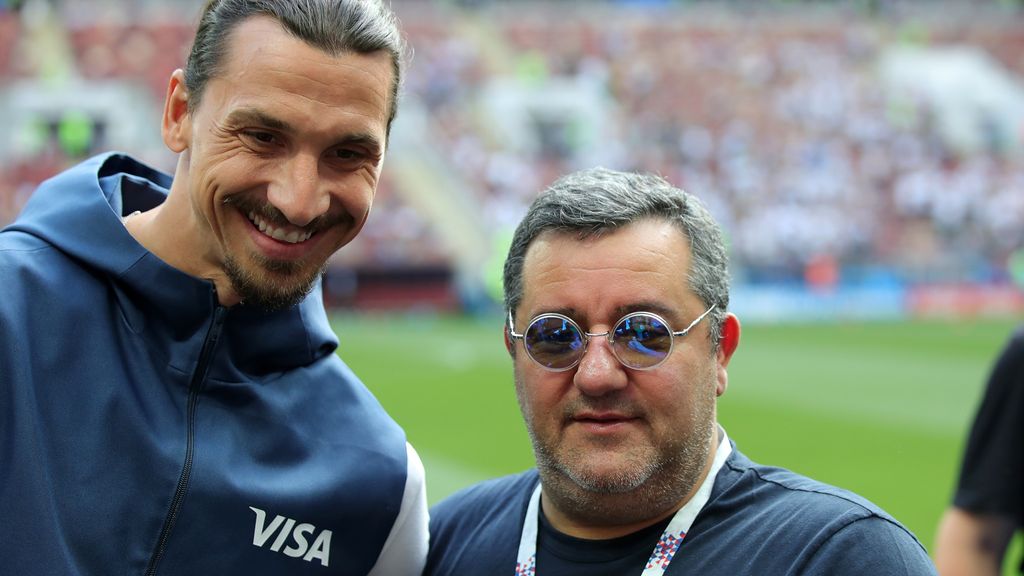
Raiola Secretly Owned Czech Club, Viktoria Plzen, to Circumvent Agent Ownership Rules
PRAGUE - Super-agent mino Raiola, renowned for brokering deals for some of football’s biggest stars, secretly acquired ownership of Czech First League club Viktoria Plzen in the early 2000s, utilizing an Italian lawyer as a proxy to avoid regulations prohibiting agent ownership of clubs. The arrangement, revealed through interviews with a former scout and legal analysis, underscores Raiola’s ambition to not only represent players but also to control a club capable of developing talent for lucrative transfers.
The scheme allowed Raiola to operate behind the scenes, strategically positioning Viktoria Plzen as a “junction” for identifying and nurturing players with high market value. While the sporting results during his tenure were underwhelming, the venture proved financially accomplished, generating profits through player sales. “He did not mention his own name as the owner. I suddenly heard a different name,” said Ben Hendriks, a scout who worked on negotiations during the takeover. That “different name” was Luca Ferrari, an Italian lawyer who openly confirmed Raiola’s involvement.
ferrari explained Raiola’s motivation: “Mino did not want to be known as a strong player in the market. He wanted to have the space to map out the best strategy for his players, without being linked to clubs or countries. That was the reason for him to avoid the spotlights.”
Hendriks corroborated this,stating,”He sold players I found worth a lot. He deserved well from that.” Ferrari detailed the plan to develop talent “with a limited budget” and then secure ”big transfers.” He conceded, however, that the plan “looked good, but it was not implemented well.”
viktoria Plzen was sold to a full Czech owner in 2005, and subsequently achieved domestic success, winning the Czech First League in 2011. The club recently competed in the Champions League preliminary rounds, losing to Rangers.
Legal expert frans de Weeger confirmed that, at the time, regulations explicitly forbade agents from owning clubs. Though, he noted that utilizing an intermediary like Ferrari circumvented those rules: “At the time, it was not allowed for any agent. But if there is an intermediary on paper, then nothing is done in a regulatory manner that is not allowed.”
