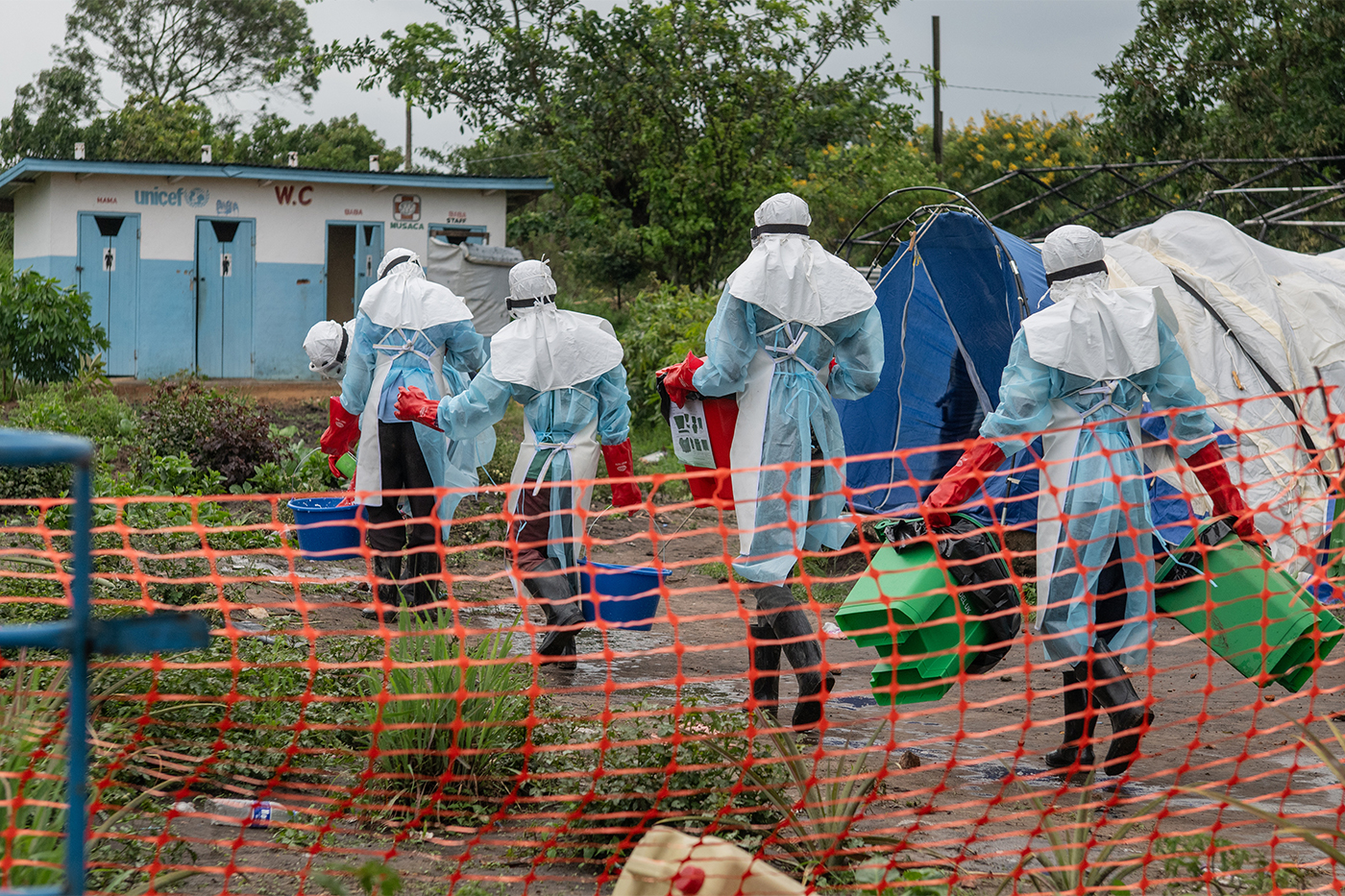
How Northeastern University is Combating the Ebola Outbreak: Key Strategies
As global health authorities grapple with the persistent threat of viral hemorrhagic fevers, the necessity for rapid, data-driven epidemiological modeling has never been more acute. Northeastern University researchers are currently deploying advanced computational frameworks to anticipate Ebola virus transmission patterns, providing a critical layer of intelligence for containment efforts. By integrating high-resolution mobility data with stochastic modeling, these efforts aim to transform reactive outbreak management into proactive, surgical public health interventions.
Key Clinical Takeaways:
- Computational models developed at Northeastern University utilize real-time human mobility data to predict the geographic spread of Ebola, allowing for optimized resource allocation.
- The research emphasizes the integration of interdisciplinary data streams to overcome traditional surveillance gaps in resource-limited settings.
- Effective containment relies on the synergy between mathematical modeling and the rapid deployment of medical countermeasures, such as vaccines and supportive care, to interrupt chains of transmission.
The Epidemiological Challenge of Viral Hemorrhagic Fevers
Ebola virus disease (EVD) remains a significant challenge to global health security due to its high case fatality rate and the complex logistics of managing outbreaks in densely populated or geographically isolated regions. The pathogenesis of EVD involves a systemic inflammatory response, leading to multi-organ failure and disseminated intravascular coagulation. Standard of care currently focuses on aggressive supportive therapy, including fluid resuscitation and electrolyte management, alongside the use of monoclonal antibody treatments and vaccines, such as those evaluated by the World Health Organization.
The core difficulty in containment is the high degree of uncertainty regarding secondary transmission rates. Epidemiological models must account for varied contact patterns, the latency period of the virus and the efficacy of contact tracing in diverse socio-cultural environments. Northeastern’s approach utilizes large-scale simulation tools to model these variables, providing a predictive backbone that informs where to deploy mobile diagnostic units and specialized treatment centers.
“Mathematical modeling is no longer a peripheral academic exercise; We see an essential component of modern infectious disease response. By mapping human mobility, we gain the ability to preemptively bolster healthcare infrastructure in high-risk zones before the exponential growth phase of an outbreak takes hold.” — Dr. Elena Rossi, Epidemiologist and Senior Research Fellow.
Integrating Computational Intelligence into Public Health Infrastructure
The shift toward digital health architecture requires a robust supply chain of data, and personnel. For institutions and regional health departments, accessing the right expertise is vital for maintaining readiness. Managing the logistics of such large-scale public health efforts often necessitates the involvement of specialized public health strategists who can bridge the gap between academic research and on-the-ground execution. These professionals ensure that computational models are translated into actionable, compliant, and culturally sensitive operational plans.
the diagnostic and clinical management of Ebola requires specialized facilities capable of maintaining high-level biocontainment standards. For patients or providers seeking guidance on the implementation of advanced infectious disease protocols, consultation with board-certified infectious disease specialists is essential. These practitioners are instrumental in ensuring that clinical workflows, from triage to isolation, adhere to the latest international safety guidelines.
Scaling Response Through Interdisciplinary Collaboration
The interdisciplinary environment at Northeastern, which has been highlighted in recent academic summits regarding public health technology, facilitates the cross-pollination of physics, computer science, and clinical medicine. This collaborative model is critical for addressing the mechanical and biological complexities of viral replication. Research into viral uncoating—often conducted through biophysical analysis of DNA pressure within viral capsids—serves as a foundation for developing next-generation antivirals that target the virus at the molecular level, as seen in recent studies published in Science Advances regarding HIV/AIDS mechanics.
Funding for these high-impact research initiatives is typically provided through competitive grants from the National Institutes of Health and the National Cancer Institute. This transparency ensures that the methodologies employed are subject to rigorous peer review and ethical oversight. For the private sector and biotech firms looking to align with these advancements, engaging with healthcare compliance attorneys is a necessary step to navigate the complex regulatory environment governing the development and distribution of new therapeutic agents.
Future Trajectories in Predictive Epidemiology
The future of Ebola containment lies in the seamless integration of predictive modeling with real-time clinical surveillance. As we move toward a model of precision public health, the ability to utilize granular, anonymized data will continue to refine our response capabilities. However, technology is only one part of the equation; the human element—the clinicians, the frontline aid workers, and the local community leaders—remains the primary determinant of success.
Continued investment in the infrastructure of public health, supported by university-led innovation and private-public partnerships, will be the determining factor in our ability to mitigate future outbreaks. As researchers continue to refine these models, the emphasis must remain on the swift translation of findings into clinical action, ensuring that the most vulnerable populations receive the benefit of the latest scientific breakthroughs. For those seeking to stay updated on clinical best practices or to find top-tier medical facilities equipped for infectious disease management, utilizing a verified medical directory is a prudent step in navigating the landscape of modern healthcare.
Disclaimer: The information provided in this article is for educational and scientific communication purposes only and does not constitute medical advice. Always consult with a qualified healthcare provider regarding any medical condition, diagnosis, or treatment plan.