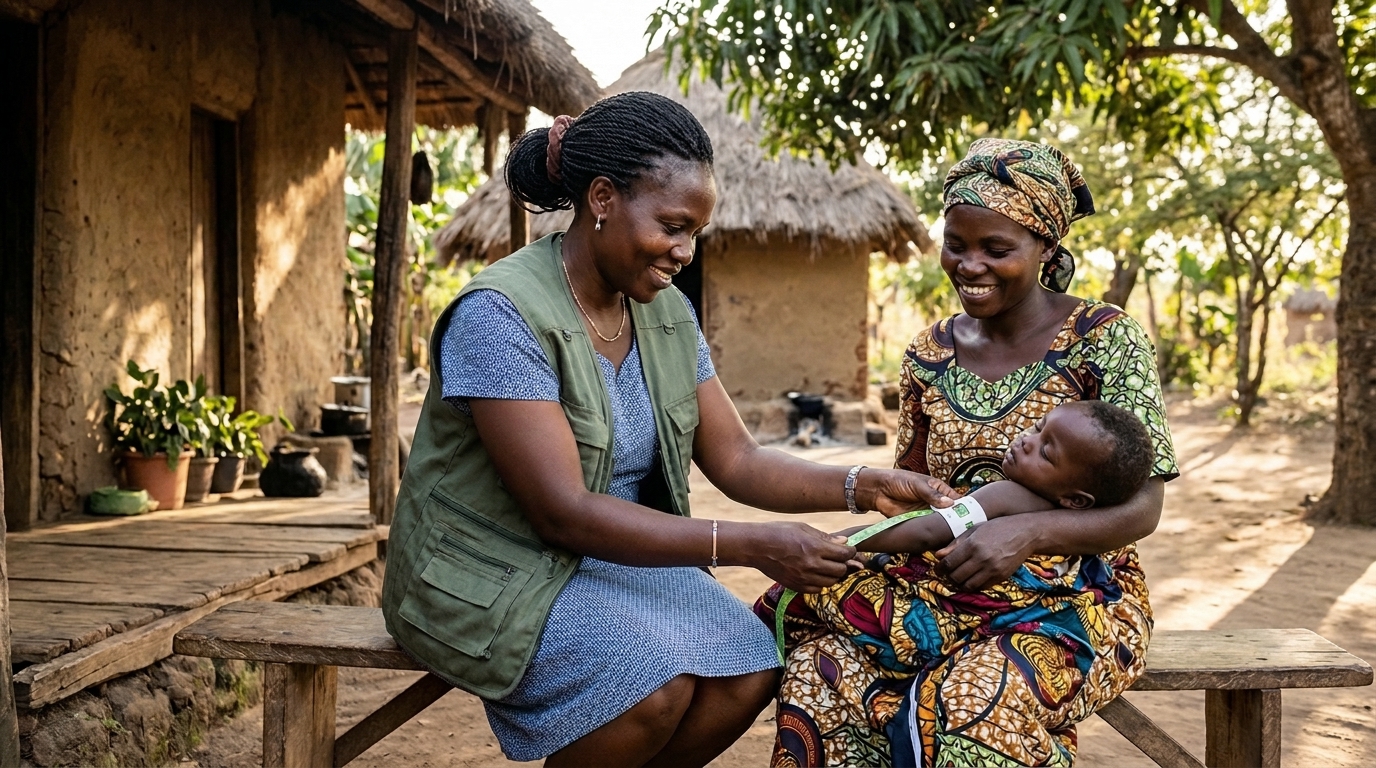
How Next-Generation Community Health Worker Programs Can Accelerate Universal Health Coverage
National health systems in low- and lower-middle-income countries can accelerate their journey toward Universal Health Coverage and expand essential care most rapidly by scaling up community health worker programs, according to a recent analysis published in PLOS Global Public Health.
Bridging Persistent Gaps in Vulnerable Regions
Many national systems currently lag behind in reaching Health for All. Persistent workforce shortages, rigid fiscal ceilings, and inadequate outreach drive these delays. Stark inequities in service coverage and overall population health endure across these regions as a result.
Drawing on more than a decade of national-scale implementation experience, researchers demonstrate that local health workers can successfully extend high-quality essential services to the last mile. The study was authored by Henry B. Perry, Abhay Bang, Steve Hodgins, Madeleine Ballard, Jeffrey D. Sachs, and colleagues. Their findings indicate these workers simultaneously boost the operational efficiency of the broader health system.
Moving Beyond Informal Roles
Realizing these gains requires specific structural commitments. Workers must receive appropriate training, adequate pay, reliable equipment, and systematic supervision.

Rather than functioning as informal or marginal adjuncts, the authors emphasize that community health workers should become the central backbone of primary health care delivery. They must serve as the fundamental cornerstone of resilient national health systems.
Tech Trends Versus Proven Survival Strategies
Scienmag.com reports that global donors and private investors are currently drawn more strongly to the high-tech appeal of digital health tools and artificial intelligence.
A paid, well-supported community health worker—empowered with digital tools—delivers the most reliable results.
Reshaping Global Public Health Finance
An ongoing contraction in Official Development Assistance creates both substantial risks and critical opportunities under tightening financial conditions. To maximize impact, the authors urge aid programs to pivot away from directly subsidizing routine operational services.
Such funding would operate as catalytic resources, delivered through matching, limited-duration grants meant to fast-track government policies supporting local community health staff.
Integrating Health Workers Boosts Economic and Pandemic Resilience
Under this proposed next-generation model, health workers would integrate systematically into national structures. Adequate pay, comprehensive training, regular supervision, and strong logistical support would define the framework.
Institutional support would empower workers to conduct monthly home visits to every household. They could then deliver an expansive array of primary care services directly within communities.
Establishing this model is projected to yield favorable economic returns. Benefits include tangible productivity gains from improved population health, direct reductions in curative health-care expenditures, and strengthened pandemic-risk mitigation.