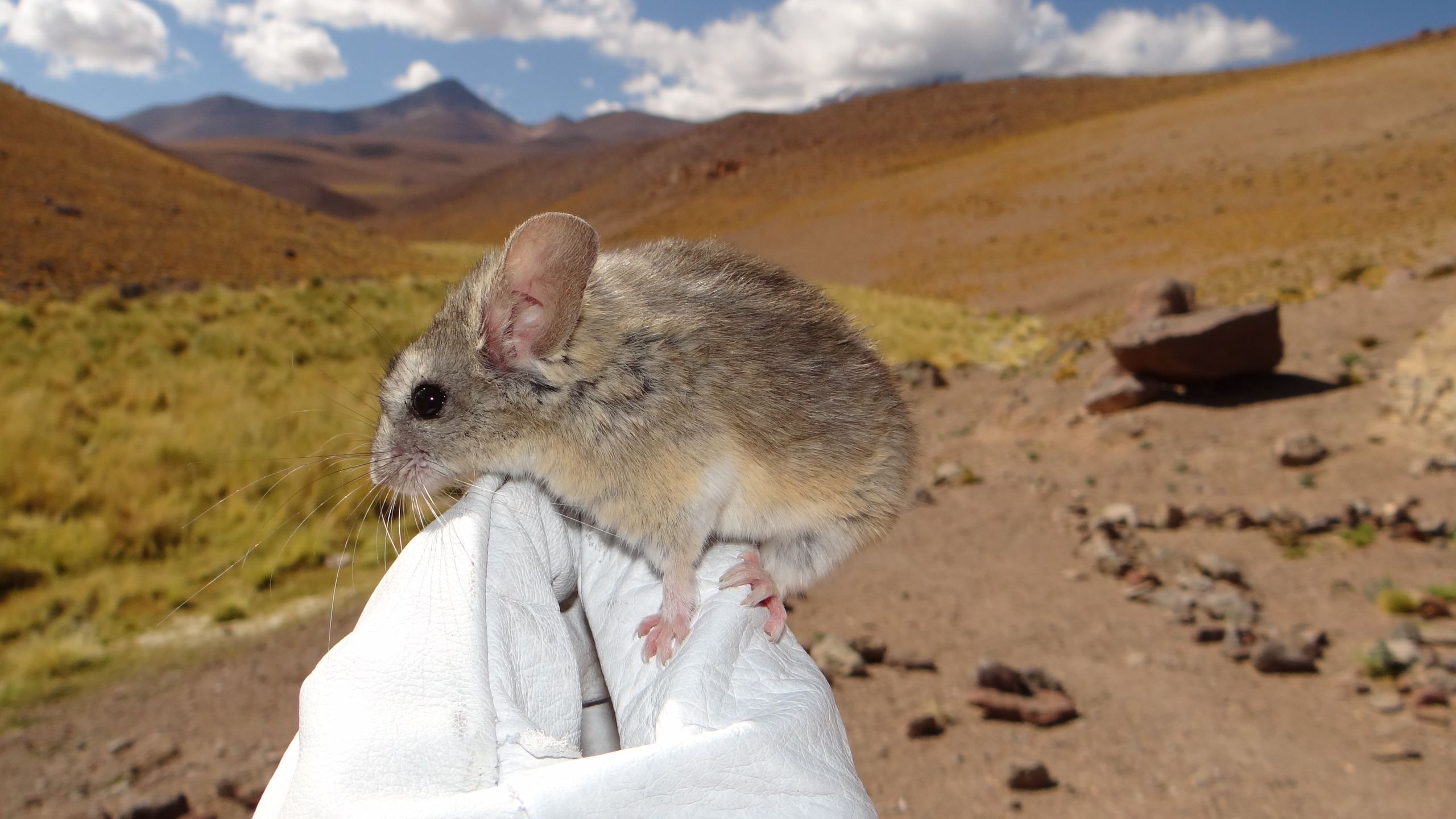
How Mice Survive at Extreme Altitudes on Icy Volcanoes in the Andes
Scientists have documented how Andean leaf-eared mice survive at extreme elevations on the summits of icy dormant volcanoes, thriving in conditions previously thought completely incompatible with long-term mammalian survival. Published on July 9 in the journal Science, a new study led by University of Nebraska–Lincoln biological sciences professor Jay Storz outlines the physiological and genetic adaptations that allow Phyllotis vaccarum to inhabit elevations more than a mile higher than the world’s highest human settlement.
- Researchers recorded Andean leaf-eared mice living up to 22,110 feet (6,739 meters) on Llullaillaco volcano, shattering the prior assumption that mammals could not survive above 18,000 feet.
- Genomic sequencing revealed specific evolutionary changes enabling these rodents to maintain body heat, stabilize oxygen levels under severe hypoxic stress, and metabolize toxic vegetation.
- Fieldwork conducted between 2020 and 2023 involved trapping and analyzing 167 specimens across low, middle, and high elevations to map genetic continuity and physiological divergence.
Physiological Adaptations and Extreme Hypoxia
The research initiative, which combined high-altitude mountaineering with rigorous animal surveying between 2020 and 2023, sought to uncover the biological mechanisms behind the rodents’ exceptional tolerance. Storz and his team ascended peaks along the border of Argentina and Chile, capturing specimens and transferring them to laboratories in Chile for controlled-chamber trials. These tests measured how the high-altitude mice adapted to severe cold and profound oxygen deprivation.
According to findings released by the University of Nebraska–Lincoln, mice collected from high-elevation summits demonstrated a superior capacity to regulate body temperature and sustain oxygenation compared to their low-altitude counterparts. The sequencing of the Andean leaf-eared mouse genome highlighted specific localized adaptations. Co-author Graham Scott, a professor of biology at McMaster University in Canada, noted that the species tackles environmental stressors—ranging from freezing temperatures to extreme barometric pressure drops—through complex evolutionary pathways.
For patients and researchers studying the cellular impacts of oxygen deprivation, understanding extreme physiological resilience offers valuable insights into tissue hypoxia. Clinicians investigating ischemic injury frequently collaborate with specialized diagnostic centers and consult clinical research guides provided by vetted professionals such as those found through a [Vetted Medical Research Directory] to stay abreast of metabolic adaptations.
Dietary Detoxification in Barren Ecosystems
Beyond coping with thin air and sub-zero temperatures, high-altitude mice face acute nutritional scarcity in an arid desert ecosystem where vegetation is severely limited. Genetic analysis conducted by the McMaster University research contingent demonstrated that the high-altitude mice possess gene alterations allowing them to digest food sources and detoxify plants that are typically poisonous to other mammals.
This metabolic versatility ensures that the rodents secure adequate caloric intake despite the bleak landscape of the frozen volcanoes. Despite these specialized traits, genetic profiling revealed that populations across the entire elevational range remain remarkably similar. Frequent genetic overlap prevents high-altitude individuals from isolating into distinct species from their coastal, sea-level relatives.
Studying how mammalian systems process unexpected toxins and adapt under extreme metabolic stress requires sophisticated clinical oversight.
The Future of High-Altitude Physiological Research
The expeditions required immense physical endurance and carried genuine medical risks for the researchers themselves. During a related expedition in Peru, a member of the research team developed high-altitude pulmonary edema, a life-threatening form of altitude sickness characterized by fluid accumulation within the lungs, necessitating emergency evacuation.
To preserve a permanent biological record for future generations, the research team collected 167 voucher specimens for museum archives. While acknowledging that these specimens were humanely euthanized to facilitate detailed tissue analysis, Storz emphasized that the collection methods did not negatively impact the overall viability of the wild populations.
As investigators continue to map the genetic markers associated with extreme hypoxia tolerance and metabolic detoxification, the medical community looks toward translational applications in cardiology and pulmonology. Translating these fundamental biological discoveries into safe human therapies demands rigorous regulatory compliance and expert oversight. Healthcare institutions and biotechnology firms navigating complex regulatory frameworks routinely partner with specialized compliance attorneys and clinical investigators accessible via an [Approved Healthcare Provider Registry] to ensure adherence to safety standards.
Disclaimer: The information provided in this article is for educational and scientific communication purposes only and does not constitute medical advice. Always consult with a qualified healthcare provider regarding any medical condition, diagnosis, or treatment plan.