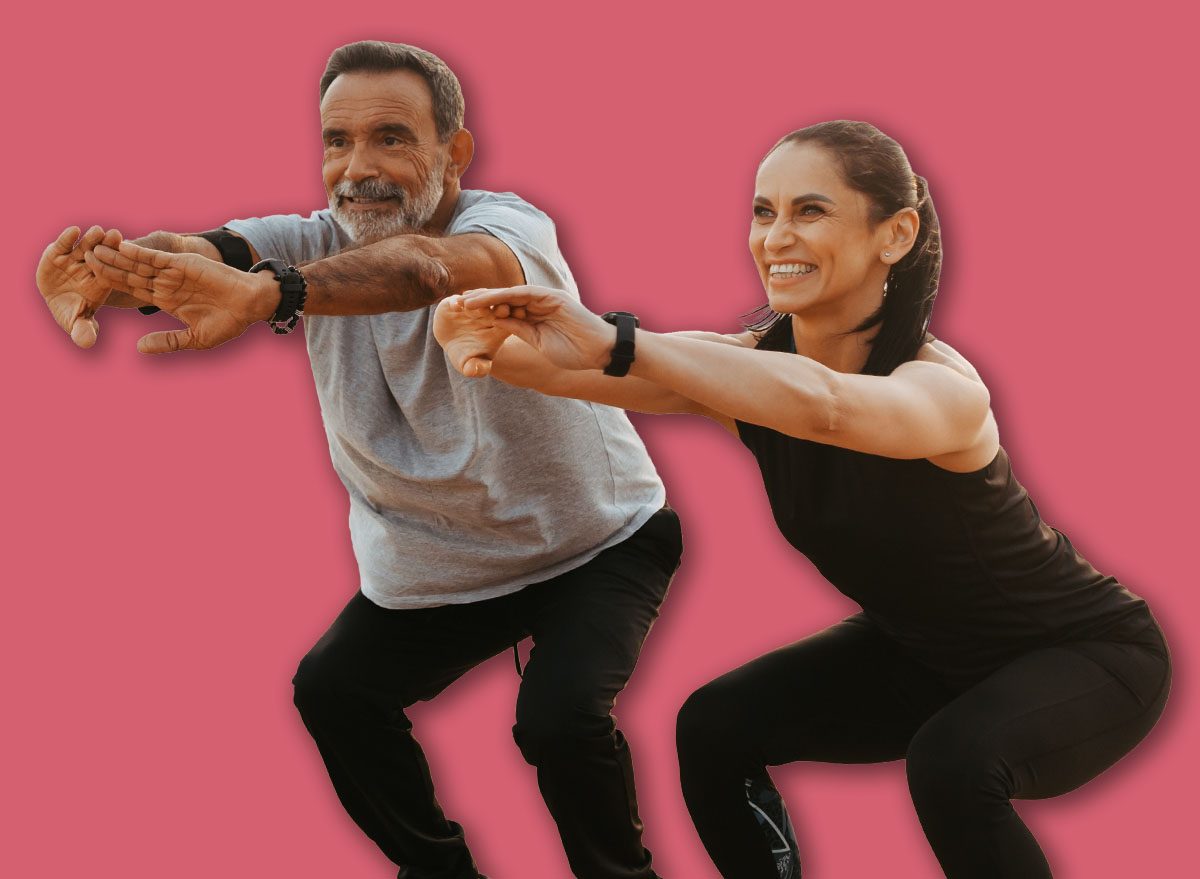
How Many Squats Are Needed for Top-Tier Leg Strength After 60
Maintaining lower-body muscular capacity and functional movement patterns after age 60 requires targeted physical conditioning to preserve bone density, balance, and independence. According to Dr. Andrew Gorecki, physical therapist and owner of Superior Physical Therapy, achieving a top-tier squat count indicates robust neuromuscular health and is associated with lower fall and hospitalization risks.
- Squat performance in adults over 60 serves as a comprehensive test of balance, endurance, mobility, and lower-body strength rather than isolated muscular force.
- Normative data from the 30-second chair stand test, developed by Rikli and Jones within the Senior Fitness Test battery, establishes functional benchmarks across aging demographics.
- Scoring 20 or more chair stands in 30 seconds places an individual in an elite functional category comparable to typical fitness levels in middle age.
The Functional Mechanics of the Squat Pattern in Aging Adults
Functional lower-body capacity relies heavily on the kinetic chain operating across the ankles, knees, hips, and core. Dr. Gorecki notes that the squat pattern mirrors fundamental daily movements such as rising from a seated position, stepping out of a vehicle, or retrieving items from the floor. When ankle mobility, knee stability, or hip strength deteriorates, these routine activities demand significantly more effort, accelerating functional decline.
Unlike isolated movements like a leg extension max, squats load multiple muscle groups simultaneously, including the quadriceps, hamstrings, glutes, calves, and spinal stabilizers.
Clinical Benchmarks and the 30-Second Chair Stand Test
Evaluating physical resilience requires standardized metrics rather than arbitrary fitness goals. The 30-second chair stand test provides validated normative data established by researchers Rikli and Jones. Top-range performance thresholds vary by age and sex:
- Ages 60-64: 16+ repetitions for men; 14+ repetitions for women
- Ages 65-69: 15+ repetitions for men; 13+ repetitions for women
- Ages 70-74: 14+ repetitions for men; 12+ repetitions for women
- Ages 75-79: 13+ repetitions for men; 11+ repetitions for women
- Ages 80-84: 11+ repetitions for men; 10+ repetitions for women
- Ages 85-89: 10+ repetitions for men; 8+ repetitions for women
Dr. Gorecki explains that performing 20 or more unassisted stands within 30 seconds at any age past 60 mirrors the functional capacity typically observed in fit adults in their forties. For unweighted, deep bodyweight squats taken down to a parallel thigh position over a 60-second window, estimated top-tier benchmarks range from 25 to 30 repetitions for men and 20 to 25 for women, though these figures represent extrapolations rather than universally validated normative data.
Inability to complete basic squat patterns typically points to specific underlying pathologies rather than simple deconditioning. Differentiating these variables dictates the appropriate therapeutic response.
Tracking functional performance metrics allows healthcare providers to intercept mobility losses before they threaten patient autonomy. Preserving lower-extremity strength through structured, evidence-based exercise regimens remains a cornerstone of preventative geriatric medicine.
*Disclaimer: The information provided in this article is for educational and scientific communication purposes only and does not constitute medical advice. Always consult with a qualified healthcare provider regarding any medical condition, diagnosis, or treatment plan.*