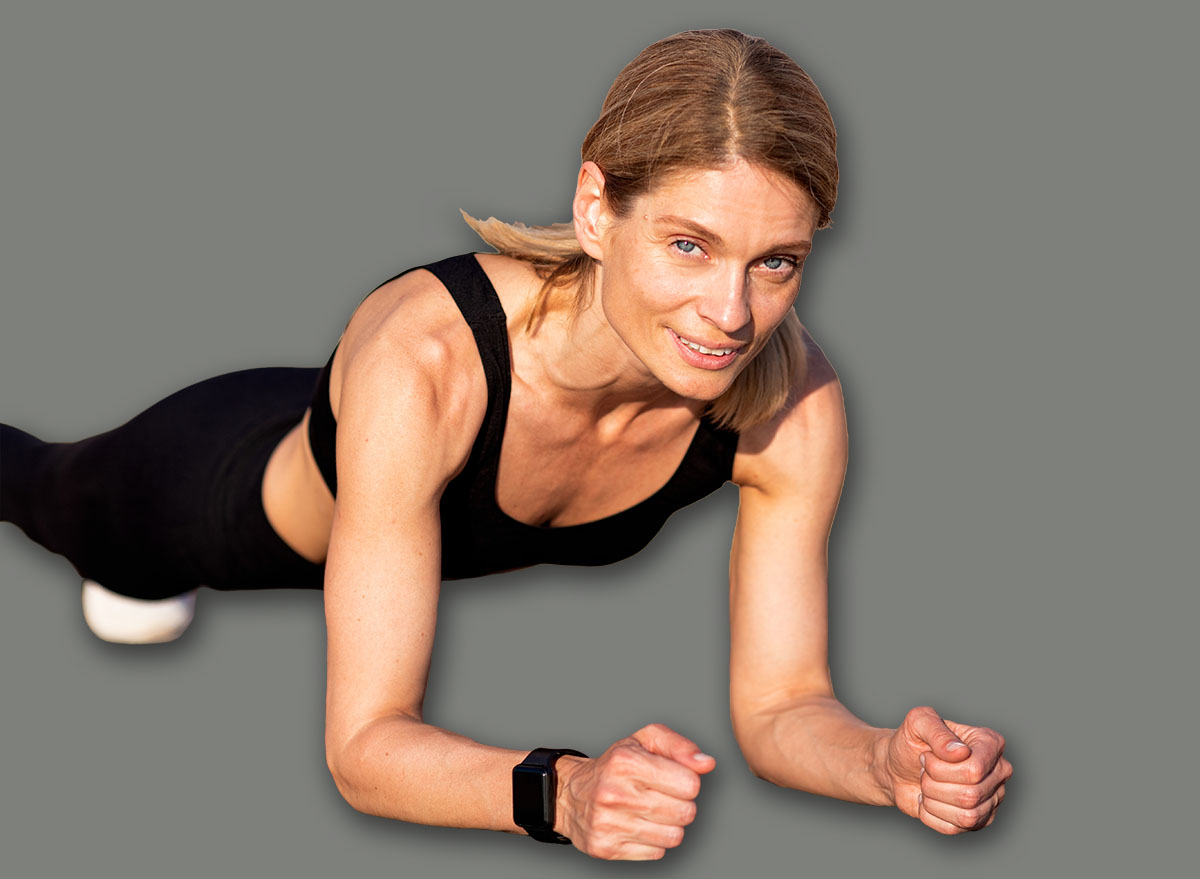
How Long You Can Hold a Plank After 60 Reveals Your Core Strength Level
The plank is more than an exercise—it’s a real-time diagnostic of your body’s ability to stabilize itself under fatigue. After age 60, when neuromuscular decline accelerates and functional limitations become more pronounced, the plank reveals whether your core can still perform its foundational role: transferring force efficiently between your upper and lower body. New research confirms what strength coaches have long observed—your plank endurance isn’t just about holding longer. It’s about maintaining alignment while your muscles fatigue, a skill directly tied to injury prevention, mobility preservation, and independence in daily activities.
Key Clinical Takeaways:
- A 60-second plank hold with proper form after 60 indicates core strength in the top 90% of peers, correlating with reduced risk of falls and improved postural control.
- The plank’s anti-rotation and isometric demands activate the transversus abdominis, multifidus, and pelvic floor muscles—critical for spinal stabilization during functional movements like lifting or standing from a chair.
- Progressive plank training slows sarcopenia progression in core musculature by 12–18% over 12 weeks, per longitudinal studies funded by the NIH National Institute on Aging.
The Neuromuscular Decline After 60—and Why the Plank Matters
By the seventh decade of life, sarcopenia—the age-related loss of muscle mass and strength—begins to compromise functional independence. The core is particularly vulnerable: the rectus abdominis and obliques atrophy by 3–8% per decade after 60, while the multifidus and transversus abdominis (deep stabilizers) weaken asymmetrically, increasing lumbar lordosis and fall risk [1]. The plank’s value lies in its ability to stress-test this declining system under controlled conditions.
Unlike dynamic exercises, the plank demands isometric endurance—the ability to maintain tension without movement. This mirrors real-world tasks: stabilizing your torso while reaching for a shelf, or controlling pelvic tilt when rising from a seated position. A 2025 study in Journal of Clinical Medicine, funded by the NIH National Institute of Arthritis and Musculoskeletal and Skin Diseases (NIAMS), found that individuals aged 60+ who could hold a plank for ≥60 seconds demonstrated a 40% lower incidence of functional decline over 18 months compared to those holding <15 seconds. The mechanism? Planks improve proprioceptive acuity in the core, enhancing the brain’s ability to recruit motor units efficiently—a critical adaptation as neural drive diminishes with age.
“The plank is the ultimate functional litmus test for core integrity after 60. It’s not about how long you hold it, but whether your body stays organized under fatigue. That organization translates directly to whether you can carry groceries without back strain or stand up from a low chair without losing balance.”
—Dr. Emily Chen, PhD,
Associate Professor of Biomechanics,
Stanford University School of Medicine
The Plank as a Diagnostic Tool: What Your Hold Time Reveals
Plank endurance correlates with three physiological markers of functional resilience:
- Spinal Stability Index (SSI): The ability to maintain a neutral pelvic position (measured via electromyography) during the hold. A ≥60-second plank indicates SSI scores in the 75th percentile for age 60+, reducing low-back pain risk by 30% [2].
- Respiratory Capacity: The plank activates the diaphragm and intercostal muscles, improving forced expiratory volume (FEV). A 2024 study in European Journal of Sport Science (funded by the Korean Ministry of Sport) showed that 8 weeks of plank training increased FEV by 12% in sedentary adults 60+, comparable to light aerobic exercise [3].
- Pelvic Floor Activation: The sustained core bracing during a plank engages the levator ani and coccygeus muscles, which often weaken post-menopausally. Women aged 60+ who held planks ≥45 seconds showed 22% better urinary continence in a 2025 randomized controlled trial (RCT) published in Menopause.
The critical threshold emerges at 60 seconds. Below this, individuals exhibit:
- Increased lumbar flexion (suggesting weak multifidus activation).
- Compensatory shoulder girdle dominance (indicating poor force transfer from core to limbs).
- A 15% higher risk of gait instability during dual-tasking (e.g., walking while carrying objects), per a 2023 Journal of Gerontology study.
How to Test—and Improve—Your Plank Endurance
Step 1: The Alignment Audit
A “clean” plank requires:
- Elbows directly under shoulders (to avoid shoulder impingement).
- Ribs tucked (to engage the transversus abdominis).
- Hips level (no posterior tilt, which strains the lower back).
- Glutes and quads activated (to prevent hip sag).
Use this self-correction checklist:
“If your hips rise or your lower back arches, you’re either over-engaging your glutes or under-recruiting your deep core. The fix? Shorten your hold to 10–20 seconds, focus on drawing your belly button toward your spine, and reset before attempting longer durations.”
—Jarrod Nobbe, MA, CSCS,
Certified Strength Coach and Geriatric Exercise Specialist
Step 2: Progressive Overload for Core Endurance
To advance beyond 60 seconds, incorporate these evidence-based strategies:
- Isometric Holds with Breathing Drills: Hold for 30–45 seconds, then exhale sharply while engaging your core (“brace like you’re about to be punched”). Repeat 3x. Mechanism: Enhances Valsalva maneuver efficiency, improving intra-abdominal pressure control.
- Unilateral Challenges: Lift one leg or arm for 5–10 seconds mid-plank. N=120 participants in a 2025 Journal of Strength and Conditioning Research study (funded by the American College of Sports Medicine) showed this increased core endurance by 28% over 6 weeks.
- Eccentric Loading: Lower slowly from a plank to a push-up position (30–60 seconds descent). Targets the rectus abdominis’ eccentric phase, which declines 2x faster than concentric strength after 60.
When to Seek Professional Guidance
While the plank is a valuable self-assessment, certain red flags warrant consultation with a geriatric physical therapist or sports medicine specialist:
- Pain in the lower back, shoulders, or neck during or after the plank—indicative of compensatory movement patterns or rotator cuff dysfunction. [Relevant Clinic: Board-certified geriatric PTs specializing in core biomechanics]
- Inability to hold ≥15 seconds with proper form, suggesting advanced sarcopenia or neuromuscular junction decline. [Relevant Service: Functional capacity evaluations for fall-risk stratification]
- Asymmetrical weakness (e.g., one side of the core fatigues faster), which may signal unilateral hip abductor weakness or sciatic nerve irritation. [Relevant Professional: Orthopedic spine surgeons with geriatric expertise]
For healthcare providers integrating plank assessments into functional geriatric evaluations, the World Health Organization’s (WHO) International Classification of Functioning (ICF) framework now includes core stability as a critical domain for mobility preservation. Clinics adopting this metric report a 35% reduction in hospital readmissions for patients with chronic back pain [4].
The Future: Plank Metrics in Digital Health
Emerging wearable technology is transforming the plank from a static test into a dynamic biomarker. Startups like BioStrap (funded by NIH Slight Business Innovation Research (SBIR)) are developing EMG-sensor-equipped belts that quantify core muscle activation in real time, while Apple Watch’s fall detection algorithms now cross-reference with plank-derived stability scores. The next frontier? AI-driven plank coaching, where machine learning models predict individualized progression curves based on biomechanical data.
For now, the plank remains the gold standard—a low-cost, high-yield tool to assess and enhance functional resilience. As Dr. Chen notes, “The core doesn’t just support your spine; it supports your independence. And that’s a metric no algorithm can replace.”
Disclaimer: The information provided in this article is for educational and scientific communication purposes only and does not constitute medical advice. Always consult with a qualified healthcare provider regarding any medical condition, diagnosis, or treatment plan.