How Japan’s TRON Lost to Windows But Won the Future of IoT
A 1984 Vision for Ubiquitous Computing
In 1984, a Japanese technology initiative launched with the ambition of designing an operating system architecture for a world that would take decades to materialize.
Unlike the proprietary software model dominating Western markets in the 1980s, the project relied on an open collaboration between industry and academia. Sakamura published technical specifications that manufacturers could implement freely without paying royalties. However, as noted in a historical reconstruction on Qiita cited by Xataka, while the specifications themselves were free, the actual implementations developed by firms like Matsushita were commercial products.
The Fracture into Specialized Branches
The initiative never materialized as a single operating system. Instead, it fractured into specialized branches tailored for distinct hardware segments: ITRON for real-time embedded systems, BTRON for personal computers, and CTRON for telecommunications, according to ecosistemastartup.com.
Market Dominance in Embedded Systems
While its desktop ambitions struggled, the embedded branch quietly captured a share of the market. The first ITRON specification debuted in 1984, followed quickly by μITRON and ITRON2 for 8-, 16-, and 32-bit microcontrollers.
A technical reconstruction published on Grokipedia estimates that ITRON accounted for roughly 30 percent of embedded systems developed in Japan during the late 1990s and early 2000s. The architecture supported more than 60 processor designs and over 37 conformant kernel products. Commercial implementations from Renesas, such as the RI600PX and RI850V4, required just 6 to 20 kilobytes of code, offering a minimal footprint optimized for resource-constrained hardware.
BTRON and the Desktop Market Struggle
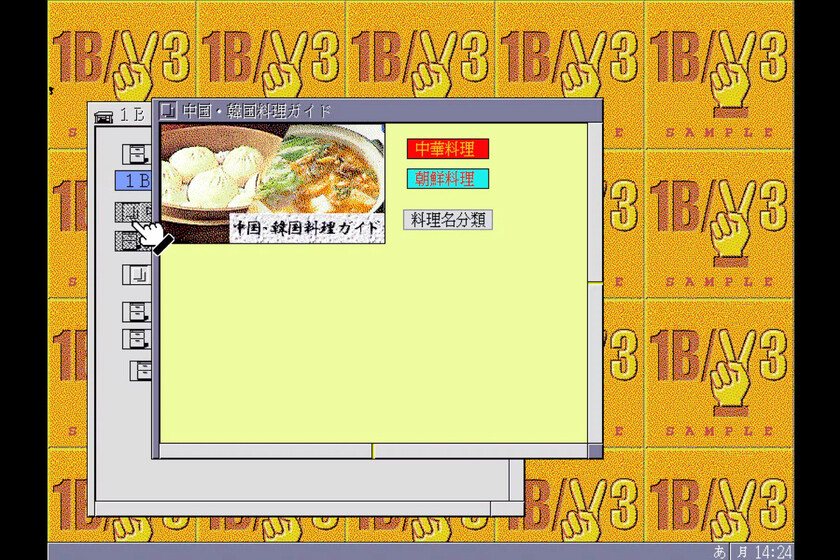
BTRON was designed to serve as the Japanese equivalent to Windows, featuring a graphical user interface, multitasking, an object-oriented document management model, and advanced handling of Japanese characters. Initial prototyping began in the mid-1980s, yielding a prototype in 1987, a commercial device called the 1B/note in 1991, and a version for PC-compatibles designated as 1B/V1 in 1994, according to Xataka.

By the time BTRON reached commercial availability in 1994, Microsoft had already established dominance with Windows 3.0 in 1990 and Windows NT in 1993. Three primary factors drove BTRON’s failure in the desktop market, none of which stemmed from external conspiracies.
Timing, Competition, and Pricing Hurdles
First, the timing proved fatal. Japanese consumers had already adopted MS-DOS and Windows alongside a vast library of existing software, making migration costly. Second, domestic hardware manufacturers lacked incentives to support a platform that might cannibalize their own established lines, such as NEC’s dominant PC-98 architecture. Third, pricing undermined competitiveness; the 1994 release of BTRON for PCs cost as much as 70,000 yen for its complete version, according to data cited by Xataka.