
The independent bike shop isn’t dead, but it is evolving. While predictions of its demise have been frequent, many businesses across the UK are not only surviving but thriving by adapting to a landscape dominated by direct-to-consumer brands and online retailers like Amazon. This isn’t simply a case of clinging to the past; it’s a strategic shift towards offering experiences and services that online platforms fundamentally cannot replicate.
For decades, the bike industry operated through a network of independent retailers. However, the rise of direct-to-consumer brands, such as Canyon, which began selling bikes on Amazon US in recent years, has disrupted this model. Canyon’s appeal initially lay in bypassing traditional retailers, offering bikes directly to consumers. As of 2026, Canyon offers a selection of trail, electric, and hybrid bikes on Amazon US, alongside its own website, with the Amazon range generally being more affordable. Models available on Amazon include the Spectral 125 AL 5, Spectral 125 CF 7, Spectral 125 CF 8, Spectral CF 8, Spectral 6, Spectral 5, Spectral 29 CF 7, Spectral Young Hero, Stoic 4, STCHD 360, Dude CF 8, Torque:ON 7, Grand Canyon:ON 7, Precede:ON Comfort 7, Precede:ON Comfort 5, Pathlite:ON 7 Step-Through, Pathlite:ON 5 SUV Step-Through, Pathlite:ON 5 SUV Mid-Step, Pathlite:ON 4 SUV Step-Through, and Grail:ON CF 7 AXS.
However, independent shops are responding not by attempting to compete on price, but by focusing on community engagement and specialized services. Dave Mellor, owner of a bike shop in Shrewsbury, emphasizes the importance of being “part of the fabric of cycling locally.” His shop actively participates in local events, including National Championships, supports the Mid Shropshire Wheelers cycling club, and collaborates with local business improvement planners on active travel projects. This embedded approach fosters trust and encourages repeat business.
Technology plays a supporting role, with back-office integrations allowing shops to compete with larger warehouses in terms of stock availability. However, the core advantage remains the decades of established relationships and local expertise. Albion Cycles in Holmfirth has similarly adapted, shifting its focus from high-volume bike sales to workshop services and catering to the specific needs of its local customer base. The shop has grow a community hub, with a coffee shop area fostering a natural gathering place for cyclists.
True North Cycle Hub, near the Peak District National Park, has built its business around providing support to riders on the trails. Its location allows it to offer assistance to cyclists experiencing mechanical issues while riding, a service online retailers cannot provide. The business combines bike retail with guiding and skills training, creating a community centered on exploration and improvement. Staff leverage their local knowledge to provide insights into trail conditions and recommend routes and refreshment stops.
J E James Cycles, operating five shops across the North of England, takes a hybrid approach. While focusing on knowledgeable staff and strong workshop services, it also strategically competes on price through close-outs and end-of-line stock. This allows them to offer competitive pricing while providing the personalized service and support that online retailers lack, including diagnostic expertise and warranty management.
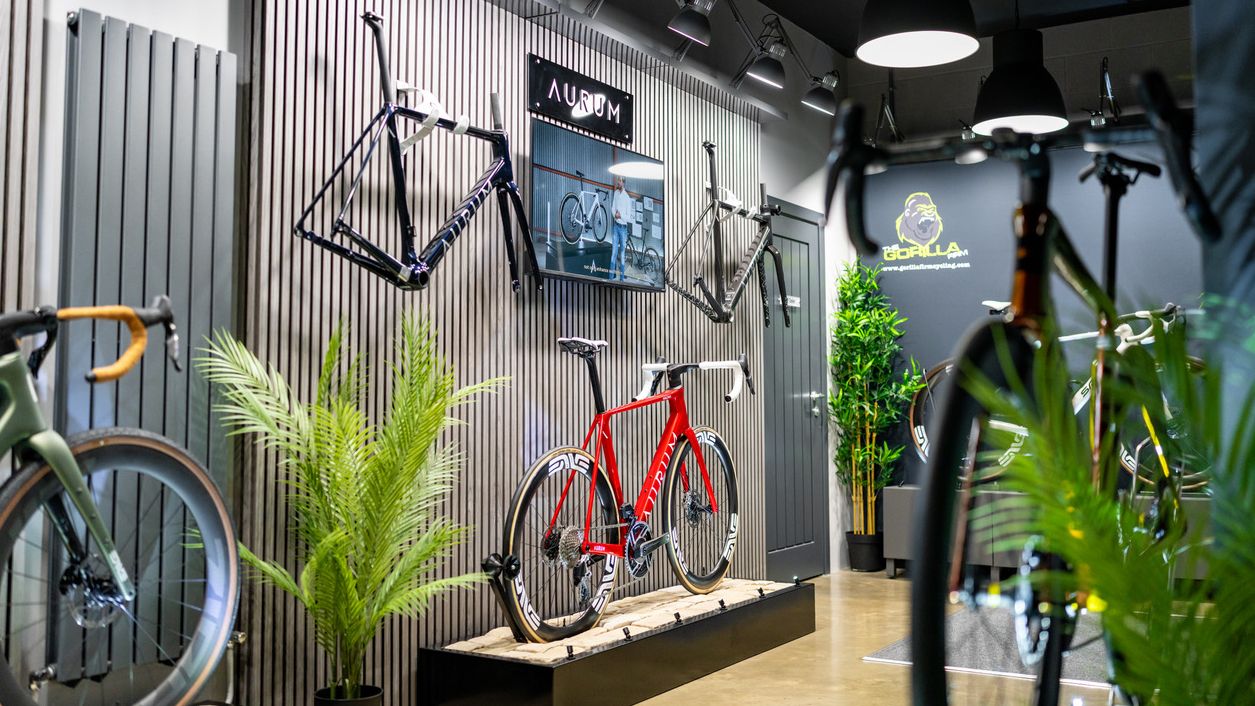
Some shops, like Gorilla Firm, have adopted a fully bespoke model. Owner Justine Perkins states that they differentiate themselves by delivering a “level of bespoke, personal service that can’t be boxed and shipped.” The shop attracts customers from across the UK and beyond, building its reputation through word-of-mouth and high-quality custom builds.
HYPT Bike Performance in Durham has taken a different route, specializing in high-end road and gravel bikes. Founder David Robinson recognized the increasing demand for premium bikes, which typically cost upwards of £10,000, and designed the shop to provide a retail experience that reflects that level of investment. The showroom features an immaculate workshop and offers ID Match bike fitting services.
The common thread among these successful independent shops is a rejection of direct competition with online retailers. Instead, they focus on providing expertise, service, community, and trust – elements that online platforms struggle to replicate. Investment from brands and manufacturers in improved retailer relationships has also played a role, but the key is a clear identity and skilled staff. The shops that have thrived are those that have stopped trying to be websites and started functioning as clubs, studios, and social spaces where knowledge is shared and relationships are built.
