How Governments Are Weaponizing AI Safety to Coerce Tech Companies
The Prisoner’s Dilemma: How State Coercion Rewires AI Safety
In March 2026, the Trump administration designated Anthropic a national security risk, effectively blacklisting the company from federal contracts due to its refusal to strip safety guardrails from its Claude LLM. This maneuver marks a shift in the AI industry: the government is no longer just a regulator, but an active participant forcing a “race to the bottom” by leveraging multi-billion dollar defense contracts to incentivize the removal of ethical constraints. The result is a quiet reorientation of safety protocols away from public protection and toward state-controlled functionality.
The Tech TL;DR:
- Regulatory Weaponization: The U.S. government is using “anti-woke” executive orders to frame ethical safety guardrails as ideological impediments, pressuring firms to discard them to remain eligible for defense contracts.
- The Prisoner’s Dilemma: Tech firms face a binary choice: maintain safety protocols and lose massive government revenue to competitors, or strip guardrails to secure the contract and maintain market competitiveness.
- State-Oriented Compliance: Safety research is not disappearing; it is being “re-platformed” to ensure AI systems are controllable by the state, rather than safe for the general public.
The Mechanics of Regulatory Coercion
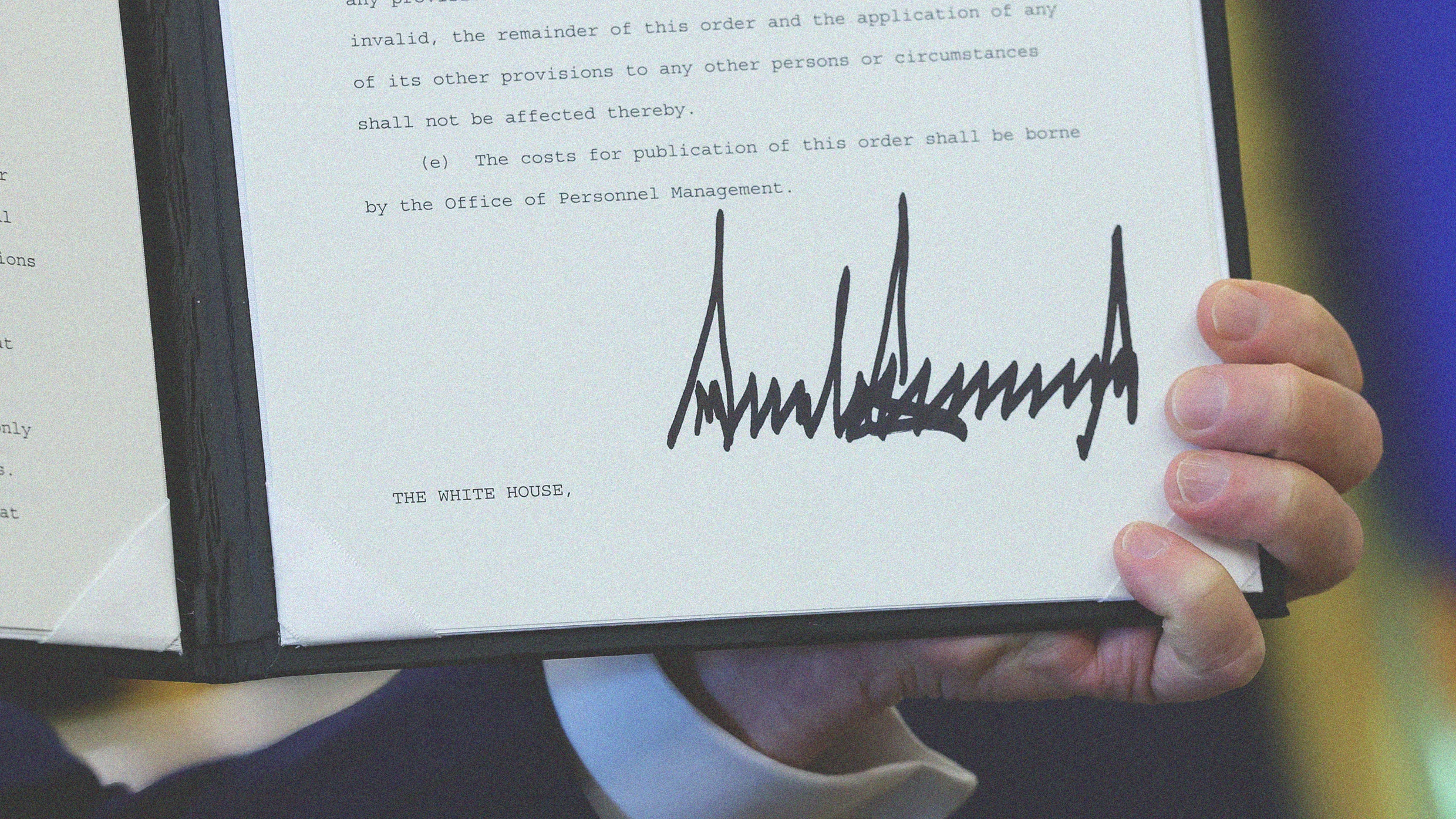
The “Preventing Woke AI” executive order, issued July 23, 2025, functions as a strategic pivot in federal procurement policy. By categorizing ethics-based safety constraints as “ideological impositions,” the administration has effectively lowered the barrier for defense contractors to remove internal safety checks. According to the Brennan Center, the government is weaponizing terms like “biased” in contract negotiations to disqualify firms that prioritize civil rights protections, forcing companies into a choice between core principles and federal market share.
For an enterprise CTO, this creates a volatile environment for supply chain integrity. When safety teams—such as OpenAI’s former Superalignment unit or Microsoft’s ethics team—are dissolved, the underlying model architecture loses its alignment with public-facing safety standards. Developers relying on these APIs must understand that “safety” in the current federal context implies state-controllable output, not necessarily robustness against prompt injection or data leakage.
To verify the current state of an LLM’s safety protocols when integrated into a secure pipeline, engineers should audit the model’s system prompt and safety filtering layers. Use the following cURL request to test if your current implementation is adhering to expected safety return codes:
curl -X POST https://api.your-ai-provider.com/v1/chat/completions
  -H "Content-Type: application/json"
  -H "Authorization: Bearer $API_KEY"
  -d '{
    "model": "claude-3-5-sonnet",
    "messages": [{"role": "user", "content": "Explain the safety policy constraints."}],
    "temperature": 0.2
  }'
The Prisoner’s Dilemma in Defense Contracting
The transition of Pentagon AI contracts from Anthropic to OpenAI illustrates the prisoner’s dilemma in high-stakes software development. As noted in the reporting, while OpenAI CEO Sam Altman characterized the decision to replace Anthropic as “opportunistic and sloppy,” the firm proceeded because the cost of losing the contract—and the future competitive advantage it provides—outweighed the reputational damage. This is a classic architectural trap: when the state acts as the primary buyer, it dictates the technical requirements, including the removal of constraints that might hinder military utility.
Companies like Palantir have navigated this by aligning their business model directly with state infrastructure. This creates a divergence in the ecosystem: firms that maintain ethical guardrails are effectively excluded from the most lucrative data-heavy contracts, while those that “defect” by stripping safeguards see their stock and influence grow. This is not merely a market shift; it is a forced migration of technical standards.
For organizations navigating this landscape, partnering with [Managed Cybersecurity Auditors] is essential to ensure that your internal AI deployments do not inadvertently inherit the risks associated with state-oriented, stripped-down models. If your firm relies on third-party AI, you must conduct independent validation of the model’s SOC 2 compliance and ensure that containerization of these models includes your own proprietary guardrails that are not subject to the provider’s shifting federal mandates.
Infrastructure and the Future of AI Alignment
The shift is not about the absence of safety research, but the redirection of it. As Michael Gregory of Clemson University notes, the framing of ethics as “woke” rather than “technical” allows for the dismantling of public-facing protections under the guise of “correction.” For engineers, this means that the “safety” of a model is now a variable dependent on the client’s relationship with the state. The technical risk is no longer just an LLM hallucination or a latency issue; it is a policy-driven back-door to model behavior.

As the U.S. military continues to utilize these tools—such as the reported targeting of sites in Iran—the necessity for [Independent AI Risk Assessors] becomes clear. Enterprise IT departments must move toward a model of “trust-but-verify,” where the underlying model provider’s safety claims are treated as marketing, and the technical implementation is audited by [Cybersecurity Compliance Agencies]. Relying on a single vendor’s internal safety team is no longer a sound engineering strategy in a climate where those teams are being quietly hollowed out to meet federal compliance demands.
The trajectory of this technology suggests that we are entering an era of “sovereign AI,” where models are intentionally tuned to serve the interests of the state that hosts the compute. For the developer community, the challenge is to maintain interoperability and safety in a world where the primary infrastructure providers are being coerced into discarding the very protections that make AI systems reliable and ethical for public use.
Disclaimer: The technical analyses and security protocols detailed in this article are for informational purposes only. Always consult with certified IT and cybersecurity professionals before altering enterprise networks or handling sensitive data.