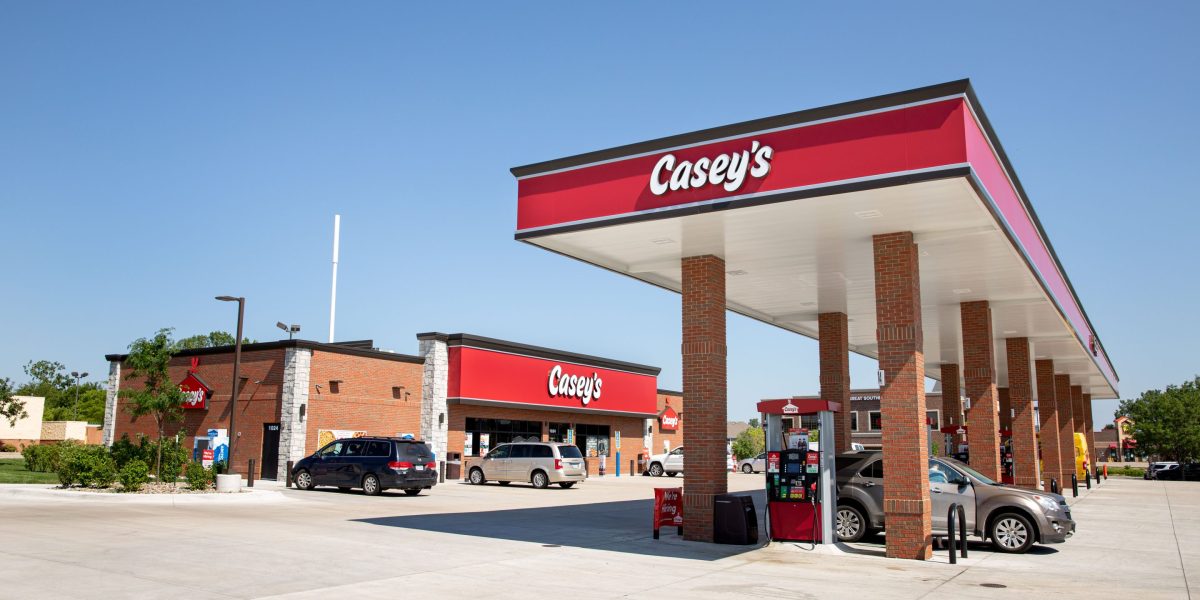
How Casey’s Quietly Became America’s Fifth-Largest Pizza Chain
Casey’s General Stores has quietly emerged as the fifth-largest pizza chain in the United States, propelled by a sprawling footprint of nearly 3,000 red-roofed convenience stores across America’s heartland. Bank of America Research calculations place the Fortune 500 gas station operator among national pizza giants based on prepared food and dispensed beverage revenue, driven by surging demand in small towns and a viral Gen Z social media following.
Small-Town Roots Fuel a Convenience Store Behemoth
Driving through Iowa, Missouri, or Illinois, motorists encounter a Casey’s roughly every few highway exits. Donald Lamberti opened the first converted service station in Boone, Iowa, in 1968 with a simple hypothesis: small-town builds would scale. That slow-and-steady expansion created a defensible economic moat. Most national quick-service competitors ignore towns with populations under 5,000. Casey’s filled that vacuum, placing nearly half its stores in tiny hamlets and roughly two-thirds in communities under 20,000 residents.
Wall Street Responds to Rural Dominance
That geographic dominance translates directly to public market performance. The company’s stock price climbed more than 50% over the trailing 12-month window, pushing its market capitalization to approximately $28 billion. Such metrics reflect strong operational resilience, particularly as Technomic data shows the broader $31 billion quick-service pizza category turned negative in 2025 after flatlining the previous year.

Tom Brennan, Casey’s chief merchandising officer, confirmed in an interview with Fortune that the enterprise ranks as the fifth-largest pizza chain, fourth-largest liquor license holder, and third-largest convenience store operator nationwide. You don’t hear the other big pizza players talk about Casey’s, Brennan noted, but the growth makes clear that the chain continues taking market share. Industry benchmarks like PMQ Pizza Magazine’s Pizza Power Report traditionally track dedicated chains such as Domino’s, Pizza Hut, Little Caesars, and Papa John’s, leaving Casey’s off conventional pizza tallies because its revenue model bundles fuel, lottery tickets, and scratch-made breakfast and taco pizzas.
TikTok Fame Meets Scratch-Made Dough
Digital platforms have transformed rural convenience store runs into viral sensations. TikTok and YouTube feature a durable genre of gas-station food reviews where creators express surprise at finding authentic scratch-made dough and on-site ovens behind the counter. According to Brennan, Casey’s internal marketing analytics show Gen Z engagement climbed 600 basis points over the past three years. The brand relies on authentic community fandom rather than digital algorithms, serving as a vital gathering spot for small-town residents.

Menu Innovation and Scaling the Supply Chain
Expansion continues beyond traditional slice menus. Sauced Wings launched as a pilot program in January 2025 and quickly scaled to nearly 900 stores, with a full chain rollout slated over the next two years.