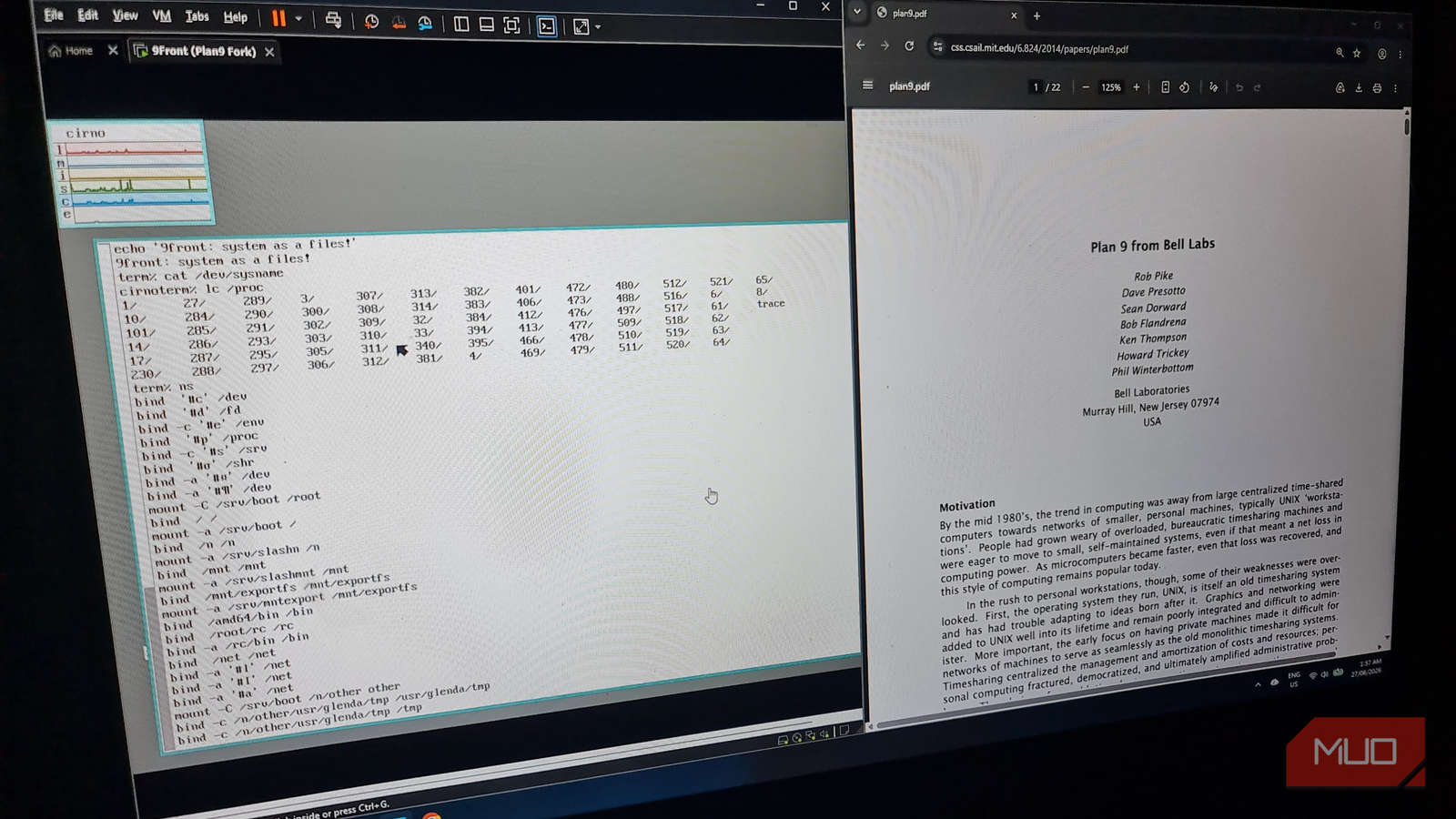
How Bell Labs’ Plan 9 OS Influences Modern Computing
The Plan 9 Legacy: How Bell Labs’ Failed OS Infiltrated Modern Infrastructure
Plan 9 from Bell Labs, a distributed operating system project once relegated to the status of a commercial failure, currently serves as the architectural blueprint for some of the most critical components of modern cloud computing and container orchestration. While the OS never achieved mass-market desktop adoption, its core philosophy—treating everything as a file and prioritizing network-transparent resource sharing—has been silently integrated into the fabric of Linux, Go, and distributed storage systems.
The Tech TL;DR:
- Architectural DNA: Plan 9’s “everything is a file” (9P protocol) abstraction is the direct ancestor to modern virtual file systems and container namespaces.
- Cloud Infrastructure: The Go programming language, developed by Plan 9 alumni at Google, carries the OS’s concurrency model and minimalist design into enterprise backends.
- Security Implications: Legacy design choices from Bell Labs continue to influence how modern microservices handle inter-process communication (IPC) and resource isolation.
Decoding the 9P Protocol and Modern Namespace Isolation
The primary innovation of Plan 9 was the 9P protocol, which allowed for the seamless sharing of resources across a network as if they were local files. According to historical technical documentation from the Plan 9 Foundation, this design eliminated the distinction between local and remote devices. In today’s containerized environments, this abstraction is fundamental to how Docker and Kubernetes manage namespaces.

When a developer spins up a container, the kernel uses techniques derived from Plan 9’s namespace isolation to present a private view of the filesystem to the process. This prevents the “dependency hell” that plagued early UNIX systems. For enterprise IT teams struggling with complex cluster management, the failure to understand these low-level abstractions can lead to significant configuration drift. Firms requiring deep-dive audits of their container orchestration stacks often engage specialized DevOps engineering agencies to ensure that their underlying kernel configurations adhere to modern security standards.
The Go Connection: A Language Built on Bell Labs Logic
The transition from Plan 9 to modern production environments is most visible in the Go programming language (Golang). Created by Rob Pike, Ken Thompson, and Robert Griesemer—all of whom worked on Plan 9—Go inherits the OS’s focus on CSP (Communicating Sequential Processes). Unlike traditional threaded models, Go’s goroutines provide a lightweight mechanism for concurrency that mirrors the resource-efficient scheduling found in the original Plan 9 kernel.

As noted in the official Go language documentation, the goal was to simplify the complexity of large-scale software development. By baking the scheduler into the runtime, Go effectively offloads the heavy lifting from the OS kernel, a direct evolution of the Plan 9 philosophy where the kernel manages resources but the user-space handles the logic flow.
// Example: Demonstrating concurrency patterns inspired by Plan 9 messaging
package main

import "fmt"

func main() {
    messages := make(chan string)
    go func() { messages <- "ping" }()
    msg := <-messages
    fmt.Println(msg)
}
Why Enterprise Infrastructure Remains Vulnerable to Legacy Debt
The ubiquity of Plan 9-derived concepts creates a unique attack surface. Because these protocols were designed for a trusted, experimental environment at Bell Labs, they often lack the robust, granular access control lists (ACLs) required by modern SOC 2 compliance standards. Cybersecurity researchers have frequently pointed out that the abstraction of "everything as a file" can lead to privilege escalation if the underlying filesystem permissions are misconfigured.
For organizations deploying high-frequency trading platforms or sensitive data lakes, the reliance on these legacy patterns requires rigorous oversight. Enterprises are increasingly turning to independent cybersecurity auditors to perform static analysis on their infrastructure-as-code (IaC) templates, specifically looking for insecure mounts that mirror the permissive nature of early 9P implementations.
The Future of Distributed Systems
The failure of Plan 9 as a commercial product was primarily a failure of timing and market entry, not of engineering quality. As we move toward edge computing and more decentralized architectures, the "network-transparent" ideals of Plan 9 are becoming the standard rather than the exception. The industry is effectively rebuilding the vision Bell Labs had in the 1990s, albeit with modern encryption and hardware acceleration.
Engineering leaders should view these legacy architectures not as obsolete code, but as the foundational logic that powers their current stacks. As data latency becomes the primary bottleneck for AI model inference and real-time processing, the lessons learned from Plan 9’s resource-sharing model will likely see a resurgence in the next generation of micro-kernels and unikernels. For firms looking to optimize their performance, partnering with specialized IT infrastructure consultants is the most efficient path to reconciling legacy patterns with modern performance requirements.
Disclaimer: The technical analyses and security protocols detailed in this article are for informational purposes only. Always consult with certified IT and cybersecurity professionals before altering enterprise networks or handling sensitive data.