How AI Agents Are Transforming Software Engineering and Dev Workflows
AI Coding Agents Blow Through Enterprise Budgets as Replit, Kilo Code, and Symbotic Rethink Token Spend
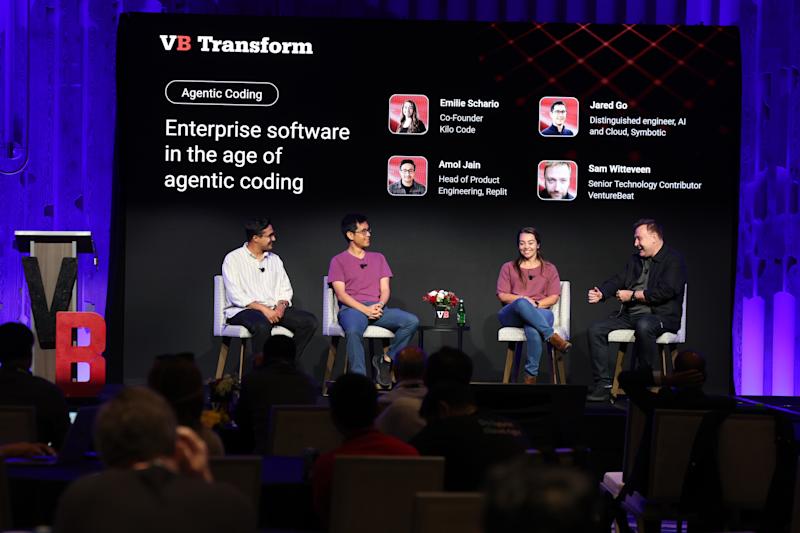
According to Emilie Schario, co-founder of Kilo Code, engineers read or write raw code themselves only about 1% of the time during standard workflows, leaving the vast majority of implementation, testing, and debugging to specialized agentic models. While this shift promises massive productivity gains, it is also forcing CTOs to rethink how they track API expenditures, implement multi-model architectures, and manage safety boundaries in production environments.
The Tech TL;DR:
- The Core Issue: Widespread deployment of autonomous coding agents has triggered skyrocketing token bills, forcing engineering teams to carefully balance raw speed against compute expenditure.
- The Architectural Fix: Industry leaders are implementing multi-model gateways—using expensive frontier models strictly for architectural planning and cheap open-weight models for execution.
- The Operational Shift: Companies are transitioning away from flat-rate legacy developer tools toward granular tier-based budgeting and metric tracking centered on cost-per-pull-request.
Shifting From Greenfielding to Brownfield Maintenance
The operational reality of agentic engineering exposes a stark dichotomy between greenfield development and brownfield maintenance. According to Jared Go, distinguished engineer for AI and cloud at warehouse automation firm Symbotic, greenfield building is exceptionally straightforward for current models, whereas maintaining, updating, or refactoring existing codebases remains the primary hurdle. Go notes that engineering teams must establish strict criteria focused on security, elegance, and clean, concise code to ensure agents do the heavy lifting while minimizing the need for intensive human code review.
This division of labor changes daily workflows. At Kilo Code, Schario noted at VB Transform 2026 that unless systems are broken or developers are deep in active debugging, humans rarely touch raw syntax. Yet, human oversight remains vital further down the deployment pipeline because current models struggle with high-level product decisions.
Agentic Workflows and Risk Scoring at Scale
Different platforms are taking distinct architectural routes to handle autonomous task execution. Replit has adopted a deeply agentic posture, deploying internal tools where developers hand off entire tasks to agents capable of end-to-end planning, implementation, and testing. According to Amol Jain, head of product engineering at Replit, these operations occur inside isolated cloud virtual machines secured behind token proxies.
“The idea was human on the loop, not human in the loop,” Jain said. Replit’s infrastructure subjects every agent-generated pull request to an automated risk score. Low-risk updates are self-merged by their authors, while higher-risk changes route to human reviewers. Jain highlighted a case where human engineers were stumped by a complex bug deep within core systems. An AI manager agent took over, placed the task into a sleep cycle, and dynamically spun up auxiliary agents to isolate the issue and formulate a fix, producing a validated pull request within six hours.
Multi-Model Strategies and Cost Control via Token Routing
To combat runaway token bills, engineering teams are rapidly abandoning vendor lock-in in favor of multi-model routing architectures. Kilo Code’s gateway currently supports over 500 distinct models. Schario emphasizes that software used for agentic engineering must remain completely decoupled from the underlying model provider. Organizations frequently utilize high-tier, expensive frontier models for initial project architecture and debugging logic, then switch to lower-cost open-weight models for routine code generation.
Similarly, Replit manages the cost-versus-capability spectrum automatically on behalf of its users, selecting optimal models dynamically. This programmatic restraint is becoming mandatory as financial pressure mounts. Schario noted instances where developers with a “heavy foot” generated daily usage bills scaling into hundreds of dollars, forcing teams to evaluate efficiency through a new lens. “Cost per pull request is the metric that I’m paying attention to right now,” Schario said, noting that overall spend matters less than ensuring a measurable return on investment.
Symbotic handles cost containment by enforcing strict per-month tier caps for employees. The company constructed internal visibility dashboards tracking pull requests and usage trends, allowing managers to adjust user tiers dynamically. This internal accountability became urgent after developer tool providers—such as Cursor—phased out legacy grandfathered discounts, moving enterprise clients to full-rate pricing models.
The financial impact of agentic workflows also extends past traditional engineering departments. Jain recounted an incident where support personnel utilizing autonomous automations accidentally exhausted significant financial limits by running continuous loops on advanced models like GPT 5.5 Pro Max. Incidents like these demonstrate that unless organizations implement sensible defaults, strict token caps, and intelligent model routing, autonomous AI deployment can quickly drain departmental IT budgets.
The Path Forward for Enterprise AI Infrastructure
As agentic systems mature throughout 2026, the primary constraint on software development is no longer human typing speed or raw algorithmic capability, but rather financial governance and infrastructure visibility.