How Affordable Eyeglasses are Boosting Productivity in Bangladesh’s Garment Industry
Research published in the British Journal of Ophthalmology indicates this intervention yields a 3.37x return on investment, potentially unlocking $27 billion in global industry output.
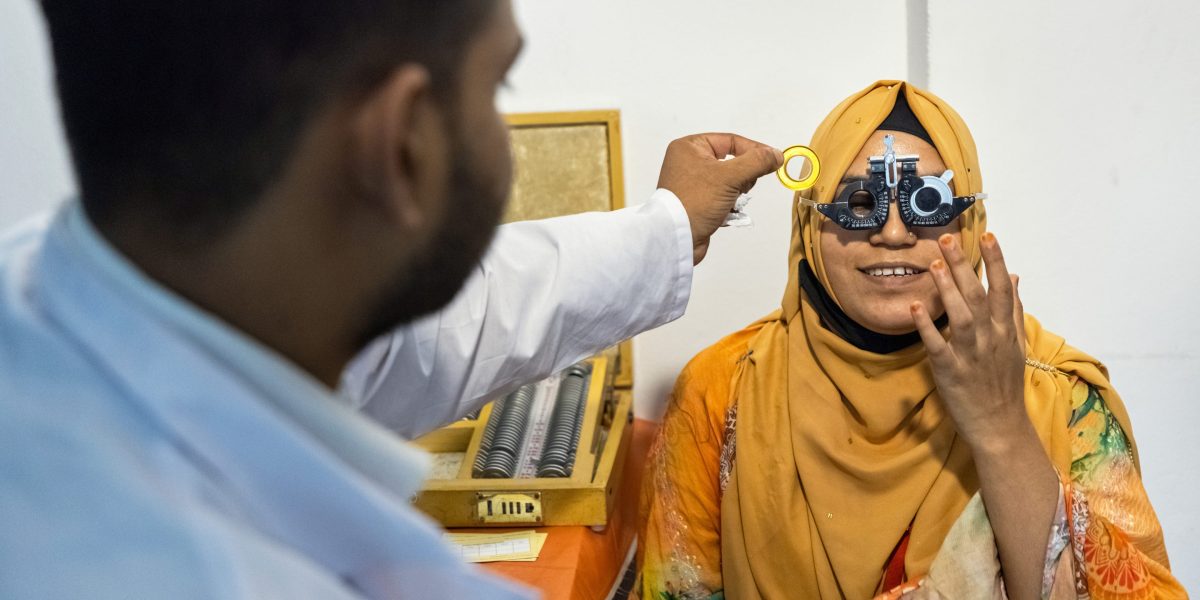
For operators like Ruma Aktar, the inability to see fine stitches clearly was not merely a physical discomfort but a systemic bottleneck in high-volume production. When thousands of garments pass through a single line daily, minute errors in needlework or button placement force costly rework cycles. According to data from VisionSpring, roughly one-third of the garment workforce in Bangladesh requires vision correction but lacks access, effectively creating an invisible drag on operational efficiency across the sector.
Quantifying the Productivity-Vision Correlation
The financial argument for vision correction has moved beyond corporate social responsibility into the realm of hard asset management. A randomized controlled trial co-authored by Ella Gudwin, CEO of VisionSpring, demonstrated that providing reading glasses to sewing machine operators leads to immediate improvements in quality control. The study found that every $1 invested in screening and eyewear generates $3.37 in productivity gains within a 12-week window.
These findings suggest that the textile industry has been operating with a persistent, avoidable inefficiency. For managers, the failure to address age-related presbyopia—which typically onset in the late 30s—results in increased material waste and slower throughput. Companies like Masco Group, which has already screened 5,000 employees with plans to expand to its full 20,000-person workforce, have explicitly framed these screenings as a capital investment rather than a discretionary expense.
The Hidden Costs of Uncorrected Sight
The garment sector, which accounts for approximately 11% of Bangladesh’s gross domestic product and employs 4 million people, faces unique challenges in maintaining consistent quality standards. When workers struggle with eye strain and headaches, the result is a higher rate of rejected items and skipped stitches.
Fahima Akhter, a director at Masco Group, noted that management often remained unaware of the scale of vision impairment because employees rarely self-reported these issues, viewing glasses as a prohibitively expensive luxury. By bringing screenings directly into the factory floor, companies remove the friction of access. This proactive approach to human capital management is becoming a standard marker of operational maturity in the region.
Scaling Human Capital Investment
The potential for a $27 billion industry-wide gain rests on the shift from viewing eyewear as a personal medical expense to recognizing it as an essential piece of industrial equipment.
Without these systems, the correlation between worker health and bottom-line growth remains anecdotal rather than data-driven.