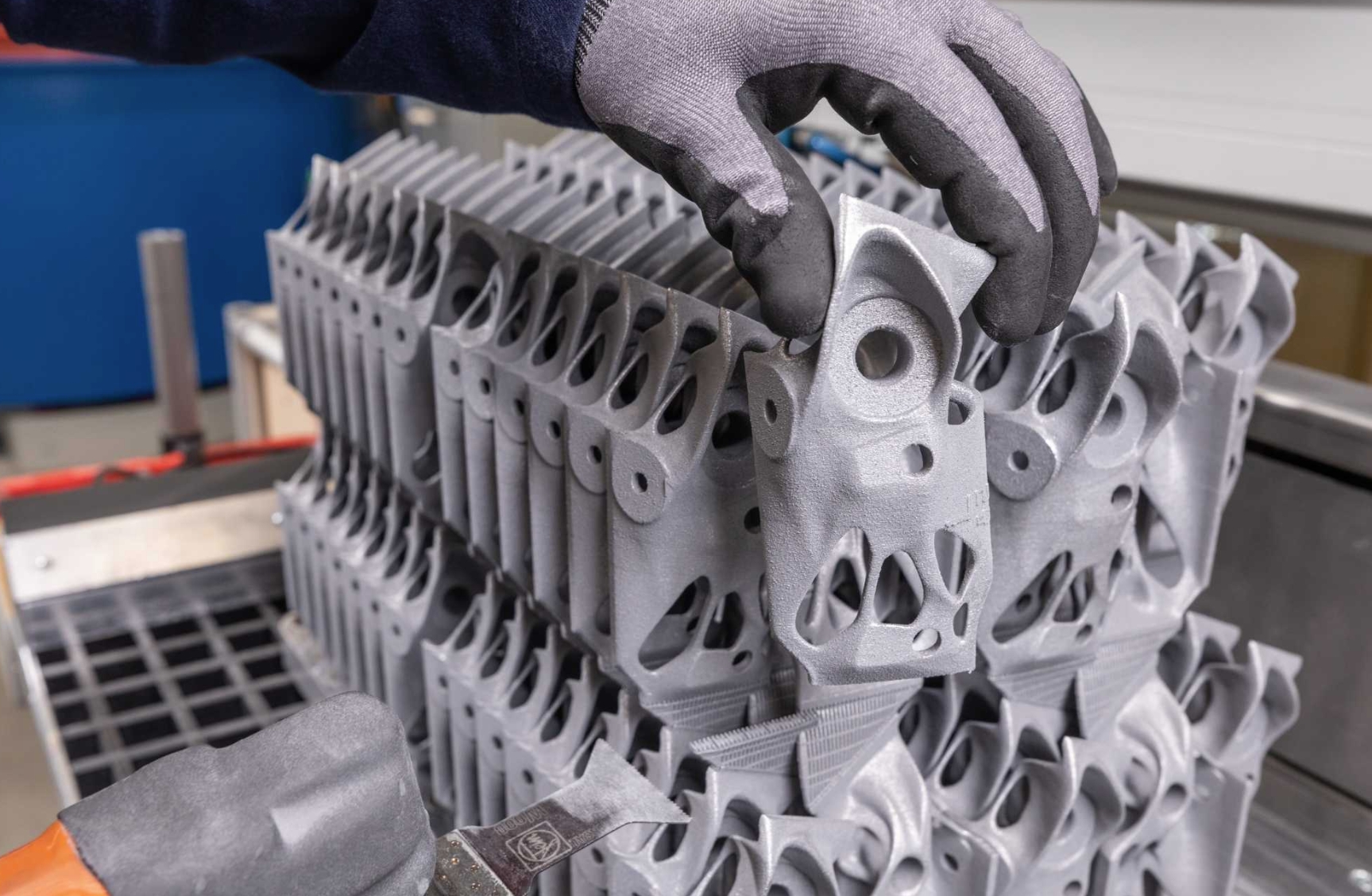
How 3D Printing is Transforming Car Manufacturing with Part Consolidation
Industrial additive manufacturing is transitioning rapidly from rapid prototyping to final-part production, driven by new high-performance materials and thermal management techniques. Recent developments in Spain and South Korea highlight how the technology is overcoming historical limitations in mechanical strength and layer-to-layer cohesion across the automotive and aerospace sectors.
- Project L3DO, coordinated by researcher David Diego Vallejo at the AIMEN Technology Centre in Galicia, utilizes laser-assisted extrusion to process high-performance thermoplastics.
- Hyundai Motor and Kia launched the Additive Manufacturing Solutions Center (AMSC) in South Korea to advance polymer and metal 3D printing for production environments.
- Both initiatives prioritize thermal control during deposition to prevent structural warping and improve mechanical performance in complex geometries.
Thermal Control and Laser-Assisted Extrusion in Galicia
The AIMEN Technology Centre’s Project L3DO addresses the challenge of printing high-performance thermoplastics, which offer superior mechanical and thermal resistance compared to traditional materials like PLA but suffer from processing difficulties. These materials demand stringent temperature control to prevent structural deformation during deposition. The project employs a localized laser-heating method that targets only the specific deposition zone rather than heating the entire surrounding area. This localized approach prevents thermal distortion and strengthens the bonding between printed layers.
Backed by the Xunta de Galicia regional government through the Ignicia proof-of-concept program, the research team has constructed a functional prototype and is preparing to spin off a startup enterprise. Project coordinator David Diego Vallejo notes that the Ignicia support has been vital for building commercial confidence. Market consultations conducted by the team reveal strong interest from industrial partners, particularly in automotive prototyping and aerospace component manufacturing. For the automotive sector, the technology enables small-batch production of specialized test parts, while drone manufacturers can utilize the system to print lightweight, highly customized structural components.
Dedicated Infrastructure for Automotive Production in South Korea
Parallel to the European development, South Korean automakers Hyundai Motor and Kia inaugurated the Additive Manufacturing Solutions Center (AMSC). This dedicated facility concentrates exclusively on research and production applications for polymer and metal additive manufacturing. By moving beyond temporary, brittle prototypes, the facility focuses on fabricating final-use parts that match the thermal and mechanical tolerances required in modern vehicle assembly.

Both the Galician initiative and the South Korean automotive center converge on a singular manufacturing requirement: eliminating structural delamination through precise thermal monitoring. By utilizing targeted laser energy or industrial production loops, these facilities reduce reliance on traditional tooling and casting molds. This reduction in tooling dependency shortens development cycles for complex geometries, allowing manufacturers to iterate functional parts rapidly.
*Disclaimer: The information provided in this article is for educational and scientific communication purposes only and does not constitute medical advice. Always consult with a qualified healthcare provider regarding any medical condition, diagnosis, or treatment plan.*