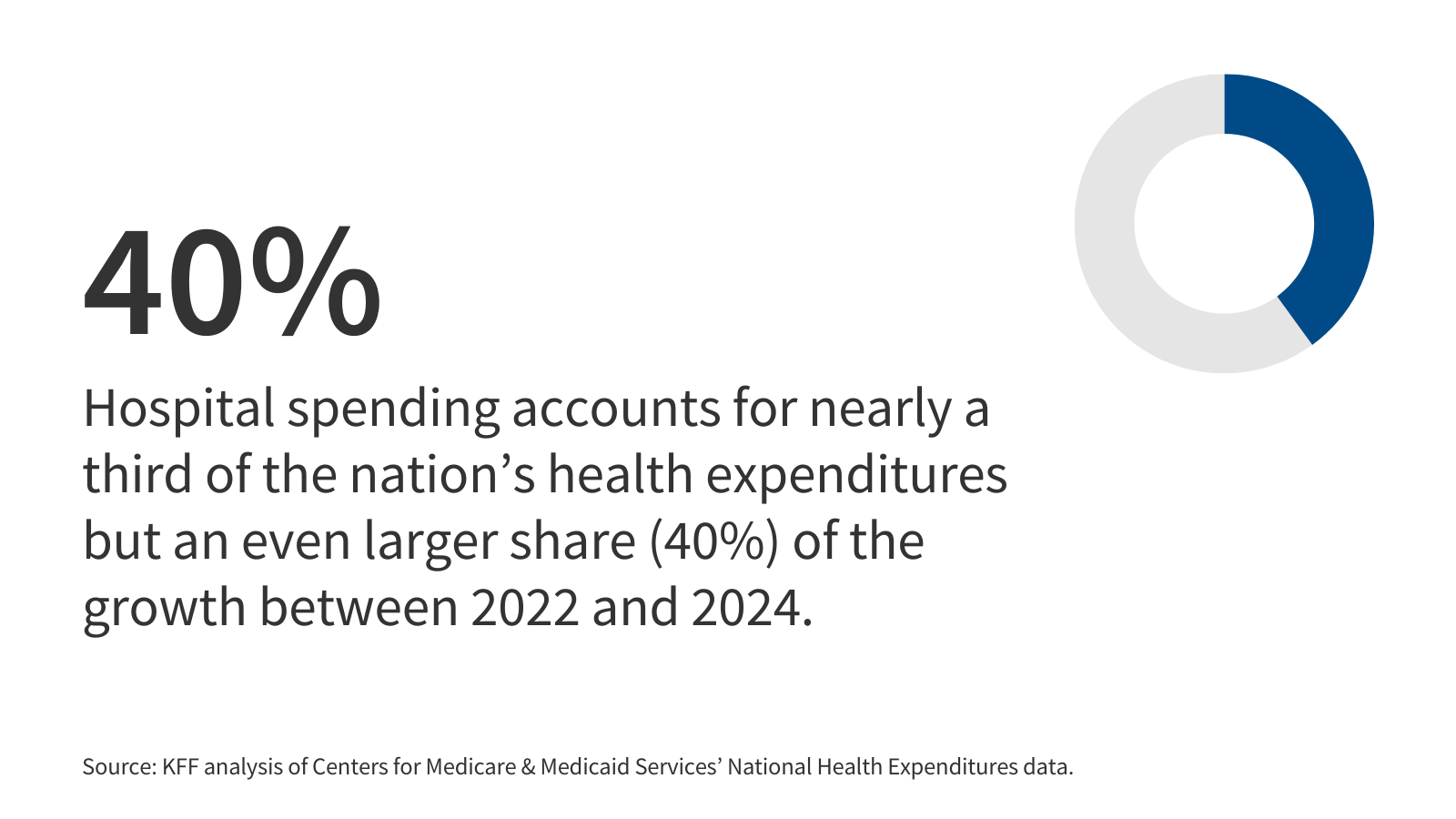
Hospital Spending Drove 40% of US Health Cost Growth (2022-2024)
Hospital Costs Drive National Health Spending Surge
National health expenditures in the United States reached $5.3 trillion in 2024, an increase of $692 billion over the previous two years, with hospital care accounting for a disproportionate 40% of that growth, according to data from the Centers for Medicare & Medicaid Services (CMS).
Between 2022 and 2024, spending on hospital care rose by $277 billion. This surge significantly outpaced other major healthcare spending categories, including physician and clinical services (22% of the growth) and retail prescription drugs (11%). The increase in hospital spending reflects both a rebound in service utilization following the COVID-19 pandemic and a notable rise in hospital prices.
CMS data indicates that the growth in hospital spending during 2023 and 2024 was largely attributable to increased service volume and intensity, which were suppressed during the height of the public health emergency. However, hospital prices also contributed, increasing by 2.7% in 2023 and 3.4% in 2024 – the fastest rate of growth since 2007.
While hospital price growth encompasses spending from Medicare, Medicaid, and commercial insurers, prices in public programs have historically grown at a slower pace than commercial prices. The overall increase in national health expenditures from $4.6 trillion to $5.3 trillion between 2022 and 2024 underscores the escalating costs facing families, employers, and government programs.
Over the longer term, from 2005 to 2024, hospital spending accounted for 32% of the overall increase in national health spending. CMS projects that hospitals will account for 32% of spending growth through 2033, a slight decrease from the recent 40% share. However, this still positions hospitals as a primary driver of healthcare cost increases.
Total hospital spending has increased by $1 trillion over the past two decades, rising from $609 billion in 2005 to $1.6 trillion in 2024. This growth surpasses increases in spending on physician services and prescription drugs. Hospital spending now represents 5.6% of GDP, up from 4.7% in 2005, while total healthcare spending has climbed to 18.0% of GDP from 15.5% over the same period.
The increase in hospital spending is linked to both price increases and a greater volume of services. From 2005 to 2024, hospital prices, as measured by the Producer Price Index, increased by 61%. During the same period, total hospital inpatient days decreased by 5%, but outpatient visits rose by 44%. This shift towards outpatient care, coupled with rising prices, has contributed significantly to the overall increase in hospital spending.
Recent reports from KFF Health News indicate that states are already cutting Medicaid provider payments to address budget gaps, raising concerns about access to care and potential hospital closures. The Centers for Medicare & Medicaid Services is also investigating potential waste, fraud, and abuse within Medicaid programs in several states that have expanded coverage to immigrants without legal status.
The continued growth in hospital spending is expected to place further strain on public programs like Medicare and Medicaid, as well as on employers and families, exacerbating concerns about healthcare affordability. CMS projects that hospital spending will reach 6.4% of GDP by 2033, with total national health expenditures rising to 20.3% of GDP.