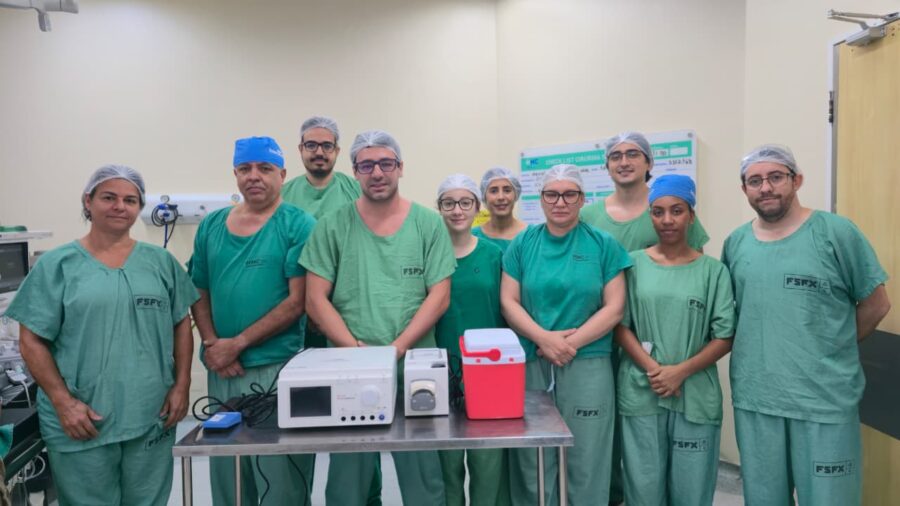
Hospital Márcio Cunha Performs First Thyroid Radiofrequency Ablation in Eastern Minas Gerais
The introduction of radiofrequency ablation (RFA) at Hospital Márcio Cunha marks a pivotal shift in the endocrine care landscape for Eastern Minas Gerais. By performing the region’s first RFA for thyroid nodules, the institution has transitioned from traditional surgical reliance toward a minimally invasive paradigm that prioritizes organ preservation and reduces patient morbidity.
Key Clinical Takeaways:
- Minimally Invasive Alternative: RFA provides a non-surgical option for treating benign thyroid nodules, eliminating the need for general anesthesia and large incisions.
- Regional Access: The availability of this technology in Eastern Minas Gerais removes significant geographical barriers for patients who previously had to travel to major metropolitan hubs for advanced endocrine interventions.
- Preservation of Function: Unlike total or partial thyroidectomies, RFA targets specific nodular tissue, significantly lowering the risk of permanent hypoparathyroidism and recurrent laryngeal nerve damage.
Thyroid nodules are remarkably prevalent in the general population, often discovered incidentally during routine imaging. While the majority are benign, symptomatic nodules—those causing dysphagia, dyspnea, or visible cosmetic deformity—present a clinical challenge. For decades, the standard of care for symptomatic benign nodules was surgical resection. However, the pathogenesis of these nodules often allows for more conservative management, and the risks associated with open thyroid surgery, including the potential for lifelong hormone replacement therapy, have driven the search for more precise interventions.
The Biological Mechanism of Thermal Coagulation
Radiofrequency ablation operates on the principle of thermal energy delivery to induce controlled coagulation necrosis. Using an ultrasound-guided approach, a thin electrode is inserted directly into the thyroid nodule. High-frequency alternating current creates frictional heat among the intracellular and extracellular ions, raising the tissue temperature to a point where cellular proteins denature and the blood supply to the nodule is cauterized.
This process causes the nodule to shrink over time as the body resorbs the necrotic tissue. Because the procedure is performed under local anesthesia and guided by real-time imaging, the precision is significantly higher than traditional surgical margins. This precision is critical in the thyroid gland, where the proximity to the recurrent laryngeal nerve and the parathyroid glands makes any surgical deviation potentially debilitating.

“The transition toward thermal ablation represents a fundamental shift in endocrine surgery. We are moving away from the ‘remove and replace’ philosophy toward a ‘target and preserve’ strategy, which drastically improves the patient’s quality of life by maintaining natural thyroid homeostasis.”
For patients navigating the diagnosis of a symptomatic nodule, the first step is always a rigorous diagnostic workup. This proves essential to consult with board-certified endocrinologists to ensure the nodule is confirmed as benign via fine-needle aspiration (FNA) before considering ablation, as RFA is generally contraindicated for suspected malignancies.
Addressing the Clinical Gap in Regional Healthcare
The implementation of RFA at Hospital Márcio Cunha addresses a critical gap in healthcare infrastructure within Eastern Minas Gerais. Previously, patients requiring advanced nodule treatment faced the “travel burden,” which often leads to delayed treatment or the acceptance of higher-risk surgical options simply due to accessibility. By decentralizing this technology, the hospital reduces the systemic strain on tertiary centers in larger cities and provides immediate local access to high-tier care.
This expansion of service is typically the result of strategic institutional investment in medical technology and specialized training for clinical staff. The adoption of RFA aligns with global trends seen in peer-reviewed literature, including longitudinal studies indexed in PubMed, which demonstrate that RFA is not only safe but often results in higher patient satisfaction scores compared to traditional surgery due to the absence of surgical scars and shorter recovery times.
The success of these procedures relies heavily on the synergy between the prescribing physician and the technician. The role of interventional radiologists is paramount here, as the efficacy of the ablation is directly proportional to the accuracy of the needle placement and the thoroughness of the thermal coverage within the nodule.
Comparative Morbidity and Safety Profiles
When comparing RFA to a standard thyroidectomy, the difference in morbidity is stark. Surgical intervention carries an inherent risk of creating a permanent hypothyroid state, requiring the patient to adhere to a strict daily regimen of levothyroxine. Thermal ablation, by contrast, targets only the pathological tissue, leaving the healthy parenchyma intact.
Clinical data suggests that the risk of voice alteration—a dreaded complication of thyroid surgery caused by laryngeal nerve trauma—is significantly lower in RFA cohorts. While temporary soreness or mild swelling at the injection site is common, the systemic recovery period is measured in hours rather than weeks. This allows patients to return to their professional and personal lives with minimal disruption, a factor that is increasingly prioritized in modern patient-centered care.
To ensure the highest safety standards, the procedure must be supported by high-resolution diagnostic imaging centers capable of providing precise pre-operative mapping and post-operative volumetric analysis to track the shrinkage of the nodule.
The Future of Minimally Invasive Endocrine Care
The milestone achieved by Hospital Márcio Cunha is a precursor to a broader trend of “de-hospitalization” of endocrine procedures. As the evidence base for RFA continues to grow—supported by guidelines from organizations like the American Thyroid Association and the World Health Organization’s focus on expanding access to essential surgical technologies—we can expect more regional hospitals to adopt these protocols.

The trajectory of this research suggests a future where the “surgical” thyroid nodule is treated more like a dermatological or vascular lesion: a quick, outpatient procedure with immediate results and negligible downtime. For the population of Eastern Minas Gerais, Which means a higher standard of care that balances clinical efficacy with an uncompromising focus on patient safety and quality of life.
As these technologies become more prevalent, patients are encouraged to seek out providers who combine advanced technical certification with a comprehensive understanding of endocrine health. Finding a vetted specialist through a professional directory ensures that the treatment plan is based on the latest clinical evidence and personalized to the patient’s specific biological profile.
Disclaimer: The information provided in this article is for educational and scientific communication purposes only and does not constitute medical advice. Always consult with a qualified healthcare provider regarding any medical condition, diagnosis, or treatment plan.