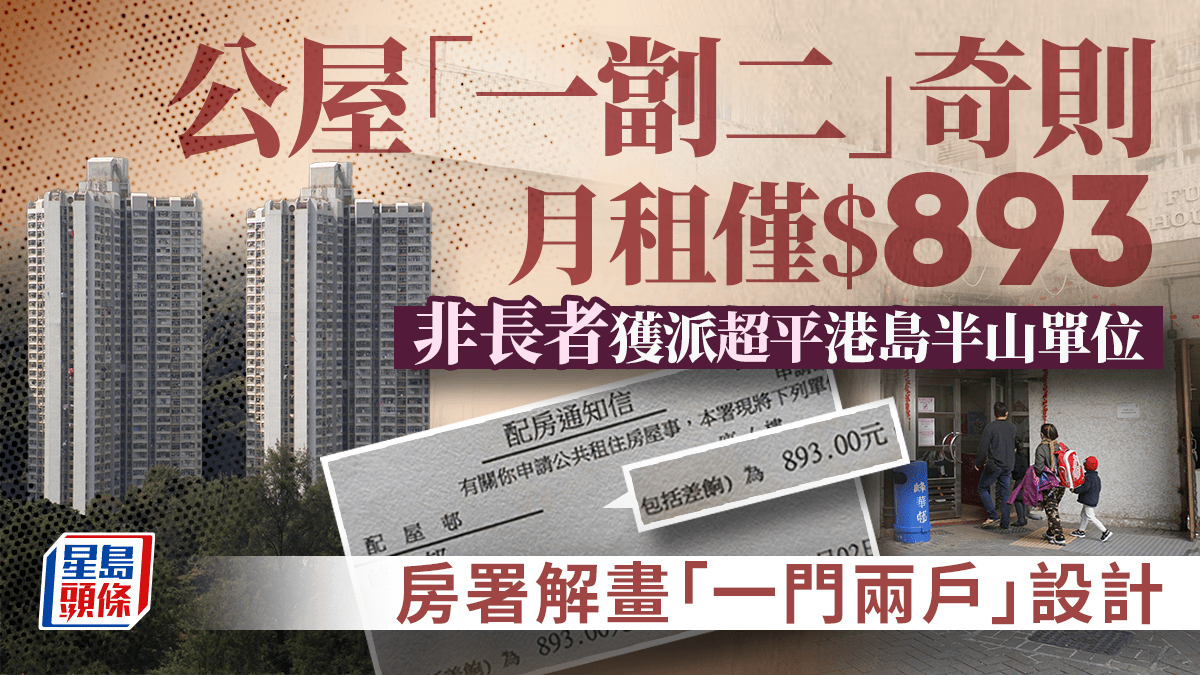
Hong Kong Public Housing Horror Stories: From Cheap Mid-Levels Units to Shared Toilets
Public housing applicants in Hong Kong are raising alarms over the emergence of unconventional “subdivided” unit designs within the government’s housing stock. Recent allocations, including units in prime Mid-Levels locations with monthly rents as low as HK$893, have sparked a debate regarding living standards, privacy, and the Housing Department’s criteria for efficient space utilization.
The “One Door, Two Households” Design Controversy
While these units offer significantly lower rental costs—some priced under HK$900—they have drawn criticism for their architectural limitations. The Housing Department maintains that these designs are intended to maximize housing supply in high-demand areas, but residents report that the trade-off involves shared facilities, such as bathrooms, which creates significant friction between unrelated tenants.
The design effectively forces a communal living arrangement on individuals who did not choose to cohabitate. For many, the low rent is overshadowed by the lack of personal space and the degradation of living conditions. This architectural approach, intended to address the chronic shortage of affordable housing, has instead become a focal point for those questioning the long-term sustainability of such high-density living models.
Infrastructure Strain and the Reality of Wait Times
The frustration is compounded by the length of time applicants spend on the waiting list. Some residents have reported waiting up to a decade before receiving an offer, only to be presented with units they describe as being in poor condition, featuring stained surfaces and aging infrastructure. This disconnect between a ten-year wait and the quality of the final offer has led to a high vacancy rate in certain blocks, with hundreds of units remaining unoccupied as potential tenants reject offers deemed unlivable.

Institutional Rationale vs. Resident Experience
The Housing Department has defended these designs, citing the need to promote social interaction among elderly residents and to optimize the use of limited land resources. However, this rationale often clashes with the reality of the residents’ daily lives. The disparity between the government’s policy goals and the actual quality of life provided in these “odd-shaped” units highlights a systemic failure to balance efficiency with basic human dignity.
The Path Forward for Public Housing
The situation remains volatile, with public sentiment heavily critical of the current allocation process. The “one door, two households” design is not merely an architectural curiosity; it is a flashpoint for a population exhausted by years of waiting for adequate shelter.

The true cost of these “cheap” units is measured not in dollars, but in the toll taken on the residents’ well-being.