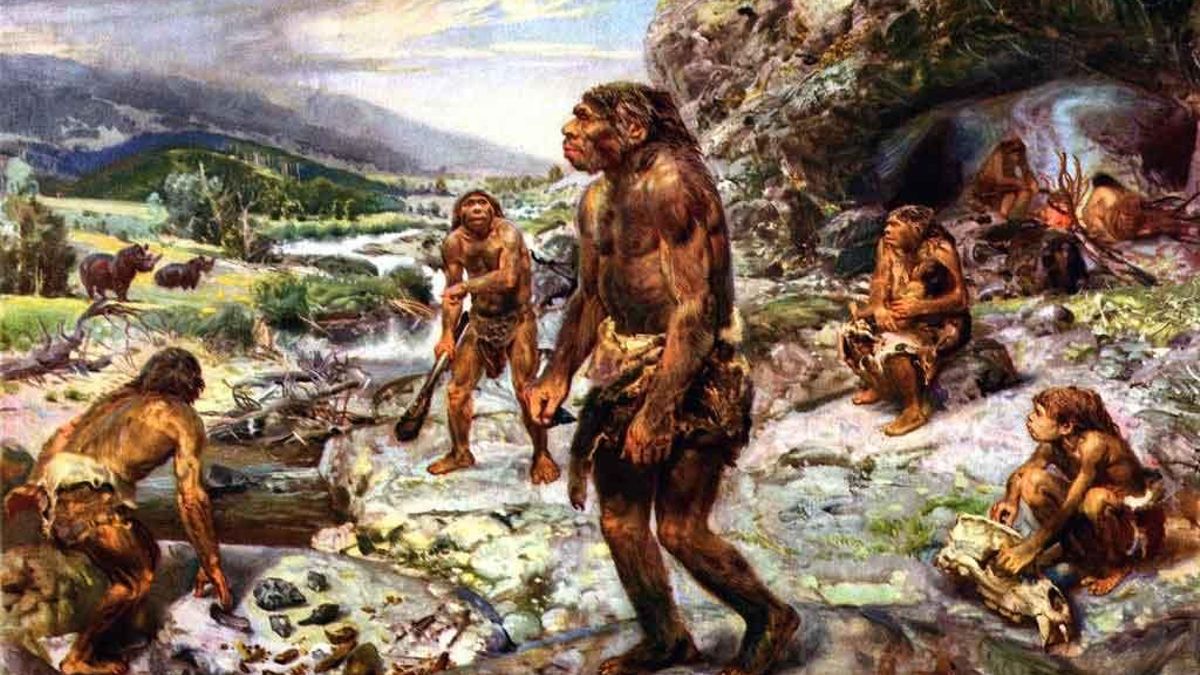
Homo Sapiens Expansion Drove Neanderthal Extinction, Study Finds
The expansion of Homo sapiens into Europe acted as a primary driver in the extinction of Neanderthals, according to a study published in the journal Science Advances on Friday.
While climate change reduced available resources, researchers found that modern human population density and group connectivity were the decisive factors in the species’ disappearance.
Climate shifts weakened Neanderthal populations
During the period between 45,000 and 40,000 years ago, Europe experienced significant climate fluctuations. These shifts altered vegetation patterns and the distribution of large herbivores, which were essential food sources for both Neanderthals and modern humans, as reported by Infobae.
The research team, led by the EvoAdapta group at the University of Cantabria, said that while these environmental changes weakened Neanderthal populations, they were insufficient on their own to trigger a total continental extinction, according to Infobae.
Simulations conducted by the researchers showed that, in isolation, climate-driven resource decline would have caused only regional disappearances. The arrival of Homo sapiens, however, fundamentally changed the demographic trajectory of the region.
By occupying territories already inhabited by Neanderthals, modern humans increased competitive pressure significantly. The study estimates that Homo sapiens could reach population densities approximately 25% higher than their predecessors, particularly along migration routes in Central and Eastern Europe, according to eldiario.es.
Connectivity as a survival mechanism
The research emphasizes that the ability of human groups to remain connected was vital for long-term persistence. Populations that maintained contact with other groups showed greater resilience against environmental and demographic shocks. Isolated Neanderthal communities, conversely, proved far more vulnerable to the fluctuations of the era.
“The survival was not determined solely by environmental conditions, but connectivity was fundamental. The better-connected populations were more resilient, and that could have made the difference in one of the most critical moments in human history,” said Ana Belén Marín-Arroyo, a professor of Prehistory at the University of Cantabria and lead author of the study, as reported by eldiario.es.
This connectivity allowed for the exchange of individuals and the stabilization of group numbers. The study, which also involved researchers from the universities of Cambridge, Seville, and Complutense de Madrid, suggests that the expansion of Homo sapiens into Europe was not a single, fluid event, according to Eldiario. Instead, early waves of modern humans faced their own localized setbacks and disappearances before establishing a permanent presence.
The findings indicate that the extinction of Neanderthals and the dispersal of Homo sapiens were deeply interconnected demographic processes. By modeling hundreds of potential scenarios, the authors provided a clearer picture of how spatial distribution and interaction influenced survival rates. The study highlights that the extinction remained a gradual process rather than a singular event.
Researchers continue to analyze how these ancient demographic shifts correlate with the specific archaeological sites where Neanderthal remains have been found. Understanding the impact of population density and migration remains a priority for anthropologists seeking to define the precise mechanisms of human evolution.
As the scientific community refines these models, professionals in fields such as data archaeology and environmental science may look to these simulation methodologies to better interpret human dispersal patterns.
The study remains a benchmark for future investigations into human origins and the environmental pressures that shaped the modern world. The team’s work, conducted under the SUBSILIENCE project funded by the European Research Council, provides a framework for analyzing how species interaction—rather than just external climate factors—governs the rise and fall of human populations.
As new archaeological evidence emerges from European sites, the focus will likely remain on how these early group dynamics established the trajectory for Homo sapiens to become the dominant human species on the continent.