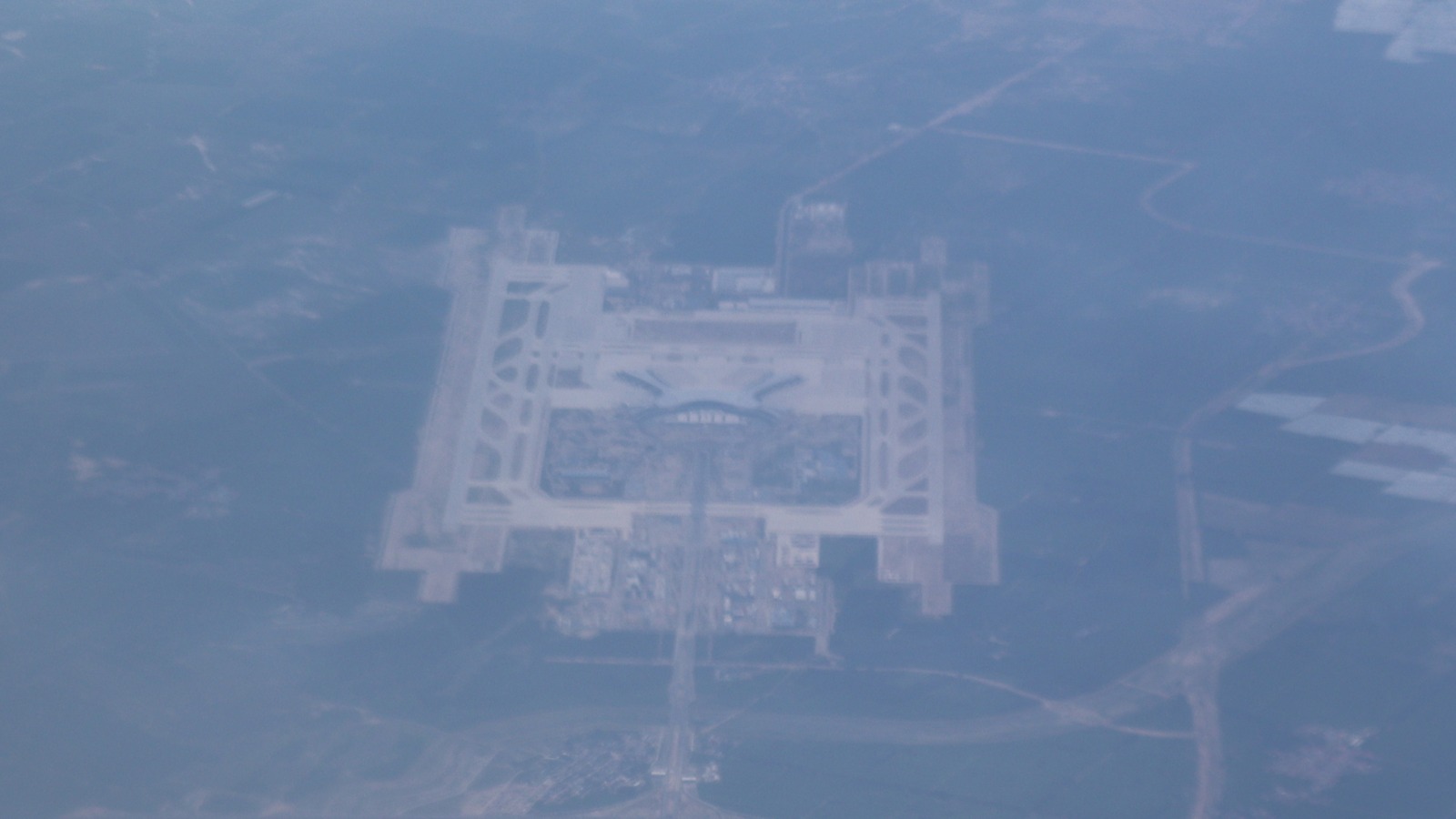
Hohhot Shengle International Airport Opened to Improve Regional Logistics
Hohhot Shengle International Airport opened Thursday, replacing the 68-year-old Baita International Airport to improve regional logistics and give the Beijing-Tianjin-Hebei aviation cluster an important alternative.
- The new 4F-class facility in Inner Mongolia spans 320,000 square metres and features two parallel runways.
- Operations officially transferred to the new site at midnight on November 26, 2026.
- The airport is designed to handle 28 million passengers and 320,000 tonnes of cargo annually by 2030.
The facility, built over six years at a cost of 23.11 billion yuan, serves as an “important transport node” for the Belt and Road Initiative, according to People’s Daily Online’s Daily. Analysts suggest the airport’s location, 410km from Beijing, allows it to absorb excess traffic and accommodate large aircraft like the Airbus A350 and Boeing 747 when storms disrupt operations in the capital.
Infrastructure and Capacity
The new site features two parallel runways measuring 3,400 and 3,800 metres in length, which can operate independently. With space for 130 aircraft parking stands, the facility is the first in Inner Mongolia to meet the 4F civil aviation standard, the highest classification, allowing it to accommodate large aircraft including the Airbus A380. China Eastern notes the airport is located approximately 38.5 kilometres, or 24 miles, from the city centre.

Future Development and Regional Connectivity
Regional transport authorities said that the new facility will serve as a central aviation hub for Inner Mongolia, rather than just a local airport for Hohhot. Under the current winter schedule, the airport will also operate 12 weekly flights to Ulaanbaatar, the capital of Mongolia.
The facility’s development is tied to the city’s role as a northward node, with the People’s Daily reporting that Shengle International serves as an “important transport node” for the Belt and Road Initiative.
Analysts note that the project addresses the long-term capacity constraints of the former Baita airport, which had become one of the closest provincial capital airports to an urban center in China. With Baita located only 2.6 kilometres from the built-up area, the move provides the necessary space to accommodate the projected growth in passenger and cargo flow for the region.
Economic Context and Logistics
The relocation was necessitated by the urban encroachment surrounding the former Baita airport, which had operated well beyond its design capacity for years. While Baita’s last expansion in 2004 planned for 3 million passengers, it handled over 13.15 million in 2019 and 12.7227 million in 2025. The project represents a significant financial commitment for the city, as its total investment is close to Hohhot’s entire 2025 general public budget revenue of 26.86 billion yuan.
Beyond domestic connectivity, the airport is expected to strengthen trade links with Mongolia and Russia. Between January and July 2026, international passenger traffic at the now-closed Baita facility rose 89.3 per cent year-on-year.

“It allows them to create industries around there, and transport, logistics and cargo are all part of that,” Mayur Patel, head of Asia at OAG Aviation, told the South China Morning Post. “You bring people from belt-and-road countries to go in there, build industries, expand it. You’re building for the future, basically.”
Hohhot, as the capital of Inner Mongolia, serves as a critical regional logistics hub, particularly through its new Shengle International Airport. Analysts highlight its capacity to absorb excess traffic from Beijing, accommodating large aircraft like the Boeing 747, and its designation as an “important transport node” for the initiative.
The transition to the new site was marked by the arrival of a C909 regional jet operated by Genghis Khan Airlines from Ulaanhot at 9:10 am. The first outbound flight was an Air China Boeing 747-400 departing for Beijing Capital International Airport with 324 passengers.
Shenzhen Airlines confirmed its domestic flights moved at midnight, with existing check-in and boarding deadlines remaining in effect. Full flight network restoration is expected by the end of the fourth week following the relocation.