Himes Threatens to Block SpaceX Funding Over Starshield Ukraine Cuts
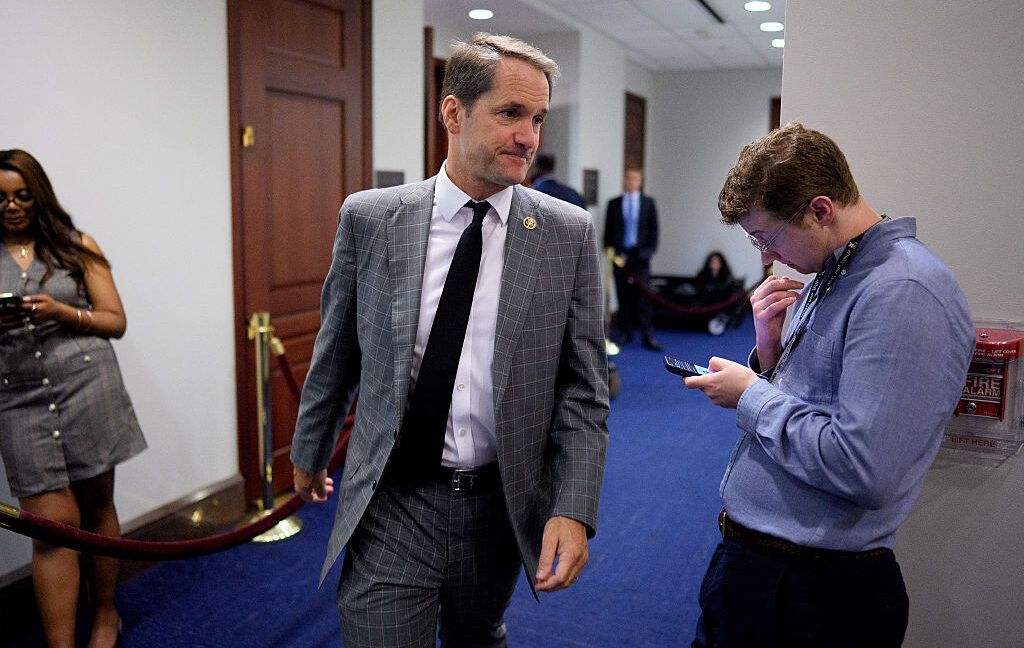
Incoming House Armed Services Committee ranking member Jim Himes threatened Friday to block SpaceX defense funding unless the company explains why Starshield performance was curtailed in Ukraine last month, a move that could jeopardize the contractor’s broader military business.
Himes wrote to Elon Musk demanding details on the October 2026 changes to Starshield service, why they were made, and whether SpaceX acted unilaterally or at the direction of a U.S. government official.
“It is difficult for me to continue supporting the authorization of funding for these SpaceX-developed, government-owned systems, until I receive satisfactory answers to my questions about the Starshield service in Ukraine,” Himes wrote in his letter to Musk.
The threat carries weight because Democrats will control both chambers of Congress in January following the midterm elections. Options include demanding classified briefings and documents, and restricting appropriations to the Defense Department and other federal agencies.
At stake are programs including a $2.29 billion U.S. Space Force contract awarded earlier this year for the Space Data Network Backbone supporting the Golden Dome missile defense initiative, as well as SpaceX’s work building intelligence satellites for the National Reconnaissance Office.

President Volodymyr Zelenskyy said Sunday that restrictions on Ukraine’s Starshield system are hindering its ability to intercept Russian drones. According to Zelenskyy, interceptor drones lose contact with operators when flying faster than 161 kph (100 mph) along the front line and over Russian-occupied territory, leaving them unable to catch Russian Shahed drones.
“We are counting on these restrictions to be lifted,” he wrote on social media. “The protection of lives and Ukrainian energy infrastructure before winter depends on this.”
Zelenskyy questioned whether the problem was technical, saying the restrictions appeared to have been imposed by SpaceX despite earlier assurances from Secretary of State Marco Rubio that Starshield was more under U.S. government control.
Accounts have variously implicated Musk, SpaceX, the Pentagon, and the White House in the decision to curtail performance. According to Musk, U.S. officials control Starshield access, while he defended SpaceX’s right to restrict the use of commercial Starlink service in war.
SpaceX, founded by Elon Musk in 2002, achieved a turning point in 2008 when its Falcon 1 became the first privately developed liquid-fueled rocket to reach orbit after three earlier failures. By May 2026 the company had completed roughly 650 orbital launches, averaging about three Falcon 9 missions per week, and conducted more orbital launches annually than any other provider.
In 2019 the first operational Starlink satellite came online; the constellation now generates the bulk of SpaceX revenue and led to the Starshield military counterpart at the center of the current dispute.
It remains unclear who ordered the October changes and whether Congress will receive answers before the new session begins in January.
Related reading
- Belgian Gel-Polish Brand Miure Promises 20-Minute Manicure; Editor Finishes in 19:32
- UC Santa Cruz Researchers Harvest 4.5V From Eight Cactus Stems in Series
- York Inclusive Choir Fights Funding Crisis to Survive (newsy-today.com)
- SpaceX Share for Every Kid Needs a Charity and Treasury's Approval (daybreakwire.com)