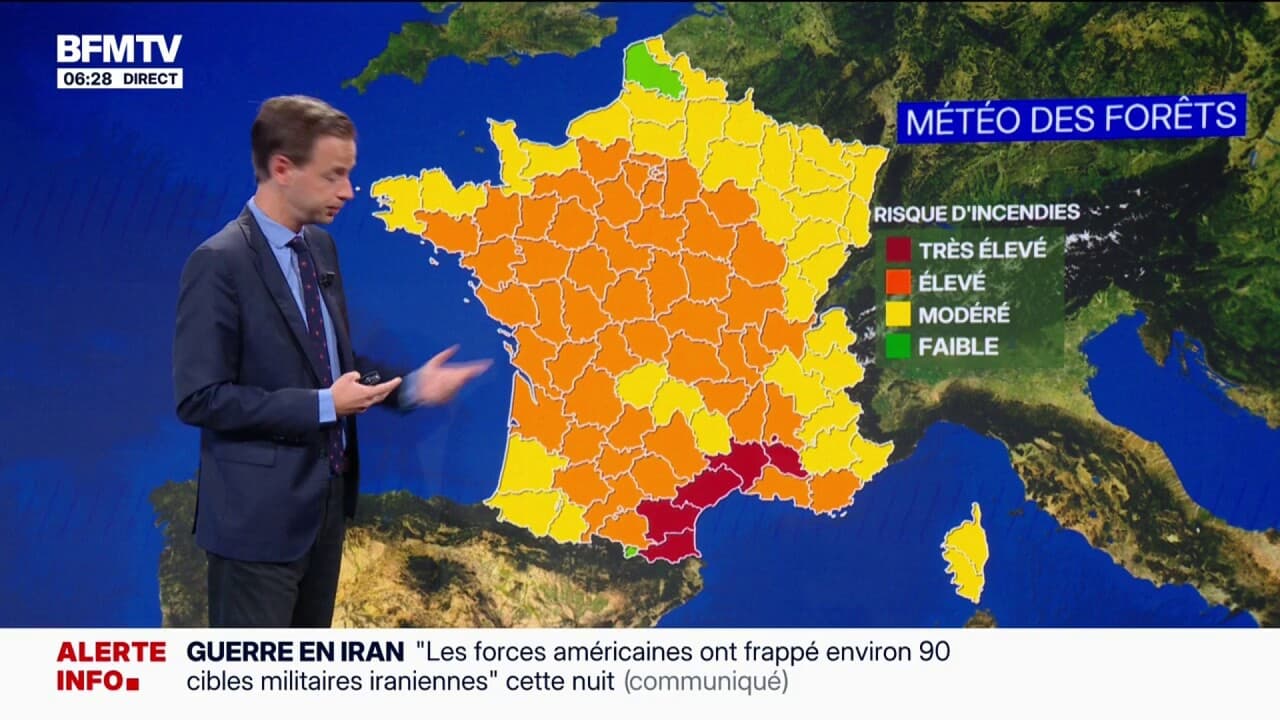
High Fire Risk Warning for Five Southern France Departments
As of July 9, 2026, France is experiencing a stark meteorological divide, with a temperature differential of nearly 20°C recorded between the northern and southern regions. This thermal split has triggered high-level wildfire alerts in five southern departments, while localized thunderstorms impact relief areas, complicating emergency response and public safety protocols.
The Thermal Divide: Meteorological Context
The current weather pattern across France demonstrates a dramatic variation in atmospheric conditions. While northern regions remain under cooler, more temperate air masses, the south is grappling with intense heat that has pushed the mercury significantly higher. This 20°C gap is not merely a statistical curiosity; it represents a hazardous environmental shift that has immediate consequences for land management and public health.
Meteorological data indicates that the juxtaposition of extreme heat in the south and instability in the mountainous regions creates a volatile environment. According to the Météo-France observational network, such gradients often precede rapid shifts in wind direction, which can exacerbate the speed and unpredictability of brush fires.
High-Risk Zones and Infrastructure Vulnerability
Five departments in the south of France have been officially designated as being at “very high” risk for wildfires. This classification, managed by local prefecture authorities, triggers mandatory restrictions on agricultural burning, forest access, and industrial activities that could produce sparks.
The risk is compounded by the localized thunderstorms reported near mountainous terrains. While rain is often perceived as a relief, lightning strikes in dry, overheated forests represent a primary ignition source for wildfires. For landowners and municipal managers, this necessitates immediate attention to fire suppression infrastructure.
Property owners in these high-risk zones are now being urged to verify their compliance with local brush clearing ordinances, known as débroussaillement. Failure to maintain these firebreaks can result in significant legal liability. For those seeking professional assistance, engaging a certified land management firm is often the only way to ensure compliance with strict departmental codes.
“The intersection of extreme heat and localized storm cells creates a ‘perfect storm’ for ignition. We are moving from a period of observation to one of active containment, requiring residents to monitor official alerts hourly.”
— Internal assessment from regional civil protection monitors.
Economic and Legal Implications of Extreme Weather
The impact of this weather event extends beyond immediate safety. Businesses and agricultural entities operating within the affected southern departments face operational disruptions. The sudden change in climate variables often triggers “force majeure” clauses in supply chain contracts, leaving many firms in a position where they must consult with commercial legal counsel to navigate potential contract disputes or insurance claims related to climate-induced delays.
Furthermore, the maintenance of critical utility infrastructure—including power lines and telecommunications towers—is now under heightened scrutiny. As noted by the Ministry for the Ecological Transition, the integrity of the power grid is tested during these extreme thermal fluctuations, often requiring rapid intervention from specialized contractors.
Proactive Management in a Changing Climate
The current situation in France serves as a marker for the broader challenges of climate adaptation. With extreme weather events becoming more frequent, the reliance on reactive measures is shifting toward a culture of proactive resilience. This includes the implementation of advanced monitoring systems and the professionalization of fire-risk mitigation.
For municipal leaders and private property owners alike, the primary defense remains preparedness. Coordinating with vetted emergency response contractors is no longer an optional precaution but a foundational requirement for those operating in high-risk, drought-prone environments.
As the heat continues to hold across the Mediterranean coast and the southern hinterlands, the focus remains on the containment of potential ignition points. The atmospheric instability currently observed near the reliefs serves as a warning that the situation remains fluid. In the coming days, the ability of local authorities to enforce safety mandates will be the primary factor in mitigating property loss. For those seeking to safeguard assets against the growing threat of regional wildfire activity, the imperative is to secure professional expertise before the next shift in the weather pattern occurs.