Hidden Water Reservoir Discovered Deep Inside Earth Mantle
Earth May Harbor Hidden Water Reservoirs Up to 1,800 Miles Deep in Lower Mantle
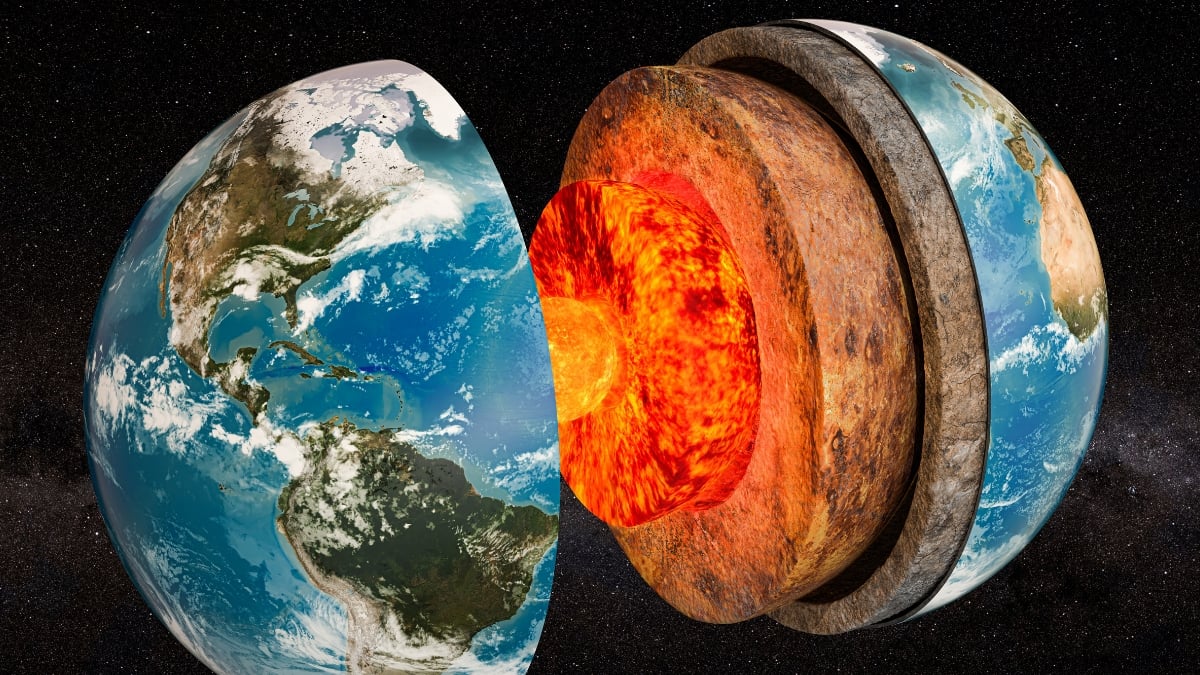
According to research published in Nature Geoscience and detailed by ScienceAlert, Earth may be harboring a hidden water stash up to 1,800 miles below the surface near the boundary between the mantle and its liquid outer core. Liquid water drives planetary habitability by lubricating the slow movement of the mantle layer, powering tectonic cycles that regulate climate over geological time. Yet pinpointing where this vast fluid volume resides within the miles-deep interior has remained a central puzzle for geoscientists.
- The Discovery: High-pressure laboratory experiments identify two new iron oxyhydroxides (Fe5O12Hx and Fe7O12Hx) capable of storing immense quantities of water near the core-mantle boundary.
- The Mechanism: Even with starting materials containing less than 0.1 percent water, trace hydrogen concentrations stabilized these dense phases under extreme lower-mantle pressures and temperatures.
- The Geological Impact: These stable mineral phases could have formed as an early basal magma ocean cooled, sinking toward the core-mantle boundary before potentially recycling water back toward the surface via mantle plumes and volcanism.
Unlocking Deep-Mantle Mineralogy With Laser-Heated Diamond Anvil Cells
The lower mantle extends from about 660 to 2,900 kilometers (373 to 1,802 miles) beneath the surface. Its most abundant minerals, including bridgmanite and ferropericlase, are generally considered dry under normal conditions. Other minerals can hold water at depth, but many require unusual compositions to remain stable or break down entirely at the extreme temperatures found in the deepest mantle. To find viable reservoirs, researchers utilized laser-heated diamond anvil cells. These specialized devices squeeze tiny samples between two diamond tips just a paper-thickness-width apart while lasers blast them with high heat, successfully recreating the extreme pressure-temperature conditions of the Earth’s deep interior.

Under these laboratory conditions, scientists identified two previously unknown iron oxyhydroxides, designated as Fe5O12Hx and Fe7O12Hx. As noted by University of Leeds geoscientist Alfred Wilson in an accompanying commentary covered by ScienceAlert, these iron oxyhydroxides represent stable, dense phases that capture and retain water across a wide range of lower-mantle conditions. Crucially, these minerals formed even when water was exceptionally scarce. Trace hydrogen concentrations were completely sufficient to stabilize the new phases, solving a major thermodynamic hurdle for deep-earth volatile storage.
Seismic Evidence and Alternative Storage Depths
The new research suggests these water-bearing minerals are likely located near the boundary between the mantle and its liquid outer core, matching seismic tests that reveal mysterious ultralow velocity zones. This adds vital nuance to broader geophysical findings. These slowed seismic waves often indicate water saturation in specific mantle regions, functioning similarly to an underground X-ray.

The discovery of ringwoodite inclusions inside Brazilian diamonds, brought up from depths exceeding 310 miles, previously confirmed about 1.5 weight percent water bound in solid form. While transition-zone ringwoodite holds substantial water at intermediate depths, the newly identified iron oxyhydroxides provide a viable storage mechanism much closer to the core-mantle boundary.
Mantle Circulation and Surface Volatile Recycling
This deep-earth water does not necessarily remain permanently locked away. As water-bearing material is dragged upward by active mantle circulation, decreasing pressure can destabilize these dense minerals. This depressurization releases their trapped water into surrounding mantle phases, eventually allowing some of that water to make its way back toward the surface via mantle plumes and volcanism. This ongoing cycle explains how volatile compounds continuously circulate between the planet’s surface and its deepest geological vaults.
As empirical investigations into deep mantle mineralogy advance, reconciling high-pressure diamond anvil cell benchmarks with global seismic tomography remains the definitive engineering challenge for Earth sciences.
*Disclaimer: The technical analyses and security protocols detailed in this article are for informational purposes only. Always consult with certified IT and cybersecurity professionals before altering enterprise networks or handling sensitive data.*