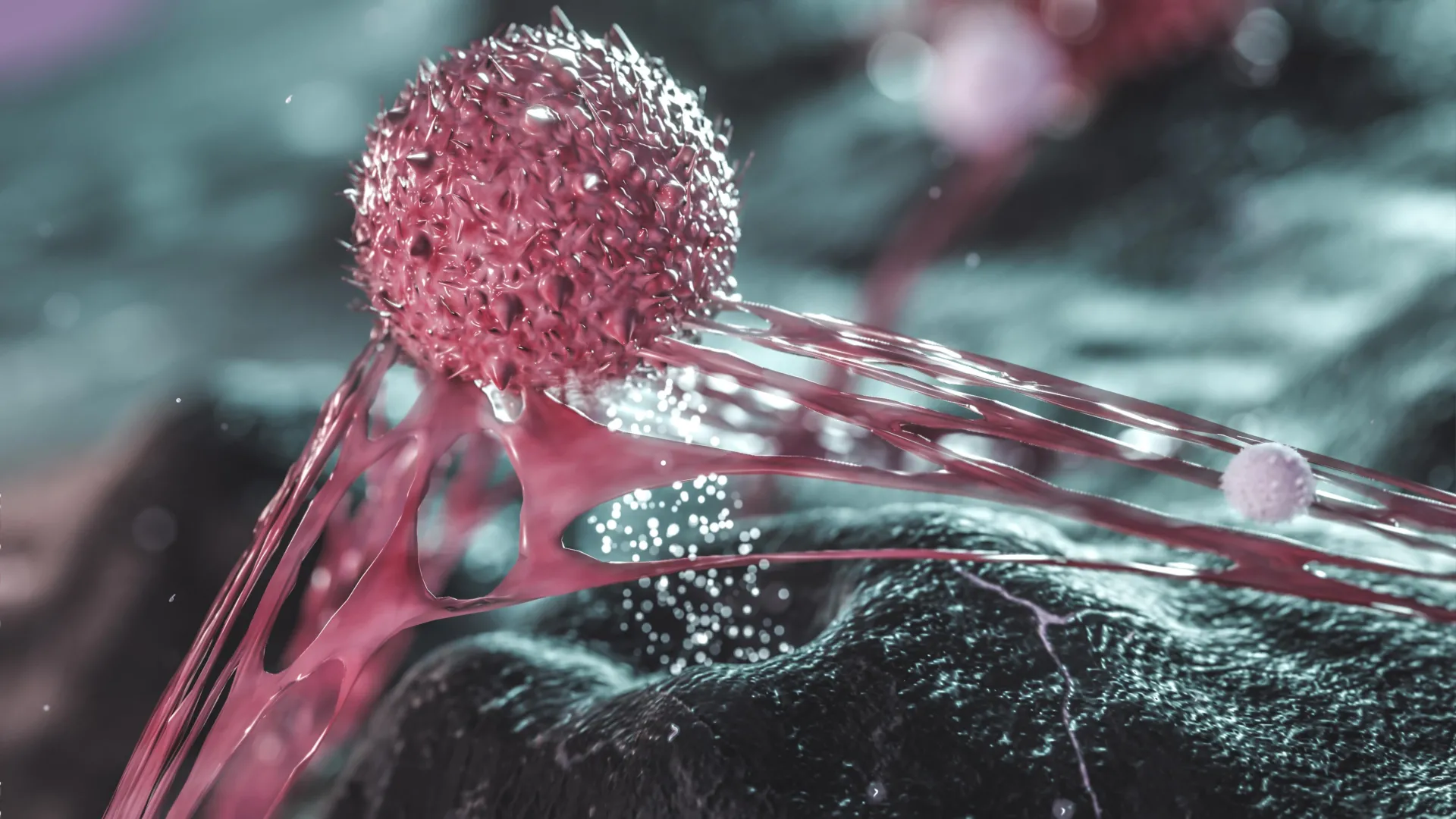
Hidden Dormant Breast Cancer Cells May Shield Themselves From Treatment
<>
Researchers have mapped breast tumors in striking detail and uncovered hidden pockets of dormant cancer cells that may help explain why cancer can return after treatment. As detailed in Genome Medicine, these inactive cells can effectively enter a hibernation-like state that lets them dodge chemotherapy before waking up at a later time.
- Scientists from the MRC Laboratory of Medical Sciences (LMS), Imperial College London, and UCL Genetics Institute mapped distinct cellular regions in breast tumors, identifying separate neighborhoods of proliferating and dormant cells.
- The study found that dormant cancer cells are often surrounded by immune cells and connective tissue cells, including CXCL10-positive macrophages and myofibroblastic cancer-associated fibroblasts, which act as a protective shield.
- Researchers noted that therapy-resistant traits may already reside within the tumor before treatment begins, suggesting future therapies must target both cancer cell states and their local survival environments.
Mapping Tumor Architecture and Dormant Cell Niches
Inside a breast tumor, rapidly multiplying cancer cells sit beside others that appear almost inactive. Researchers from the MRC Laboratory of Medical Sciences (LMS), Imperial College London, and the UCL Genetics Institute mapped these contrasting cellular regions in detail to understand why tumors recur. As detailed in Genome Medicine, the collaborative team used publicly available data to investigate where quiescent cells locate in untreated tumors, what distinguishes them, and which cell types occupy the surrounding space.
The resulting visualization displayed distinct clusters of resting cells surrounded by adjacent cells that might function as a defense barrier. A tumor contains far more than one uniform mass of cancer cells. Alongside quiescent cancer cells that have temporarily paused their division, the mass contains immune cells and newly formed blood vessels. These dormant cells can avoid treatments aimed at active growth before later awakening to contribute to cancer spreading or returning.
“These cells can hide from chemotherapy and then remain in this dormant quiescent state in the tumor, and then later reactivate to drive proliferation.”
Some cancer cells enter quiescence when the demands of rapid tumor growth outpace supplies of nutrients and blood. By pausing their activity during these stressful conditions, they survive until the environment becomes more favorable, potentially after treatment has ended. Dr. Barr adds, “If we want to achieve long-term control of peoples’ tumors and prevent tumor relapse, we have to focus on these dormant quiescent cancer cells, and have to understand more about them.”
Pre-Existing Resistance and Cellular Neighborhoods
To investigate these hidden cell populations, Dr. Barr worked alongside Maria Secrier’s computational biology group at UCL to map the tumor together with its immune and support cells. The team blended single-cell RNA sequencing—which uncovered the specific genes active within every individual cell—with spatial transcriptomics to pinpoint the exact locations of those cells and their neighbors throughout the tumor.
“We found cells that resemble therapy-resistant cells already residing in the tumor before we give any treatment,” says Dr. Secrier, pointing out that treatment resistance traits might already be present inside a tumor rather than developing solely as a consequence of therapy. These cells appeared in aggressive tumors as well as more slowly developing forms, an unexpected result because quiescence had previously been linked mainly to slower-growing disease.
The analysis also examined the many support cells recruited into the tumor environment. A consistent pattern emerged: dormant cancer cells were frequently positioned beside CXCL10-positive macrophages and myofibroblastic cancer-associated fibroblasts. These neighboring cells may have been recruited to protect the dormant population, forming a barrier that limits access by cancer-killing immune cells or treatments.
Therapeutic Implications and Future Clinical Care
According to the results, stopping tumor growth and preventing future relapses may demand treatments that tackle both the various states of cancer cells and the local environmental factors enabling them to endure. Future cancer therapies may need to do more than attack fast-growing tumor cells; they must also target dormant cancer cells and the microenvironments that allow them to persist.
*Disclaimer: The information provided in this article is for educational and scientific communication purposes only and does not constitute medical advice. Always consult with a qualified healthcare provider regarding any medical condition, diagnosis, or treatment plan.*
Related reading
- Alcohol-Attributable Cancer Deaths in US Have Doubled Since 1990
- Women With Type 2 Diabetes 50% More Likely to Develop Mental Health Issues
- Utah Rock Glaciers Hold Nearly 1 Billion Tons of Hidden Water, Study Finds (time.news)
- How Gravitational Wave Ringdowns Could Reveal Hidden “Black Hole Hair (archyde.com)