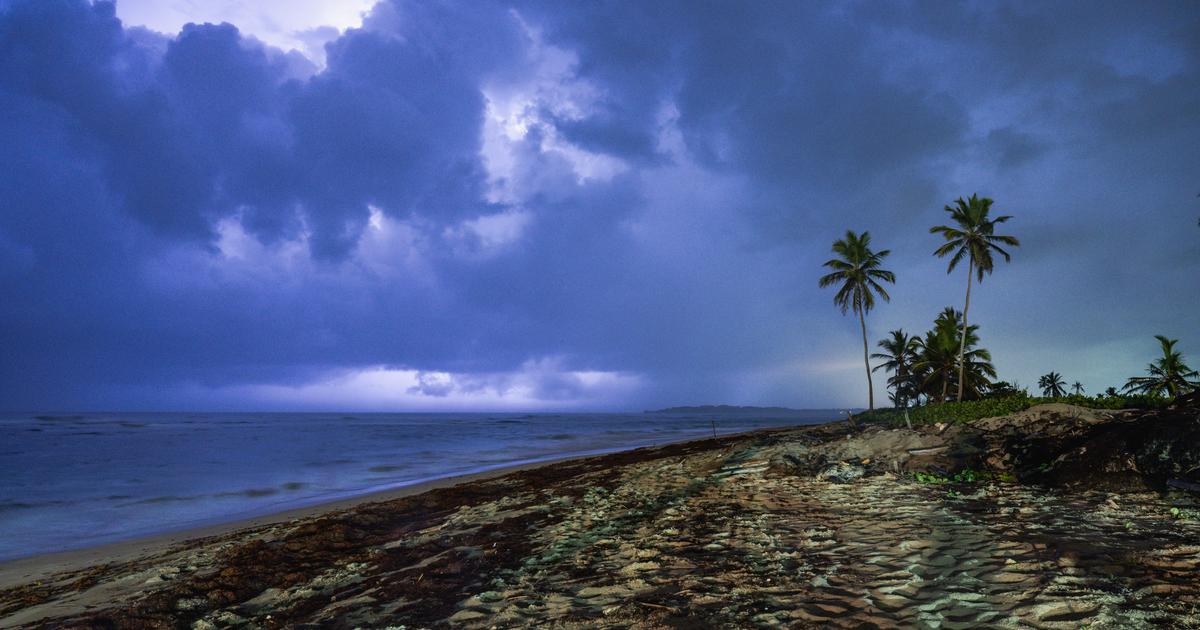
Heavy Rains Cause School Closures and Power Outages in Santo Domingo
Heavy rainfall and flash floods across the island of Hispaniola have killed at least 19 people and displaced over 30,000 residents in the Dominican Republic, and Haiti. Beginning April 7, 2026, torrential storms devastated infrastructure, isolated dozens of communities, and triggered widespread power outages in the capital, Santo Domingo.
This is not a sudden, isolated surge of water. We see the result of a relentless weather pattern that has gripped the region for over a week. When the rains began on the night of April 7, few could have predicted the scale of the resulting catastrophe. Now, as of April 16, the numbers tell a grim story of vulnerability and systemic failure.
The human cost is distributed across the border, though the impact manifests differently on each side of the island. In Haiti, the death toll has reached 12, with the majority of fatalities concentrated in the country’s northwest department. In the Dominican Republic, seven deaths have been confirmed. Whereas the death toll in the Dominican Republic is lower, the scale of displacement is staggering.
Thirty thousand people. That is the number of individuals forced from their homes in the Dominican Republic alone. The Center for Emergency Operations (COE) reports that at least 30,500 people have been evacuated or displaced as the waters rose.
A Nation Under Siege: The Dominican Republic’s Infrastructure Collapse
The geography of the disaster is vast. Currently, the Dominican government maintains preventive alerts in 24 of the country’s 31 provinces. Even as the intensity of the rain has fluctuated, the risk remains critical. The sheer volume of water has turned roads into rivers and neighborhoods into islands.

Approximately 6,500 homes have been directly impacted. More concerning is the isolation of 38 distinct communities, which have been completely cut off from primary transport arteries. When a community is isolated, the clock starts ticking on food security and medical emergencies. These gaps in accessibility create a desperate need for emergency logistics specialists who can coordinate air-lifts or amphibious rescues to reach those trapped by the floods.
“The Civil Defense maintains its protocol on maximum alert. Forecasts indicate that over the weekend, we could be faced with new heavy precipitation affecting a significant part of the country.”
Juan Salas, the Director of Civil Defense, issued this warning as the country struggles to recover from the first wave. The damage isn’t just rural. In Santo Domingo, the heartbeat of the nation, the floods triggered widespread power outages and disrupted the basic functions of the city. To prevent further casualties, authorities were forced to close schools and mandate reduced working hours last week.
This disruption ripples through the economy. When schools close and businesses operate on limited schedules, the loss of productivity is compounded by the cost of emergency repairs. For the thousands of homeowners facing ruined foundations and electrical failures, the priority has shifted from recovery to survival. Securing vetted certified electrical engineers is now a critical necessity to ensure that returning to these homes doesn’t result in further tragedies through electrocution or fire.
The Fragility of the Northwest: Haiti’s Struggle
While the Dominican Republic battles displacement and infrastructure failure, Haiti faces a more lethal reality. The 12 deaths reported by Haitian Civil Protection highlight the extreme vulnerability of the northwest department. In these regions, the lack of robust drainage systems and the prevalence of soil erosion turn heavy rain into a deadly weapon.
The tragedy in Haiti is often a story of missing safeguards. Where the Dominican Republic has the COE to track displacement, Haiti’s response is frequently fragmented, relying heavily on the International Committee of the Red Cross and other global entities to fill the gaps in state capacity.
The rain does not respect borders. The entire island of Hispaniola has been saturated, creating a landscape where the ground can no longer absorb water. This saturation means that even a moderate amount of additional rain can trigger new landslides or flash floods.
The Road to Recovery and the Looming Threat
The crisis is far from over. The Dominican Institute of Meteorology is not forecasting clear skies; instead, it warns of more rain and the possibility of hail in the coming days. This creates a secondary crisis: the “recovery gap.” It is nearly impossible to begin permanent reconstruction when the environment remains hostile.

For the 30,500 displaced persons, the immediate need is shelter. However, the long-term solution requires a complete overhaul of how these Caribbean nations approach urban planning and flood mitigation. The current reliance on “preventive alerts” is a reactive strategy. The proactive solution lies in engaging infrastructure consultants to design sustainable drainage and flood-resistant housing that can withstand the increasing volatility of the Atlantic weather patterns.
The logistical nightmare of 38 isolated communities underscores a failure in regional connectivity. Until these communities are linked by resilient infrastructure, they will remain hostage to every major storm system. The coordination between the AP News reporting and official government data shows a pattern of recurring disaster that demands a structural, rather than a temporary, response.
As the weekend approaches, the residents of 24 provinces in the Dominican Republic and the devastated northwest of Haiti are waiting. They are waiting for the rain to stop, and for the help to arrive. But as Juan Salas noted, the danger is not behind them—it is simply pausing.
The tragedy of the last ten days is a stark reminder that in the face of climatic instability, the difference between a “weather event” and a “human catastrophe” is the quality of the infrastructure and the availability of professional expertise. For those currently displaced or trapped, the path back to normalcy will require more than just a drop in rainfall; it will require the intervention of verified professionals capable of rebuilding a broken landscape. Finding those experts is the only way to ensure that the next storm doesn’t leave another 30,000 people without a home. You can locate those essential services through the verified professionals listed in the World Today News Directory.