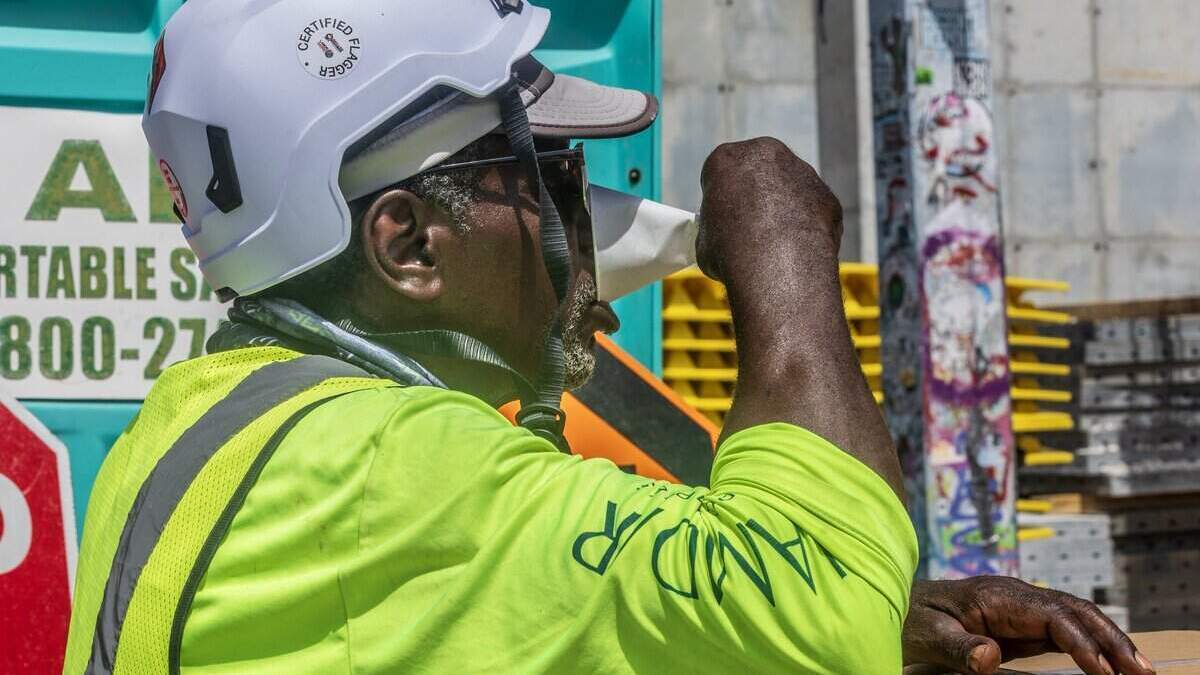
Heat Advisory Issued for Southern Florida for Third Consecutive Day
The National Weather Service (NWS) has issued an extreme heat advisory for South Florida as of July 9, 2026, warning that heat indices could reach 110 degrees Fahrenheit. This third consecutive day of critical temperatures poses severe health risks to residents in Miami-Dade, Broward, and Palm Beach counties.
This is not a standard summer spike. The persistence of this heat dome creates a compounding effect on the human body and regional infrastructure, pushing the electrical grid to its limits and increasing the risk of heat-related fatalities. When the heat index hits 110, the body’s ability to cool itself through perspiration fails, leading rapidly to heat exhaustion or heat stroke.
The Infrastructure Strain in Miami and Fort Lauderdale
The current heatwave is placing an unprecedented load on the Florida power grid. According to data from Florida Power & Light (FPL), peak demand typically surges during these prolonged periods of extreme heat as air conditioning units run continuously. This puts immense pressure on aging transformers and residential electrical panels.
For many homeowners, the problem isn’t just the heat, but the failure of cooling systems under this stress. When an HVAC unit fails during a 110-degree index event, the indoor temperature can reach dangerous levels within hours. This has led to a surge in demand for emergency repairs. Finding vetted [HVAC Contractors] is currently the primary challenge for residents attempting to maintain a habitable environment.
Municipalities are also feeling the impact. The City of Miami has historically increased the operation of “cooling centers” during such alerts, but the sheer volume of residents lacking central air in older rental properties creates a systemic vulnerability.
Comparing Current Heat Metrics to Historical Averages
To understand the severity of this July 2026 event, it is necessary to look at the deviation from the norm. While South Florida is accustomed to humidity, the combination of stagnant air and high dew points creates a “wet-bulb” effect that is significantly more dangerous than dry heat.
| Metric | Typical July Average | Current Heatwave Peak | Impact Level |
|---|---|---|---|
| Ambient Temperature | 88°F – 92°F | 95°F – 98°F | High |
| Heat Index (Feel) | 95°F – 100°F | 110°F | Extreme/Dangerous |
| Humidity Levels | Moderate/High | Saturating | Critical |
The NWS notes that when the heat index reaches 110, the risk of heat stroke is “extreme.” This is a physiological tipping point where the core body temperature rises faster than it can be dissipated.
Public Health Risks and Legal Implications for Employers
The health risks are immediate. Dehydration and hyperthermia are the primary concerns for outdoor workers, particularly in construction and landscaping. According to the Occupational Safety and Health Administration (OSHA), employers are required to provide water, rest, and shade to prevent heat-related illnesses.
Failure to adhere to these safety standards during a declared NWS heat advisory can lead to severe legal liabilities. In recent years, there has been a trend toward stricter enforcement of “duty of care” laws. Businesses that ignore these warnings face potential lawsuits and heavy fines if an employee suffers a heat-related casualty on the job.
Companies are increasingly consulting [Employment Law Firms] to update their heat-stress protocols and ensure their employee handbooks comply with evolving state and federal safety mandates. This is no longer just a matter of comfort; it is a matter of legal compliance and risk management.
Urban Heat Island Effect in South Florida
The danger is not distributed evenly across the region. The “Urban Heat Island” effect means that the concrete jungles of downtown Miami and Fort Lauderdale retain significantly more heat than the surrounding wetlands or coastal areas. Pavement and buildings absorb solar radiation during the day and release it slowly at night, preventing the city from cooling down.
This means that for residents in high-density urban cores, the “recovery period” for the body—the time spent in cooler temperatures to reset the internal thermostat—is virtually non-existent. This leads to cumulative heat stress, where the body becomes more susceptible to heat stroke on day three than it was on day one.
City planners are looking toward long-term solutions, such as increasing the urban canopy and using reflective roofing materials, but these are systemic changes that do not help the person currently trapped in a 110-degree index apartment.
Immediate Mitigation and Long-term Resilience
The immediate priority for residents is hydration and the avoidance of outdoor activity between 11:00 AM and 5:00 PM. The Centers for Disease Control and Prevention (CDC) recommends monitoring the color of urine as a primary indicator of hydration levels.
Beyond immediate survival, this heatwave highlights a broader need for residential resilience. Many older structures in South Florida were not built for the sustained, extreme heat indices now becoming common. Retrofitting homes with high-efficiency insulation and modern cooling systems is becoming a necessity rather than a luxury.
As the climate continues to shift, the ability to access reliable, certified professionals will be the difference between a manageable summer and a public health crisis. Whether it is securing a [Home Improvement Specialist] to weatherize a property or finding medical professionals specializing in heat-related trauma, the infrastructure of support must be as robust as the heat is intense.
The 110-degree forecast is a warning. For those in the path of this heat dome, the focus now shifts from preparation to survival, while the region at large must reckon with a new, harsher atmospheric reality.