Healthcare Costs Outweigh MAHA Food Concerns for Voters
The intersection of political ideology and public health is currently undergoing a seismic shift, as a new wave of health-centric populism clashes with the systemic financial burdens of the American medical system. While the “Make America Healthy Again” (MAHA) movement has successfully elevated discourse around food purity and vaccine safety, the crushing weight of healthcare affordability remains the primary driver of voter behavior.
Key Clinical Takeaways:
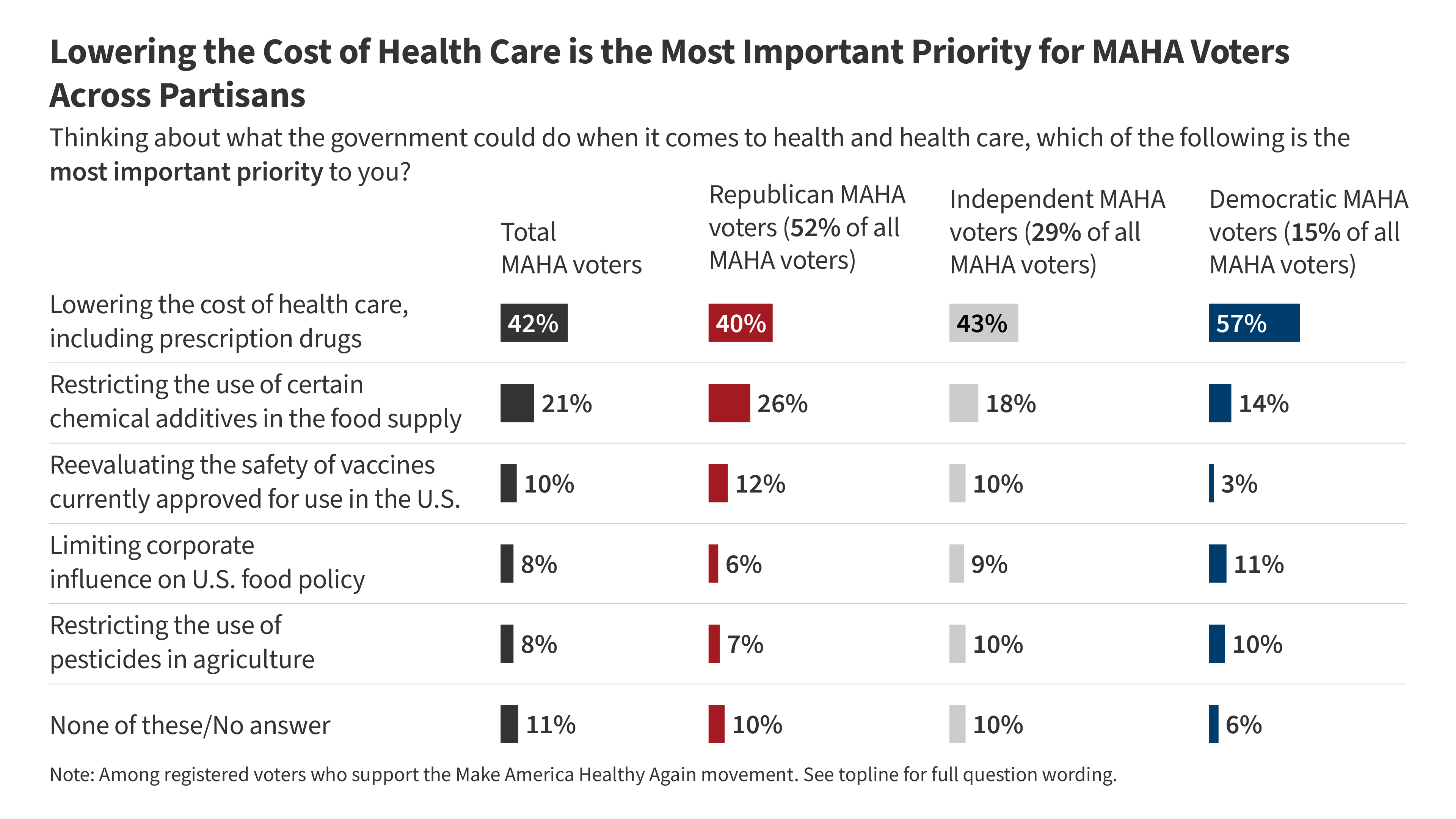
- Economic barriers to care outweigh ideological health concerns, with 42% of MAHA-supporting voters prioritizing the reduction of healthcare and prescription drug costs over food or vaccine policy.
- Public skepticism regarding food safety is widespread; 75% of adults believe chemical additives are insufficiently regulated, and 64% express similar concerns regarding agricultural pesticides.
- Despite the movement’s focus on chronic disease and childhood illness, the financial morbidity associated with healthcare costs is a more significant motivator for midterm voting decisions than specific health policy reforms.
The tension between preventive wellness and systemic accessibility is laid bare in the latest KFF Health Tracking Poll, released Wednesday, May 6, 2026. The data suggests that while the MAHA movement—spearheaded by Health and Human Services Secretary Robert F. Kennedy, Jr. And President Trump—has successfully shifted the cultural needle toward “clean” eating and medical skepticism, these priorities are secondary to the immediate crisis of affordability. For the average citizen, the theoretical risk of a food additive is less pressing than the tangible risk of medical bankruptcy.
The Economic Determinants of Health Priority
The KFF poll, conducted by the independent, non-profit Kaiser Family Foundation, reveals a stark hierarchy of concerns. Among voters who identify with the MAHA movement, 42% identified lowering the cost of health care, including prescription drugs, as the government’s most urgent priority. This figure dwarfs the 21% who prioritized restricting chemical additives in the food supply and the 10% who sought a reevaluation of vaccine safety. Limiting corporate influence on food policy and restricting agricultural pesticides each garnered only 8% of the top-priority vote.
This disparity highlights a critical clinical gap: the disconnect between the desire for optimal wellness and the ability to afford the standard of care. When at least half of MAHA voters state that healthcare costs will have a “major impact” on their voting decisions in the upcoming midterms, they are reacting to the systemic pathogenesis of the U.S. Healthcare economy. The morbidity associated with deferred care—where patients skip essential medications or diagnostic screenings due to cost—creates a public health crisis that transcends political affiliation.
For those navigating the complexities of insurance gaps or struggling with the cost of chronic disease management, the immediate solution is often a combination of financial advocacy and specialized care. Patients facing these hurdles are encouraged to seek guidance from certified patient advocates to navigate subsidy programs and cost-reduction strategies.
Toxicology and the Public Trust Deficit
The MAHA movement’s focus on chemical additives and pesticides has found fertile ground in a general public already characterized by deep distrust. The poll indicates that 4 in 10 adults self-describe as MAHA supporters, but the anxiety regarding food purity is even more pervasive. A staggering 75% of all respondents believe that chemical additives in food are insufficiently regulated, while 64% believe the same about agricultural pesticides.
From a clinical perspective, these concerns often center on the potential for endocrine disruption and the alteration of the gut microbiome. Research published in PubMed suggests that certain synthetic emulsifiers and artificial sweeteners may increase intestinal permeability, potentially contributing to systemic inflammation and metabolic syndrome. This biological mechanism of action provides a scientific basis for the movement’s push away from ultra-processed foods, regardless of the political framing.
“The current public anxiety regarding food additives is not merely a political trend but a reflection of a growing understanding of how chronic, low-dose exposure to endocrine disruptors can influence long-term metabolic health,” notes one leading epidemiologist specializing in environmental toxicology. “When the public perceives a regulatory failure, they pivot toward individual autonomy in nutrition as a survival strategy.”
Addressing these concerns requires more than political rhetoric; it requires rigorous diagnostic clarity. Individuals concerned about environmental toxin exposure or the systemic effects of food additives should consult with board-certified toxicologists or clinical nutritionists to develop evidence-based detoxification and dietary protocols.
Vaccine Safety and the Consensus Gap
While vaccine safety is a signature issue for MAHA leadership, it ranks significantly lower among the movement’s actual supporters, with only 10% listing it as their top priority. This suggests a divergence between the movement’s public figureheads and its voting base. Secretary Robert F. Kennedy, Jr. Has frequently questioned the science underlying vaccines and their relationship to conditions such as autism—claims that stand in direct contradiction to the established medical consensus and extensive World Health Organization (WHO) data.
The clinical reality remains that vaccines are among the most scrutinized medical interventions in history, utilizing double-blind, placebo-controlled trials to ensure efficacy and safety. The perceived risk of vaccine injury, while a potent narrative tool, is statistically marginal compared to the morbidity and mortality associated with the diseases they prevent. The challenge for public health officials is to address the distrust of the pharmaceutical industry—a sentiment echoed broadly in the KFF poll—without compromising the standard of care that prevents large-scale outbreaks.
Because the distrust of pharmaceutical interests is so ingrained, pharmaceutical companies and healthcare providers are increasingly retaining healthcare compliance attorneys to ensure that transparency in clinical trial reporting meets new, more stringent public expectations and regulatory demands.
The Path Toward Integrated Wellness
The data suggests that the American public is not necessarily rejecting science, but is instead rejecting the systems that deliver that science. The distrust of the food, agriculture, and pharmaceutical industries is a systemic response to perceived corporate capture of regulatory agencies. When 42% of a health-focused movement prioritizes cost over purity, it is a clear signal that the “health” in “Make America Healthy Again” cannot be achieved without addressing the financial toxicity of the medical system.
Looking forward, the trajectory of public health will likely depend on whether the government can synchronize the demand for cleaner nutrition and safer environments with a healthcare model that is financially accessible. The shift toward promoting regular exercise and reducing processed food consumption is a welcomed clinical evolution, provided it is not used as a substitute for essential medical interventions or as a veil for anti-vaccine sentiment.
As we move toward a more transparent health landscape, the necessity of vetted, professional guidance has never been greater. Whether you are seeking to optimize your metabolic health through a cleaner diet or require affordable access to life-saving medications, the first step is connecting with verified experts. We invite you to utilize our directory to find qualified healthcare providers who prioritize evidence-based medicine and patient-centered care.
Disclaimer: The information provided in this article is for educational and scientific communication purposes only and does not constitute medical advice. Always consult with a qualified healthcare provider regarding any medical condition, diagnosis, or treatment plan.