
HDB will build a new housing estate in eastern Pasir Ris by developing a forested coastal site
HDB will build a new housing estate in eastern Pasir Ris by developing a forested coastal site, CNA reported on Monday.
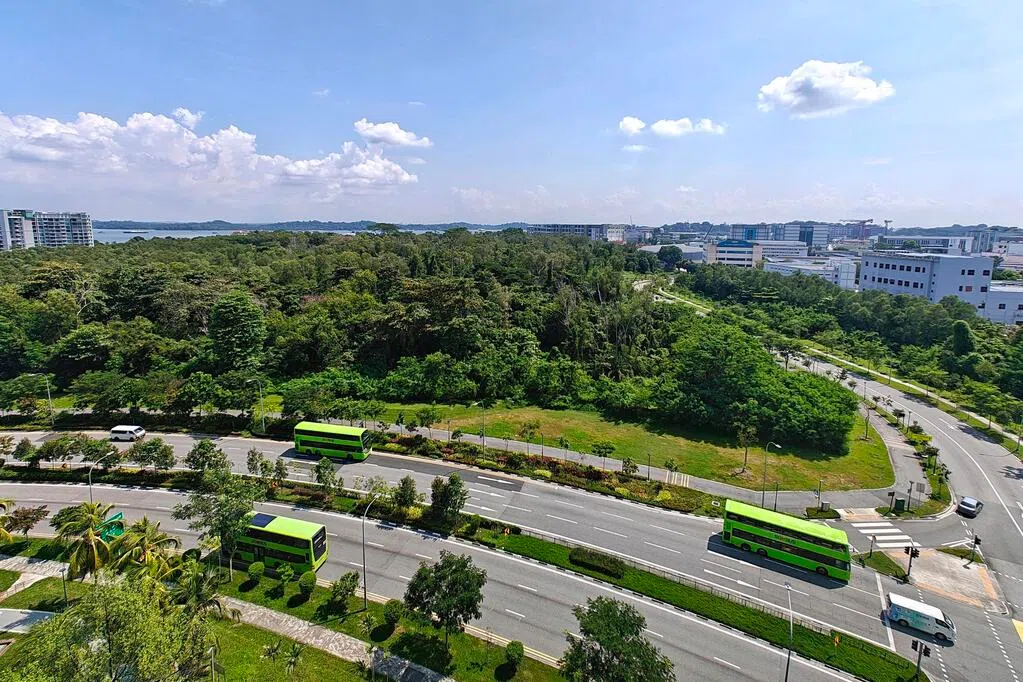
The proposed Pasir Ris Neighbourhood 3 will include a mix of public and private homes on land bounded by Jalan Loyang Besar, Pasir Ris Drive 3, Pasir Ris Drive 4, and Sungei Loyang, Lianhe Zaobao reported. To address housing demand, the Housing & Development Board (HDB) plans to retain approximately 13ha of natural area, including 8ha of coastal habitats such as mangroves and seagrass beds, AsiaOne reported.
The decision follows an environmental impact assessment (EIA) by Tembusu Asia Consulting that covered 36ha of land. While HDB said the project will include a 15m-wide linear park and green buffers to support biodiversity, conservationists have raised concerns regarding wildlife movement.
“The biggest concern here is during development, there’s always shepherding. So you shepherd the animals away from the development site, and then now you will squeeze them all into the conservation site that HDB choose to conserve that would be the holding ground or the habitat that is left for them,” Mr Lester Tan, chairperson of the marine conservation group at the Nature Society Singapore (NSS), told CNA.
EIA Rates Habitat Loss Moderate Negative
The EIA assessed the impact on habitat loss as a “moderate negative,” noting that approximately 81 per cent of the terrestrial forested area would be lost even with mitigation, CNA reported. The site is a potential stepping stone for species like the greater mousedeer, which was resighted at Pulau Ubin in 2008 after an 80-year absence, CNA reported.
“Without proper connectivity, one single bad event can wipe out your whole population”, Ho Xiang Tian, co-founder of LepakInSG, said.
Ho Xiang Tian, co-founder of LepakInSG, said that connectivity from the east to the Central Catchment Area is already “weak.” He warned that a lack of gene pool diversity could cause species to “inbreed to death,” CNA reported.
Dr Marcus Chua, a research fellow and curator of mammals at the Lee Kong Chian Natural History Museum, said the sufficiency of the 13ha retained area depends on the specific species. He said that most plans have “adequately considered” the development’s impact, but suggested that improving connectivity to Pasir Ris Park could make the site better from a conservation perspective.

HDB Rejects Alternative Brownfield Sites
HDB said that no suitable alternative brownfield sites near Pasir Ris, such as the former Siglap Secondary School or industrial areas at Lorong Halus, could provide a comparable amount of housing within the necessary timeframe, The Straits Times reported.
The survey recorded 254 animal species and 159 plant species, showing the site's ecological value, Lianhe Zaobao reported. Among the fauna are 25 species of conservation significance, including the Sunda pangolin and the coastal horseshoe crab, The Business Times reported.
| Category | Total species recorded | Species of conservation significance |
|---|---|---|
| Fauna | 254 | 25 |
| Flora | 159 | 26 |
High Housing Demand Drives Development
The development comes amid high demand for housing in the area. Recent Build-To-Order projects in Pasir Ris, such as Costa Grove and Costa Riviera I and II, saw application rates of 3.6 for four-room flats, The Business Times reported.
Lee Sze Teck, senior director of data analytics at Huttons Asia, estimated the site could house up to 3,000 HDB flats or 4,000 private homes, The Straits Times reported. To manage the construction, HDB will implement an environmental monitoring and management plan to safeguard surrounding habitats, EdgeProp.sg reported.
The Nature Society Singapore (NSS) has driven conservation policy through formal proposals since the late 1980s. In 1986, its Conservation Committee, led by Richard Hale, documented migratory bird richness at the degraded Sungei Buloh mangroves and submitted recommendations that persuaded the government to designate the area as a bird sanctuary, marking the society’s first major intervention in land-use decisions.
In the current Pasir Ris development, NSS continues to shape outcomes through expert testimony.
HDB is inviting public feedback on the environmental impact assessment findings and the conceptual plan from November 23 to December 20.