Hayabusa2 Captures Stunning High-Speed Images of Asteroid Torifune
Hayabusa2 Captures High-Resolution Images of Asteroid Torifune
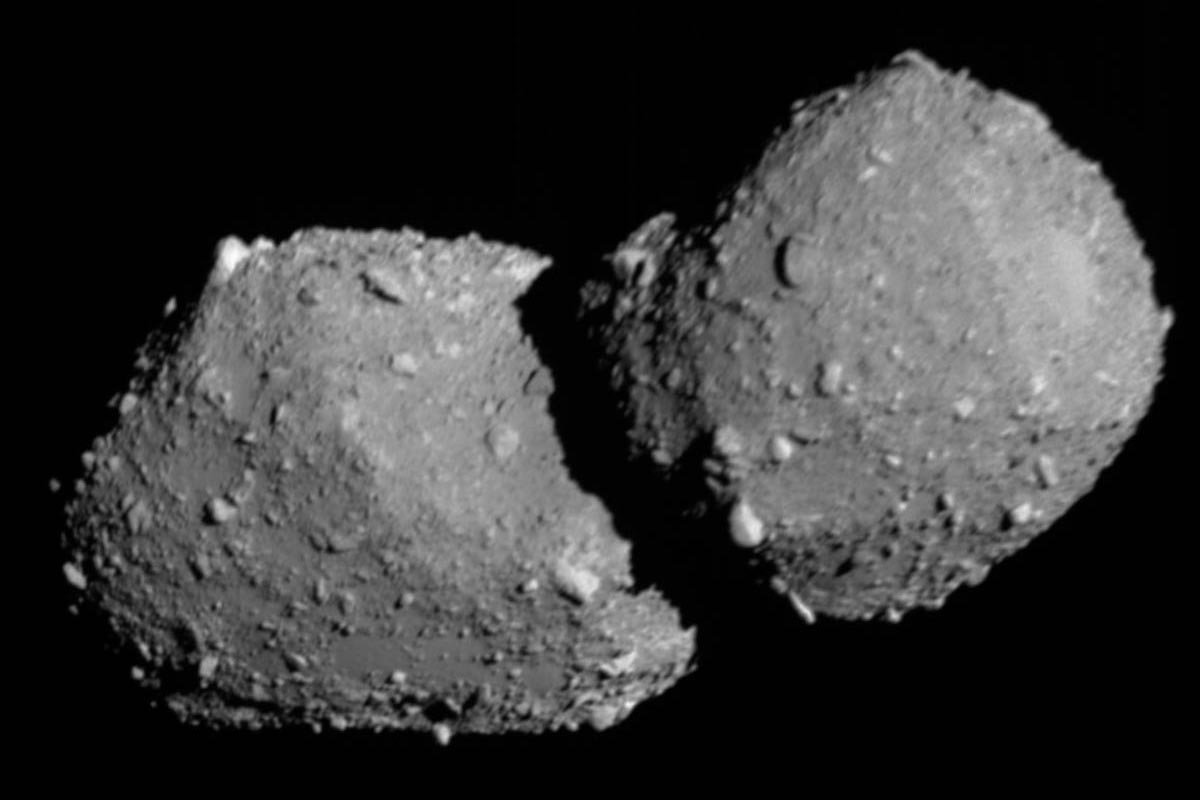
Japan’s Hayabusa2 spacecraft successfully captured detailed images of the asteroid Torifune during a high-speed flyby, according to the Japan Aerospace Exploration Agency (JAXA). The mission utilized a precise timing sequence to photograph the small celestial body while traveling at a relative speed of 5.3 kilometers per second.
Technical Execution of the Torifune Flyby
The encounter required a “one-shot” photography approach due to the spacecraft’s velocity. JAXA reports that Hayabusa2 captured images that exceeded the expectations of the mission team, providing a clearer view of the asteroid than previously anticipated. The data acquisition focused on the asteroid’s surface characteristics and overall shape during the closest approach.

According to reports from Impress Watch and JAXA, the mission’s ability to resolve the asteroid’s features at such high speeds demonstrates the advanced imaging capabilities of the probe. The team described the spacecraft as “the best explorer in the universe” following the successful retrieval of these images.
Scientific Objectives and Planetary Defense
The observation of Torifune serves a broader purpose beyond simple mapping. As reported by the Mainichi Shimbun, studying small asteroids like Torifune is critical for developing strategies to protect Earth from potential impacts. By analyzing the composition and physical properties of these small bodies, scientists can better understand the risks posed by near-Earth objects.
The data gathered during this flyby allows researchers to analyze the asteroid’s rotation and surface morphology, which are key variables in predicting the trajectories of small asteroids that may cross Earth’s orbit.
Mission Context and Imaging Results
The images released by JAXA show the asteroid’s form in detail, contrasting with the limited data available for such small bodies before this encounter. The precision of the flyby ensured that the camera remained locked on the target despite the 5.3km/s relative velocity, preventing motion blur and ensuring scientific utility.
This operation is part of the extended mission of Hayabusa2, which continues to explore the solar system’s remnants after its primary mission of sampling asteroid Ryugu. The mission continues to operate under JAXA’s direction as it seeks further targets of opportunity.