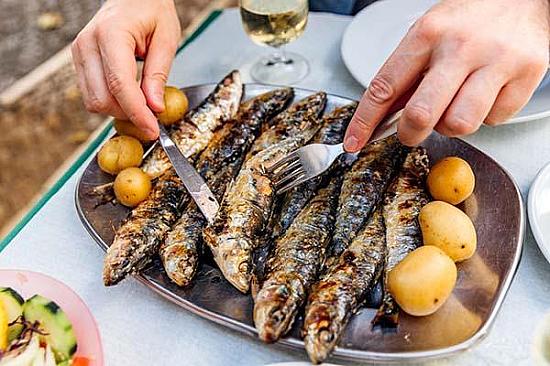
Harvard Expert Suggests Cooking Methods for Fatty Fish
“But there’s a lot you can do to overcome fishy flavor,” says Dr. Rani Polak, founding director of the Culinary Healthcare Education Fundamentals (CHEF) Coaching program at Harvard’s Institute of Lifestyle Medicine.
While fatty fish like sardines, mackerel, and anchovies are prized as some of nature’s richest sources of heart-healthy omega-3 fatty acids, their bold, rich taste can be off-putting to some consumers.
These same fish “tend to taste the fishiest,” which can be off-putting for some people, says Dr. Polak. “Some people like it and others don’t.” And of course, any fish can become “fishy” if not handled properly.
According to Harvard Health, the distinct odor and taste often associated with these varieties stem from a compound called trimethylamine oxide (TMAO). As fish age, bacteria break down this compound, creating a stronger scent. To minimize this, experts recommend purchasing from reputable markets with high turnover or opting for high-quality frozen fish, which is often processed immediately after being caught.
Dr. Polak suggests several culinary techniques to balance the richness of oily fish:
- Add acid: Ingredients such as citrus juice, vinegar, or wine help cut through the natural oils.
- Use aromatics: Garlic, onions, ginger, herbs, tomatoes, and peppers provide assertive flavors that complement the fish.
- Soak in milk: Soaking raw fish in milk for 20 to 30 minutes before cooking may help bind fishy-tasting compounds.
- Grill outdoors: Cooking on a grill prevents odors from lingering in the kitchen and helps the fish remain moist.
For those looking for convenience, canned options like sardines or salmon serve as excellent alternatives to tuna. When selecting these products, consumers are encouraged to check labels to identify low-sodium varieties. “It doesn’t dry out as quickly,” says Dr. Polak regarding the resilience of fatty fish during high-heat cooking methods like roasting or baking.
Dr. Rani Polak serves as the founding director of the Culinary Healthcare Education Fundamentals (CHEF) Coaching program at Harvard’s Institute of Lifestyle Medicine. Established by Dr. Polak in 2014, the initiative functions as an evidence-based, behavioral intervention that merges culinary training with health and wellness coaching competencies. This telemedicine-focused approach is designed to improve nutrition and overall health by helping participants overcome common barriers to home cooking through active learning.
Other quick ideas include using sardines or salmon in power salads with white beans and cherry tomatoes, or preparing lemony mackerel pasta with garlic, lemon zest, and arugula. Salmon can also be served as burgers or glazed with smoky mustard and maple flavors.