
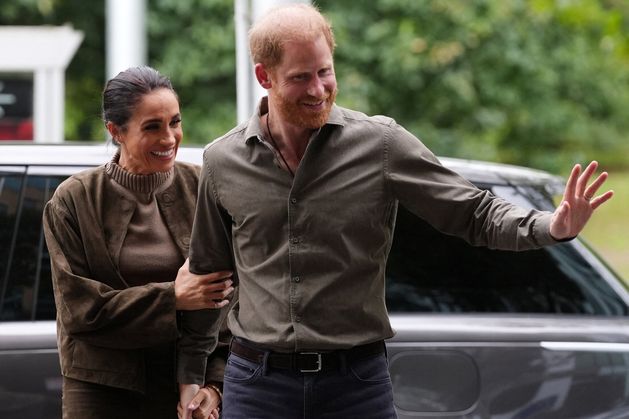
Harry and Meghan’s Australia Tour Sparked by Security Costs and Charity Row
Prince Harry and Meghan have arrived in Australia for a privately funded visit mixing charity and business. However, the tour is overshadowed by a petition signed by over 45,000 people protesting policing costs, as the couple shuns royal titles and flies commercial for the first time since 2018.
The optics of this visit are a masterclass in brand contradiction. On one hand, we have the “commercial flight” narrative—a calculated move to signal accessibility and a departure from the gilded cage of the monarchy. On the other, we have the logistical reality of a high-profile celebrity couple whose security requirements create a friction point with the local taxpayer. This isn’t just a visit; it is a stress test for the “Harry and Meghan” independent brand, attempting to navigate the space between royal prestige and private enterprise without the institutional safety net of the Crown.
The Commercial Flight Gambit and the Faux-Royal Aesthetic
Flying commercial is the ultimate “relatability” play. By eschewing the private jets usually associated with their tier of global influence, the couple is attempting to pivot their brand equity away from unattainable royalty toward a more modern, entrepreneurial celebrity model. Yet, as noted by observers of the itinerary, the schedule remains a “carbon copy” of the royal tour playbook. This creates a jarring dissonance: the couple is performing the rituals of state—hospital visits and curated public appearances—whereas explicitly denying the titles that traditionally justify such pomp.
The reaction on the ground suggests the “relatability” play is hitting a ceiling. In Melbourne, the greeting at a local hospital was described as a “hushed ‘hiii’,” a stark contrast to the rapturous receptions of 2018. When a global brand experiences this kind of sentiment dip, it usually indicates a misalignment between the perceived image and the actual cultural value. The couple is operating in a vacuum of “faux royalty,” where they maintain the perks of the spotlight but lack the institutional mandate that once made their presence a mandatory event.
This transition from state-funded icons to private contractors of their own image is a complex maneuver. For those managing such transitions, the shift requires more than just a change in travel arrangements; it requires a total overhaul of how they engage with local markets. When a brand’s identity is in flux, the immediate move is often to engage crisis communication firms and reputation managers to ensure the narrative doesn’t slide from “independent” to “out of touch.”
The Security Friction and the ‘ATM’ Narrative
The most volatile element of this tour isn’t the itinerary, but the invoice. The petition garnering more than 45,000 signatures over policing costs highlights a growing public intolerance for the “security paradox.” The couple is privately funding the trip, yet the logistical burden of their protection often falls on the host nation’s public purse. This has led to the scathing accusation that they are using Australia as an “ATM” for their security needs—a charge the couple has explicitly denied.
“The tension we are seeing here is a classic conflict between private celebrity status and public infrastructure. When a brand operates at this scale, the security requirements are non-negotiable, but the funding source is where the PR disaster lives.”
From an industry perspective, this is a failure of logistical diplomacy. A tour of this magnitude is a logistical leviathan that should be solved long before the wheels touch the tarmac. In the professional circuit, these frictions are typically mitigated by sourcing massive contracts with regional event security and A/V production vendors to privatize the cost of protection, thereby removing the taxpayer from the equation. The fact that this has become a public petition suggests a gap in the couple’s operational planning.
Looking at the foundational data from the Irish Independent and The Times, the narrative has shifted from the “glamour” of the visit to the “cost” of the visit. In the world of global talent management, as analyzed by Variety, the moment the conversation shifts from the talent’s output to their overhead, the brand is in a precarious position.
Brand Equity and the ‘Meg’ Pivot
The most telling detail of the visit is the request: “Call me Meg.” Shrugging off the Duchess title is a strategic attempt to decouple her identity from the British monarchy, effectively attempting to trademark a latest, independent persona. This is a move toward diversifying her intellectual property. By distancing herself from the royal title, she is positioning herself as a global figure in her own right—a business mogul and philanthropist rather than a consort.
However, this pivot is complicated by the “mixing of charity and business.” The BBC has highlighted how the visit blends altruistic goals with commercial interests. In the high-stakes world of celebrity branding, as often discussed in The Hollywood Reporter, the “charity-business hybrid” is a dangerous game. If the public perceives the charity function as a loss-leader for a business venture, the brand equity of the philanthropy is eroded.
The couple is essentially attempting to build a new corporate structure for their public lives. This requires a level of precision that exceeds standard celebrity PR. They are navigating a landscape that involves complex international laws and high-tier intellectual property lawyers to ensure that their new “independent” brand doesn’t infringe upon the very institutional assets they are trying to leave behind. The “Meg” persona is a product in development, and the Australian tour is the first major market test for this new iteration.
As the tour continues, the success of the venture will not be measured by the number of “hiii’s” they receive in Melbourne, but by whether they can successfully decouple their prestige from their payroll. The tragedy of the “faux royal” is the struggle to remain important without being official. For Harry and Meghan, the goal is to prove that their personal brand is a currency more valuable than a title—but as the 45,000 signatures suggest, the public is still checking the exchange rate.
Whether this tour stabilizes their image or accelerates the friction, it underscores the necessity of professional, vetted infrastructure. From high-end luxury hospitality sectors that manage their stays to the legal teams scrubbing their contracts, the machinery behind the “private” visit is anything but low-key. For those looking to navigate these same complexities of global branding and high-stakes logistics, the World Today News Directory remains the primary resource for connecting with the world’s leading PR, legal, and event professionals.
Disclaimer: The views and cultural analyses presented in this article are for informational and entertainment purposes only. Information regarding legal disputes or financial data is based on available public records.