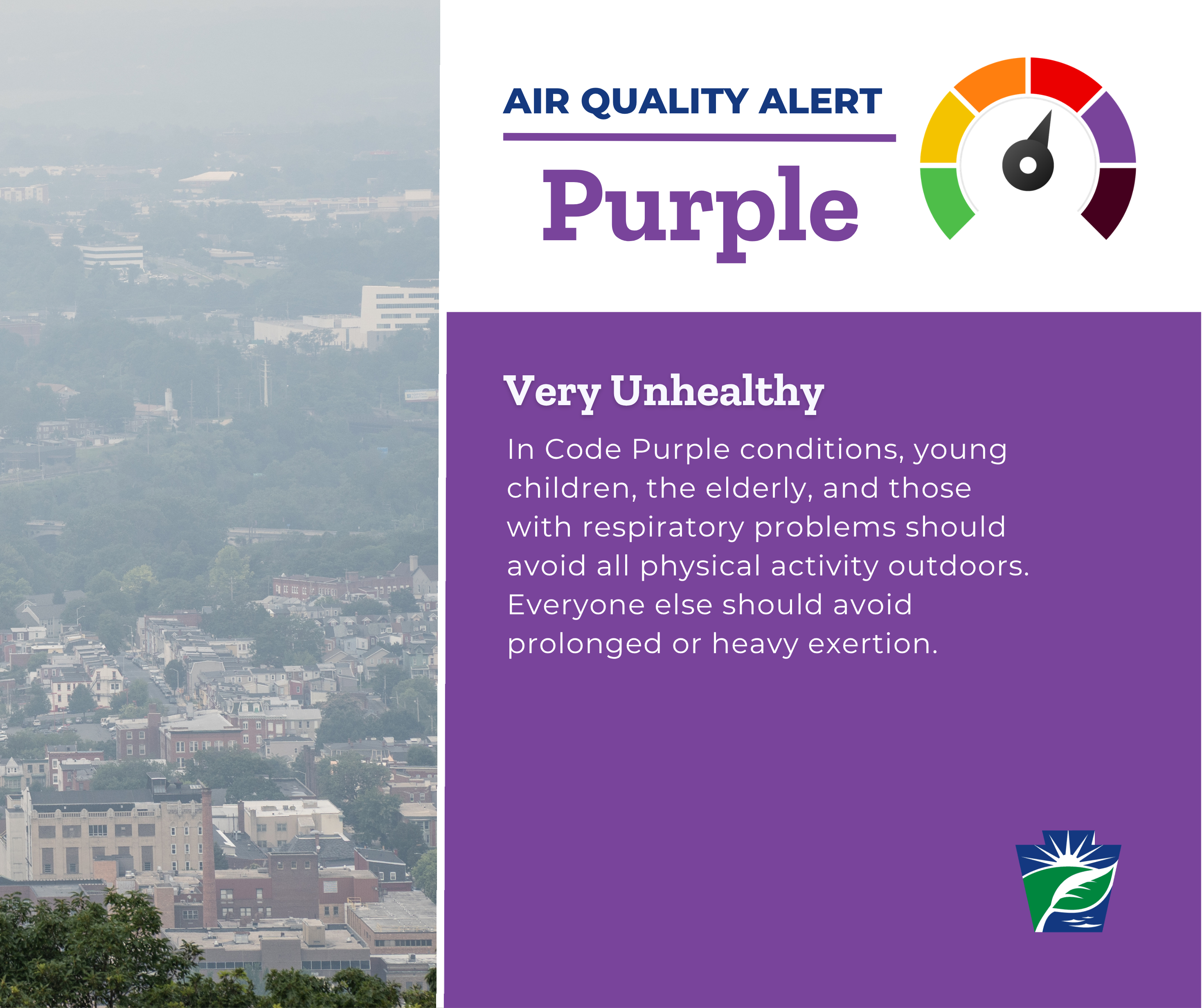
Harrisburg, PA to Face Statewide Code Purple Air Quality Alert
The Pennsylvania Department of Environmental Protection (DEP) has issued a statewide Code Purple Air Quality Alert for Friday, July 17, 2026, due to elevated fine particulate matter and ozone levels. The alert mandates that all residents, particularly those in sensitive groups, minimize outdoor exertion to avoid significant respiratory health risks.
Understanding the Code Purple Threshold
A Code Purple designation signifies that air quality has reached “very unhealthy” levels on the Air Quality Index (AQI). According to the U.S. Environmental Protection Agency (EPA), this stage of the index indicates that the entire population is more likely to experience serious health effects. The concentration of pollutants, specifically PM2.5, poses a direct threat to lung and heart health, often causing immediate symptoms for individuals with asthma, chronic obstructive pulmonary disease (COPD), or cardiovascular conditions.
This alert is not merely a suggestion; it represents a formal acknowledgment that the atmosphere in Pennsylvania has exceeded safety thresholds for the general public. As the state monitors these levels, officials from the Pennsylvania DEP emphasize that the stagnant weather patterns currently trapping pollutants are expected to persist throughout the day, necessitating immediate behavioral changes for residents across all counties.
Regional Impact and Municipal Infrastructure
The impact of this alert is felt unevenly across Pennsylvania’s diverse geography. In high-density urban centers like Philadelphia and Pittsburgh, the “urban heat island” effect often exacerbates the concentration of ground-level ozone. Municipal transit authorities and city planners are currently coordinating to monitor how these air conditions interact with existing transport infrastructure, which often experiences increased stress during periods of extreme heat and poor air quality.
For businesses operating in these regions, the alert creates a complex regulatory and duty-of-care environment. Facility managers must now audit their HVAC and ventilation systems to ensure they are equipped to filter fine particulate matter. Those struggling to maintain safe indoor environments are increasingly turning to environmental compliance consultants to mitigate liability and ensure the safety of their workforce.
“The data confirms that this is a widespread atmospheric stagnation event. It is not localized to one industrial zone but is a basin-wide issue. Protecting vulnerable populations is the primary objective of this alert,” notes a regional air quality monitoring supervisor.
Health Risks and Legal Responsibilities
When the air quality reaches this level, the legal and ethical burden on employers shifts. Under general Occupational Safety and Health Administration (OSHA) guidelines, employers are required to provide a workplace free from recognized hazards. During a Code Purple event, failure to adjust outdoor work schedules for construction crews, landscaping teams, or delivery personnel may constitute a breach of safety standards.
Law firms specializing in labor and safety disputes are frequently consulted during such periods to help organizations draft temporary operating procedures. If your enterprise is currently navigating the complexities of workforce safety and regulatory compliance, consulting with occupational health and safety attorneys is a proactive step to shield your operations from potential litigation and ensure compliance with state mandates.
Mitigation Strategies for Residential and Commercial Property
Beyond the immediate health warnings, this event serves as a stark reminder of the necessity for long-term air quality management. Many commercial buildings are finding that standard filtration is insufficient during extreme events. Upgrading to HEPA-grade filtration systems or installing real-time air quality monitoring sensors has become a standard practice for property owners who prioritize occupant health.
If your property or commercial facility is struggling to maintain air standards during these recurring alerts, connecting with HVAC and air quality engineering firms can provide the technical expertise needed to modernize your infrastructure. These professionals assist in the installation of advanced air purification systems that can neutralize volatile organic compounds and trap particulates before they enter the building envelope.
The Future of Air Quality Monitoring
As Pennsylvania faces increasingly frequent Code Purple events, the role of data-driven policy becomes paramount. The Associated Press has noted that climate-related shifts are contributing to longer and more intense periods of poor air quality across the Northeast. This trend suggests that the 2026 summer season may serve as a benchmark for future municipal planning.
The reality is that atmospheric conditions are no longer just a meteorological concern; they are a fundamental component of public health strategy and business continuity. As the state navigates the remainder of this alert, the focus remains on the intersection of individual responsibility and institutional preparedness. Ensuring that your home or business is equipped with the right resources—from air filtration hardware to legal safety protocols—is the only way to manage the inevitable recurrence of these environmental challenges. For those seeking to bolster their resilience, identifying verified partners within our professional services directory remains the most reliable path to navigating these increasingly volatile conditions.