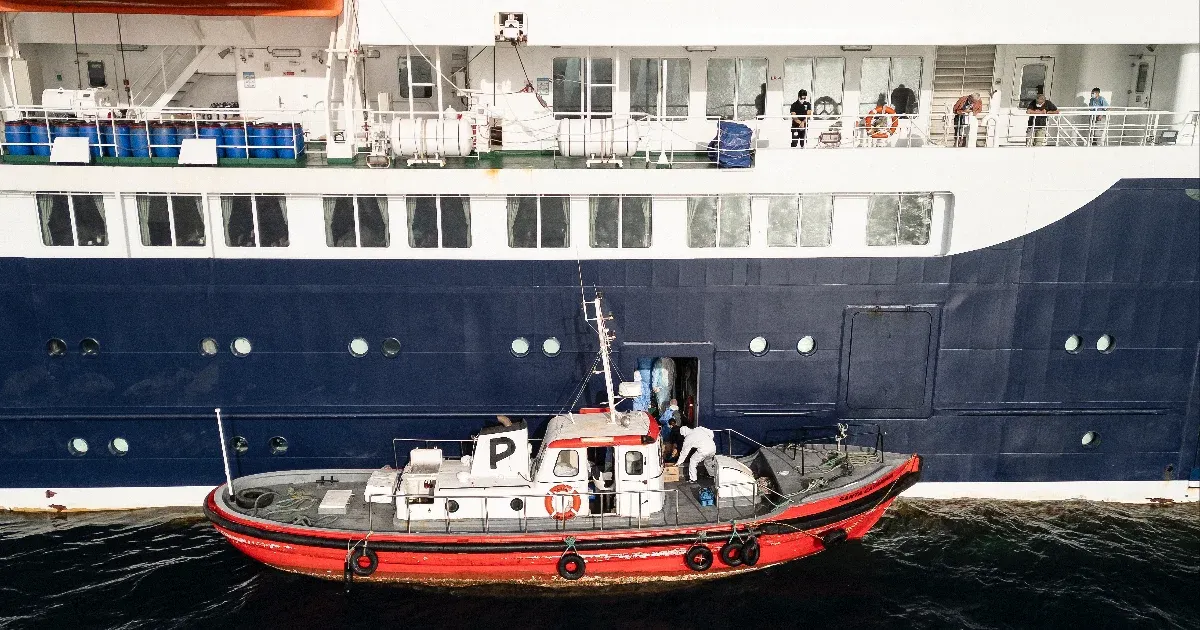
Hantavirus Outbreak on Ocean Liner Heading Toward Europe
A deadly outbreak of the Andes strain of hantavirus aboard the MV Hondius has triggered an international maritime standoff. With three confirmed deaths and rare human-to-human transmission identified, the vessel remains anchored near Cape Verde while the Canary Islands evaluate the biosecurity risks of allowing the ship to dock and disembark passengers.
This is more than a localized medical emergency. it is a systemic failure of the “extreme tourism” model. When a luxury expedition vessel becomes a vector for a rare, potentially lethal pathogen, the conflict between commercial maritime interests and national sovereign health security becomes an immediate geopolitical flashpoint. The MV Hondius is currently a floating liability, testing the limits of the International Health Regulations (IHR) and the willingness of coastal states to provide sanctuary to “plague ships” in the modern era.
The Andes Strain: A Paradigm Shift in Viral Risk
Hantaviruses are traditionally zoonotic, jumping from rodents to humans via inhalation of contaminated urine or droppings. However, the situation aboard the MV Hondius is qualitatively different. The identification of the Andes strain—a variant known for its ability to spread between humans in close contact—transforms the vessel from a site of accidental infection into a mobile incubator.
The logistics of an expedition cruise are designed for isolation, but in the event of a contagious outbreak, that isolation becomes a trap. The ship sailed from Argentina, traversing the Atlantic, effectively carrying a rare South American pathogen into the European periphery. The rarity of this strain means that most port health authorities in the North Atlantic are ill-equipped for the specific diagnostic and containment requirements of the Andes variant.
The human cost is already evident. Three passengers have died. Several others, including a British doctor who was part of the crew, have required emergency evacuation. The evacuation process itself creates a secondary risk vector, as patients were transported to the Netherlands and South Africa, forcing multiple national health ministries to coordinate a response to a single vessel’s failure.
“The transition of a zoonotic virus to human-to-human transmission within a closed maritime environment represents a worst-case scenario for port state control. We are seeing a collision between the desire for ‘off-the-beaten-path’ tourism and the hard reality of global biosafety.”
Sovereignty vs. Sanctuary: The Port State Standoff
The MV Hondius is currently caught in a diplomatic vacuum. While the vessel intends to travel to the Canary Islands, the local authorities have expressed significant hesitation. This is not merely a health concern but a political one; allowing a ship with a known, human-transmissible deadly virus to dock can trigger public panic and economic disruption for the tourism-dependent islands.

This tension highlights a gap in maritime law. While the International Maritime Organization (IMO) provides frameworks for safety and pollution, the rapid-response biosecurity protocols for non-standard outbreaks remain fragmented. When a vessel is denied entry, it becomes a “stateless” medical ward, relying on the goodwill of nearby nations and the limited resources of the operator, Oceanwide Expeditions.

For the 150 people remaining on board, the “strict precautionary measures” mentioned by the operator are a thin veil for a high-stakes quarantine. The psychological toll of being stranded near Cape Verde, knowing that the destination is hesitant to accept them, adds a layer of humanitarian crisis to the medical one.
As these complexities mount, cruise operators are finding that standard insurance policies are insufficient. Many are now seeking global health risk consultants to rewrite their emergency response protocols and ensure that “extreme” itineraries include viable, pre-negotiated medical evacuation corridors.
The Macro-Economic Ripple: The Cost of Extreme Tourism
The MV Hondius incident serves as a warning to the broader luxury expedition industry. The trend toward “last-chance tourism”—visiting remote regions like Antarctica or the deep Amazon—increases the probability of encountering rare pathogens. This “viral prospecting” creates a hidden liability for the global economy.
The financial fallout extends beyond the immediate cost of the outbreak. We are likely to see a surge in maritime insurance premiums for vessels operating in high-risk biological zones. The legal battle over liability—whether the fault lies with the operator’s screening, the ship’s sanitation, or an unavoidable natural event—will likely occupy international maritime law firms for years.
The economic friction is evident in the supply chain of specialized medical evacuations. The cost of chartering high-dependency aircraft to move a 56-year-old Briton or a 65-year-old German from a stranded ship to a European hospital is astronomical, often falling into a grey area between corporate responsibility and state-funded rescue.
Containment and Logistics: The Solution Matrix
To prevent the MV Hondius scenario from becoming a blueprint for future outbreaks, the industry must pivot toward a more integrated security model:

- Biosecurity Audits: Implementing mandatory biological risk assessments for all expedition itineraries that cross multiple ecological zones.
- Sovereign Agreements: Establishing pre-approved “safe harbor” agreements between cruise lines and port states to avoid diplomatic standoffs during health crises.
- On-Board Diagnostics: Moving beyond basic medical kits to include rapid molecular diagnostics for zoonotic threats.
Multinational corporations and luxury travel groups are already reacting. To mitigate these risks, firms are onboarding international crisis management firms to simulate “black swan” biological events and create robust communication strategies that prevent port-state panic.
The saga of the MV Hondius is a stark reminder that in a hyper-connected world, there is no such thing as a truly “remote” destination. The distance between a remote Argentinian rodent and a hospital in Zurich is now only a few weeks of sailing. As the global elite continue to push the boundaries of exploration, they are inadvertently expanding the map of biological vulnerability.
The shifting global chessboard now includes pathogens as geopolitical actors. Navigating this new landscape requires more than just a medical team; it requires a sophisticated network of legal, financial and strategic partners. Whether you are a corporate entity managing international assets or a firm expanding into emerging markets, the ability to find vetted, high-authority partners is the only real hedge against the unpredictable. The World Today News Directory remains the essential resource for connecting with the international legal and risk consultants capable of managing the fallout of a world without borders.