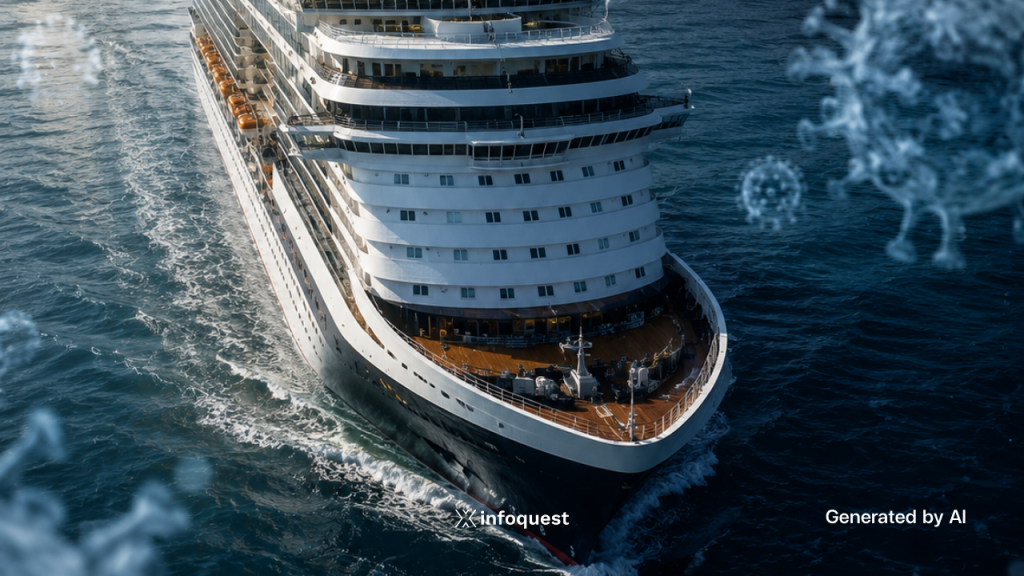
Hantavirus Cruise Ship Outbreak: WHO Confirms Not a New COVID Wave
The MV Hondius, a cruise ship sailing the Atlantic, has become the epicenter of a rapidly escalating hantavirus outbreak—one that has already claimed three lives and infected at least eight passengers. The confirmed strain, Andes virus, is a rare but deadly hantavirus variant capable of human-to-human transmission, forcing global health authorities to scramble for containment protocols. Unlike COVID-19, which spreads through respiratory droplets, hantaviruses are primarily rodent-borne—but this outbreak raises critical questions about how a virus with such a niche transmission pathway could ignite a maritime cluster. The clinical urgency is compounded by the absence of a specific antiviral treatment, leaving clinicians reliant on supportive care and rapid diagnostic triage.
Key Clinical Takeaways:
- The Andes virus strain, confirmed by the WHO, has a documented human-to-human transmission rate, complicating containment efforts on the MV Hondius.
- Three fatalities and five severe cases (including two in critical condition) underscore the virus’s high morbidity, with symptoms progressing from flu-like illness to acute respiratory distress within 1–2 weeks.
- Public health response hinges on rodent exclusion protocols, early PCR confirmation, and isolation—yet cruise ships present unique logistical hurdles for these measures.
The Viral Pathogen: Why Andes Virus Demands Immediate Attention
The Andes virus (ANDV), a member of the Hantaviridae family, is endemic to South America but has historically caused sporadic outbreaks in Argentina, Chile, and Patagonia. What distinguishes this strain is its rare but confirmed human-to-human transmission, documented in clusters where close contact—such as in healthcare or household settings—facilitated spread (WHO Fact Sheet). The MV Hondius outbreak marks the first maritime cluster, raising alarms about viral vector adaptation in enclosed environments.

According to the CDC’s foundational epidemiology, hantaviruses typically infect rodents asymptomatically before spilling over to humans via aerosolized excretions. However, ANDV’s pathogenesis includes direct person-to-person transmission, likely via respiratory droplets or contaminated surfaces—a mechanism more akin to influenza than traditional hantavirus spread. This dual transmission pathway explains why the cruise ship’s confined quarters may have amplified the outbreak.
—Dr. Elena Vasquez, PhD, Epidemiologist, Pan American Health Organization (PAHO)
“The Andes virus outbreak on the MV Hondius is a stark reminder that zoonotic viruses can exploit human mobility vectors. Cruise ships, with their high-density populations and limited rodent control, create a perfect storm for amplification. Our priority must be real-time genomic surveillance to track potential mutations that could further enhance transmission.”
Clinical Timeline: From Exposure to Critical Care
The outbreak’s progression aligns with the biphasic symptomology of hantavirus pulmonary syndrome (HPS). Initial symptoms—fatigue, fever, and myalgia—mimic influenza, delaying diagnosis. By days 4–10, patients develop acute respiratory distress syndrome (ARDS), as fluid accumulates in the lungs, often leading to fatal outcomes if not managed in an ICU.
| Phase | Symptom Onset | Critical Complications | Case Fatality Rate (CFR) |
|---|---|---|---|
| Early (1–8 weeks post-exposure) | Fever, chills, headache, abdominal pain | None (diagnostic window) | 0% |
| Late (4–10 days post-initial symptoms) | Cough, dyspnea, chest tightness | ARDS, cardiopulmonary collapse | 38% (per CDC HPS data) |
On the MV Hondius, three fatalities and two critical cases reflect this trajectory. The ship’s medical team, now reinforced with three additional physicians, is administering supportive therapies, including mechanical ventilation and fluid management—standard protocols with no curative antiviral approved (per NIH consensus). The absence of a specific treatment underscores the need for pre-exposure prophylaxis in high-risk settings, though no vaccine exists for ANDV.
Public Health Response: Gaps and Global Coordination
The WHO’s confirmation of ANDV on May 6 triggered a multi-agency response, with the cruise line collaborating with Dutch and Spanish health authorities. The ship’s diversion to the Canary Islands—expected to take 3–4 days—allows for medical evacuations and quarantine protocols. However, the outbreak exposes critical vulnerabilities:
- Diagnostic delays: Hantavirus requires PCR confirmation, which may not be available on board. Rapid antigen tests are under development but not yet deployed.
- Rodent control failures: Cruise ships often lack stringent pest management, despite hantaviruses’ primary zoonotic reservoir.
- Human-to-human transmission: The ANDV strain’s ability to spread directly complicates contact tracing, requiring isolation of all symptomatic passengers.
—Dr. Rajiv Shah, MD, Infectious Disease Specialist, Johns Hopkins Center for Health Security
“This outbreak is a wake-up call for the cruise industry. The Andes virus’s dual transmission routes mean that even a single infected rodent could trigger a cascade. We need mandatory pre-departure health screenings and onboard vector control audits—not just for hantaviruses, but as a model for emerging zoonotic threats.”
Directory Triage: Who Steps In When the Outbreak Hits Shore?
The MV Hondius’s passengers, now en route to Spain and the Netherlands, will require specialized infectious disease management. For healthcare providers and clinics preparing for potential cases:
- Patients with ARDS of unknown etiology and recent cruise travel should be evaluated for hantavirus via board-certified infectious disease specialists, who can coordinate with public health labs for PCR testing.
- Hospitals lacking high-containment units may need to transfer critical cases to designated ICU centers with experience in viral hemorrhagic fevers.
- Cruise operators and maritime health authorities should consult healthcare compliance attorneys to navigate quarantine protocols and liability risks under the International Health Regulations (IHR).
The Future: Can We Prevent the Next Maritime Outbreak?
This outbreak highlights the intersection of globalization and zoonotic spillover. While ANDV remains rare, climate change and urbanization are expanding rodent habitats, increasing human exposure. The cruise industry, in particular, must adopt proactive measures, including:
- Onboard rodent surveillance programs with real-time reporting.
- Pre-departure serological screening for passengers with recent travel to endemic regions.
- Collaboration with WHO’s Global Outbreak Alert and Response Network (GOARN) for rapid response.
The MV Hondius incident serves as a case study in adaptive public health. By leveraging WHO’s hantavirus toolkit and investing in diagnostic innovation, we can mitigate future risks. For travelers, clinicians, and cruise operators alike, vigilance—and access to the right specialized resources—will be the difference between containment and catastrophe.
Disclaimer: The information provided in this article is for educational and scientific communication purposes only and does not constitute medical advice. Always consult with a qualified healthcare provider regarding any medical condition, diagnosis, or treatment plan.