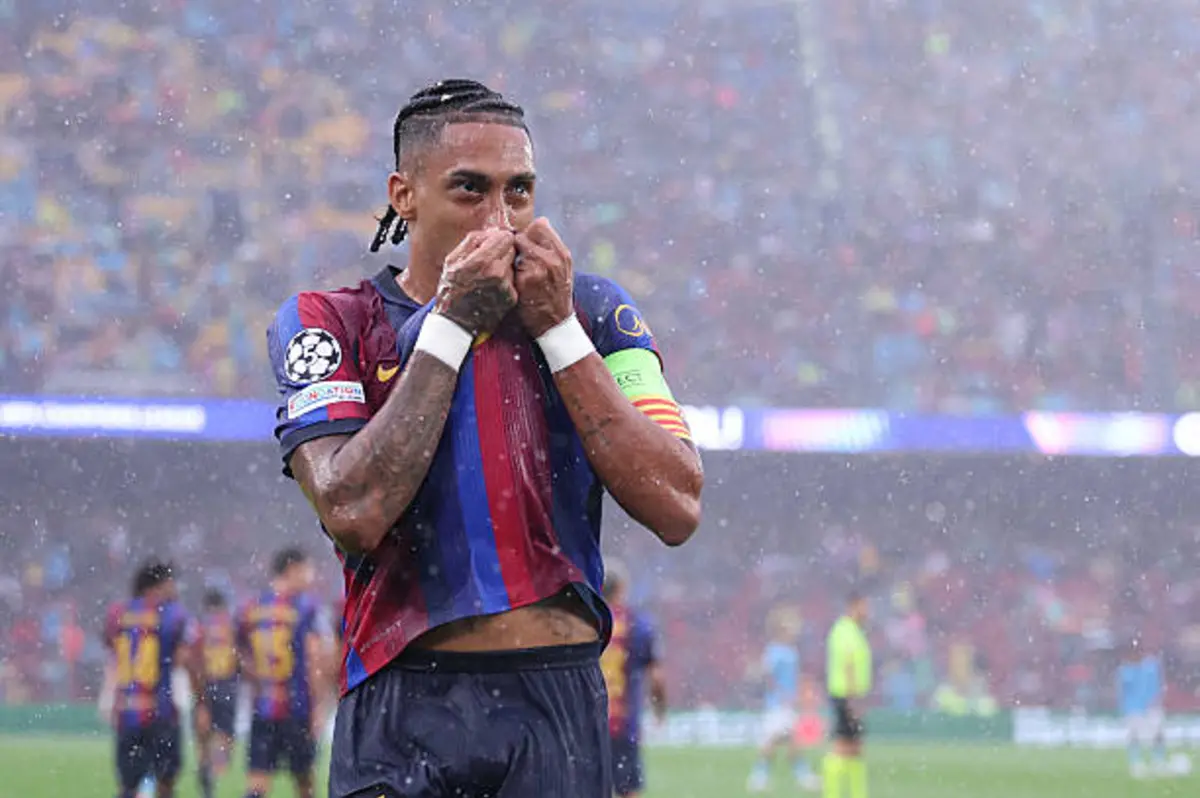
Hansi Flick reinvents Raphinha as Barcelona’s new striker
Barcelona manager Hansi Flick has reinvented Brazilian winger Raphinha as a central striker, filling a tactical void in recent matches.
The Tactical Void and Flick’s Solution
Managing squad injuries and roster constraints forces managers to experiment with unconventional formations. Faced with a lack of a traditional, physical target man, Flick deployed Raphinha centrally during recent domestic fixtures. This structural shift moves away from a static focal point toward a hyper-mobile player who drops deep to drag central defenders out of alignment.
Advanced Metrics and Comparative Output
The statistical profile of Barcelona’s attack changes dramatically with the Brazilian forward operating through the middle. Data analyst Albert Plaia, referenced in regional reports, notes that the fixtures against Elche and Athletic Bilbao ranked among the top five attacking performances of the Flick era in terms of chance quality, yielding expected goals (xG) marks of 4.38 and 4.23 respectively.
Furthermore, Raphinha averages 22 high-intensity sprints per match in the central role, eclipsing Lewandowski’s previous benchmark of 13 sprints. This relentless vertical pressure stretches opposing low blocks. It leaves space for on-rushing midfielders like Pedri and Fermín López to exploit, directly mirroring the scoring sequence against Athletic Bilbao where Raphinha attacked the vacated central corridor.
Leadership, Pressing, and Squad Flexibility
Beyond raw positioning, Flick relies on Raphinha’s intangible qualities to anchor the first line of defense. “Raphinha is one of the team’s leaders on the pitch, and the rest of the players engage immediately when he raises the intensity and tempo,” Flick stated regarding the tactical choice.

Flick maintains operational flexibility by keeping secondary options ready within the squad. While Raphinha remains the primary solution in the absence of a traditional number nine, the German manager confirmed that Fermín López also serves as a viable central option, having consistently found the score sheet during late-game substitute appearances in that role. This strategic versatility gives the technical staff multiple tactical looks heading deeper into the European calendar.
As clubs adjust their tactical frameworks and manage complex player contracts or positional shifts, front offices routinely rely on external counsel.
Future Trajectory and Squad Outlook
Integrating Raphinha into a central attacking band proves that tactical innovation can outweigh traditional roster limitations in modern football. By combining high pressing intensity with creative distribution, Barcelona sustains elite chance creation without relying on a conventional target forward.

Disclaimer: The insights provided in this article are for informational and entertainment purposes only and do not constitute medical advice or sports betting recommendations.