Handelsblatt Fights AI Traffic Slump with Content Warehouse and Smart Search to Retain Control of Audience Access
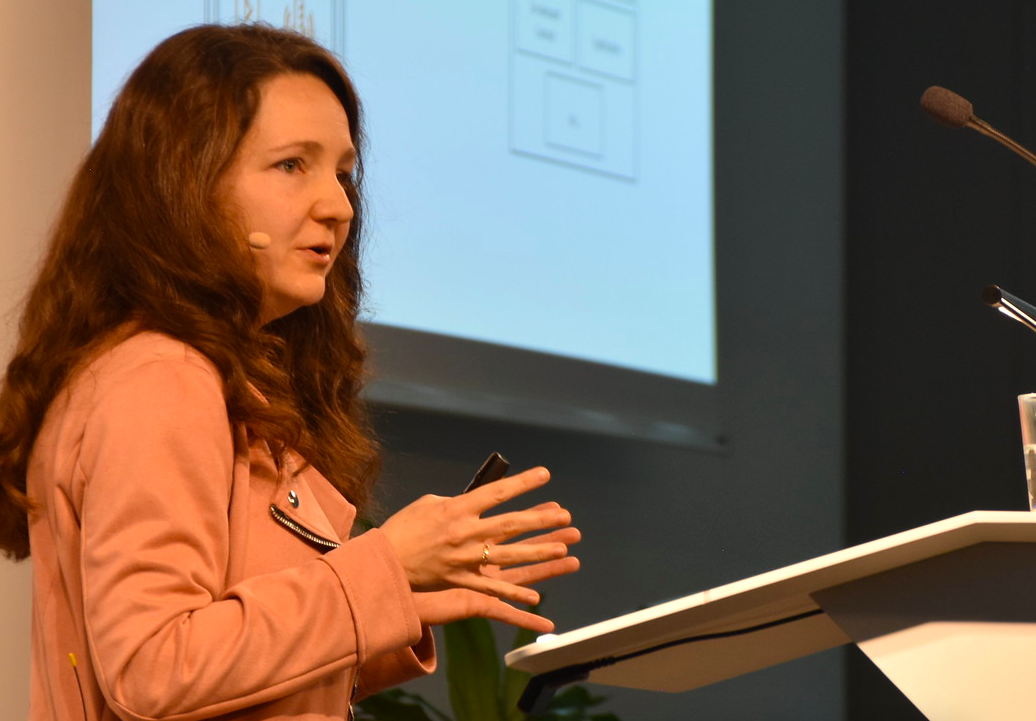
Handelsblatt Media Group is combating declining website traffic caused by AI-powered search summaries through a dual strategy: building a centralized content warehouse to structure all journalistic output for multi-format reuse and launching Smart Search, an AI-driven tool that prioritizes accuracy over instant answers to preserve reader trust. This approach, revealed at WAN-IFRA’s Frankfurt AI Forum on April 24, 2026, reflects a broader shift among European publishers to reclaim control over content distribution as generative AI reshapes how audiences seek information—favoring direct answers over article clicks—and threatens traditional ad and subscription models.
From Content Chaos to Structured Intelligence: Handelsblatt’s Warehouse Vision
Two years before the public launch of Smart Search, Handelsblatt began constructing what Janina Reimann, Director of Digital Products, calls a “content warehouse”—a centralized, semantically tagged repository designed to decouple content creation from delivery mechanics. This system ingests not only written articles but also podcasts, video recordings, conference transcripts, and panel discussions from the hundreds of events Handelsblatt hosts annually across Germany and Europe. By structuring this diverse media into a unified database, the publisher aims to enable flexible output: the same source material can power a newsletter, a social media clip, a paywalled deep-dive, or an AI-generated response—all while maintaining version control and provenance.

This initiative predates the current AI search crisis but has become critical as platforms like Google’s Search Generative Experience (SGE) and Microsoft’s Copilot increasingly synthesize publisher content without driving traffic back to original sites. A 2025 Reuters Institute survey found that 68% of users in Germany now prefer AI summaries over clicking through to news articles for factual queries, up from 41% in 2022. Handelsblatt’s warehouse ensures that even when AI systems extract information, the publisher retains structural ownership—and can monetize reuse through syndication, licensing, or internal repackaging.
Smart Search: Accuracy as a Competitive Edge
Launched in early 2026, Smart Search is Handelsblatt’s consumer-facing AI interface, but it deliberately diverges from the open-ended chatbot model. Instead of generating speculative answers, the tool is programmed to withhold responses when source confidence falls below a threshold—a design choice Reimann describes as “preferring silence over inaccuracy.” This constraint has led to occasional user frustration, but internal surveys show that 74% of subscribers who receive an answer from Smart Search report higher trust in Handelsblatt’s platform compared to generic AI assistants, precisely because they recognize the response is verifiable.
Critically, Smart Search is not designed to retain users within a closed loop. Each response includes contextual links to related articles, podcast episodes, or upcoming events—such as the Handelsblatt Energy Summit in Frankfurt or the European Banking Forum in Berlin—complete with ticket purchase options. This cross-promotion strategy transforms search from a dead end into a discovery engine for Handelsblatt’s broader product ecosystem, directly addressing the churn risk posed by AI-mediated consumption.
Geo-Local Impact: Strengthening Hesse’s Knowledge Economy
As a Frankfurt-based publisher with deep ties to Germany’s financial and industrial sectors, Handelsblatt’s innovations have ripple effects across Hesse’s regional economy. The content warehouse and Smart Search rely on local infrastructure investments, including expanded data processing capabilities at the company’s Eschborn campus and partnerships with Hessen Trade & Invest to attract AI talent specializing in natural language processing for financial journalism. In a statement to the Wiesbaden State Chancellery, Dr. Lena Vogt, Head of Digital Innovation at Hessen Trade & Invest, emphasized the strategic value of such projects:
“When a global publisher like Handelsblatt invests in structuring its intellectual property for AI readiness, it doesn’t just protect its own business—it elevates the entire region’s reputation as a hub for trustworthy, high-value information ecosystems. This attracts skilled workers, encourages university-industry collaboration, and positions Hesse as a leader in responsible AI adoption for media.”
Handelsblatt’s focus on transcription and multilingual output supports accessibility compliance under the EU’s Accessibility Directive (EN 301 549), which requires public-sector-linked digital services to offer alternative formats for people with disabilities. By converting audio and video content into searchable, structured text, the publisher not only serves internal reuse goals but also advances regional inclusivity objectives—benefiting organizations like disability advocacy groups and accessibility consultants who advise on compliant digital design.
Directory Bridge: Solving the Trust and Discovery Problem
The core problem AI-driven search creates for consumers is not just inconvenience—it’s epistemic erosion. When answers arrive without provenance, users face increased cognitive load verifying claims, leading to distrust or disengagement. For professionals who rely on timely, accurate information—such as legal researchers, financial analysts, or policy advisors—this uncertainty carries real risk. Handelsblatt’s response offers a blueprint: prioritize source fidelity, structure content for machine readability, and use AI as a gateway—not a replacement—for authoritative journalism.

This model creates clear opportunities for directory-listed entities that support information integrity and user experience. Law firms specializing in media and intellectual property law can advise publishers on licensing frameworks for AI training data and syndication rights in the age of generative models. Meanwhile, enterprise search consultants and knowledge architecture specialists are increasingly tasked with building the incredibly taxonomies and metadata schemas that power systems like Handelsblatt’s content warehouse—transforming raw archives into intelligent, navigable knowledge bases.
Even beyond media, the challenge of balancing AI efficiency with trust resonates in sectors like healthcare and public administration, where misinformation can have tangible consequences. Municipal agencies and civic technology providers are now exploring similar “trusted AI” interfaces—combining retrieval-augmented generation with human oversight—to ensure that automated responses to citizen inquiries about permits, benefits, or regulations are both helpful and verifiable.
Editorial Kicker: The Future Belongs to the Structured
As AI continues to abstract away the origins of information, the publishers, platforms, and institutions that invest in structuring their knowledge—not just producing it—will define the next era of digital trust. Handelsblatt’s experiment reminds us that the opposite of AI-driven fragmentation isn’t resistance to change, but deliberate reconstruction: building systems where every answer carries a traceable lineage, and every query becomes an invitation to deeper engagement. For professionals navigating this shift, the World Today News Directory remains the essential compass—connecting you to verified experts who don’t just understand the technology, but know how to wield it in service of clarity, accountability, and human insight.