Haitians March for Bukele as UN Documents 4,595 Gang Killings in Nine Months
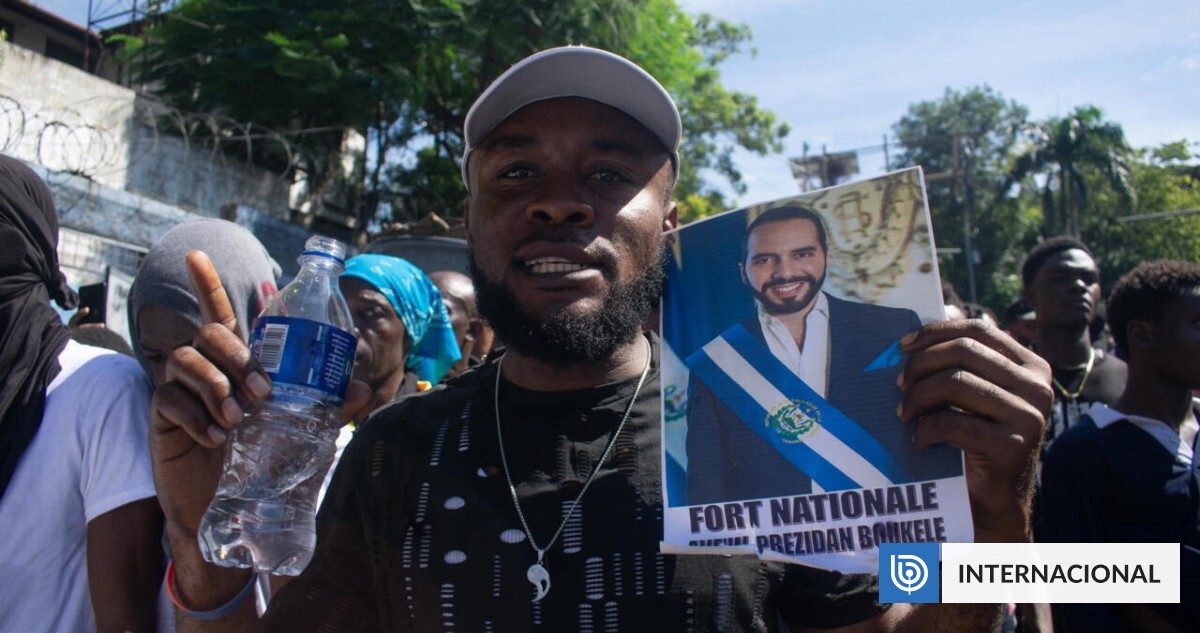
On Tuesday (17.11.2026), thousands of Haitians paraded through Port-au-Prince, brandishing Salvadoran flags and voicing their approval of the soldiers President Nayib Bukele dispatched to combat the gangs dominating much of the capital — a display of optimism occurring as the United Nations reported 4,595 victims mortales atribuidas a la violencia de las pandillas en Haití, solo en los primeros nueve meses del año.
The crowds greeted the Salvadoran contingent — a deployment of some 2,500 soldiers — with Haitian flags, placards and posters of Bukele as the troops passed. Others asked for the explosive-carrying drones and robotic dogs now patrolling the streets.
🗨️Ningún contingente extranjero, por eficaz que sea, puede sustituir indefinidamente a un Estado, el futuro haitiano no se decidirá en los operativos contra las pandillas, sino en la capacidad de reconstruir las instituciones políticas, sociales y económicas. ✍️ @crisballinas…
The marches were spontaneous, and spread beyond the capital. Organizers and young influencers announced further mobilizations in several regions for Tuesday and Wednesday, in respaldo a la presencia de las fuerzas salvadoreñas.
The outpouring reflects something Haitians say neither their own government nor previous international missions ever gave them: a feeling of being accompanied. Sam Vigersky, a researcher at the Council on Foreign Relations, wrote in a report published on November 17 that El Salvador deployed more troops in two weeks than the UN-backed mission managed in more than a year — and that this has awakened a long-dormant sentiment among many Haitians: hope.
Diferentes medios de comunicación internacionales han dado seguimiento a las acciones que ejecuta El Salvador en Haití, difundiendo principalmente el apoyo que la población haitiana brinda al despliegue de tropas salvadoreñas. pic.twitter.com/ToUPsvHgYs
Why Haitians cheer a foreign president
The testimonies gathered explain the devotion.
“Damos gracias a nuestro padre, Bukele,” agrega Lomba.
Marie Michelle Dorville, a 55-year-old street vendor who spoke to the AP, called Bukele “a breath of hope.” Her only request, she said, is that the police finish off the gang members “once and for all, so that everyone can lead a normal life.”
Las calles en diferentes zonas de Haití lucen llenas de personas que expresan su respaldo al Presidente @nayibbukele, ante el despliegue de tropas salvadoreñas que apoyan las operaciones de seguridad contra las pandillas en este territorio. 📹: Cortesía. pic.twitter.com/mAfaT6n4l1
One banner in the crowd read: “President Bukele, the people of Jacmel ask you to keep killing the gangs.” Another marcher brandished a mock identity document adopting Bukele as a Haitian citizen from Carrefour. Demonstrators chanted “Bukele is here to liberate us,” NTN24 reported, describing crowds dancing and singing as they walked.
During a soccer game between Haiti and the United States over the weekend in Miami, a number of Haitian spectators expressed their support for President Bukele, hopeful that the arrival of his troops would help curb gang activity.
Haitianos salieron a las calles para respaldar al Presidente @nayibbukele por la actuación en contra de las pandillas, destaca la comunicadora @HazimNoelia. pic.twitter.com/7l2Ketgnyp
The gangs answer with executions
The celebration carries a lethal risk. Local media reported that gang members have begun retaliating against public displays of support for Bukele. According to the station Radio Télé Galaxie, at least 10 young people were executed “in cold blood” after their phones were searched and messages favorable to the Salvadoran president were found.
The killings took place on the Cul-de-Sac plain, in the Croix-des-Bouquets area of the Port-au-Prince metropolitan zone — the same area where four Salvadoran soldiers were seized on October 18. Retaliation has also been reported in Lilavois, Carrefour and Fontamara, on the capital’s outskirts. None of it stopped the demonstrators.
The numbers behind the hope
Throughout the first ten months of 2026, the office of High Commissioner Volker Türk verified that 4,595 people were killed and 2,050 were injured as a direct result of armed violence in Haiti. Over five years, the death toll exceeds 20,000, and criminal organizations are estimated to control roughly 70 percent of the capital’s territory.
| Figure | Period | Source |
|---|---|---|
| 4,595 dead, 2,050 wounded | First nine months of 2026 | UN human rights office |
| More than 20,000 dead | Last five years | UN human rights office |
| 514 dead, 235 wounded in security operations | July to September | UN human rights office |
| 44 extrajudicial executions by police | July to September | UN human rights office |
| 87 civilians killed by explosive drones, including 21 children | July 2025 to September 2026 | UN human rights office |
Office spokesperson Marta Hurtado said the gangs have adapted their tactics, carrying out retaliation attacks against people suspected of collaborating with security forces, selective and organized kidnappings, increased forced recruitment of children and young people, and ever-tighter restrictions on freedom of movement.

Furthermore, a report from the office of High Commissioner Volker Türk casts doubt on the utility of GSF-provided hardware like explosive drones, noting that 87 civilians, 21 of whom were children, were killed by such devices between July 2025 and September 2026, according to BioBioChile – La Red de Prensa Más Grande de Chile.
The International Crisis Group, por su parte, revela que el número de civiles muertos o heridos durante operaciones de las fuerzas de seguridad aumentó 24% en el primer trimestre de 2026 y apunta que el uso de drones “ha traído rendimientos decrecientes… sin producir cambios significativos en el control territorial”.
La oficina del Alto Comisionado de la ONU para los Derechos Humanos pidió este martes a las fuerzas de seguridad que operan en Haití que prioricen la protección de la población y solo ejerzan la fuerza letal como último recurso, the DW reported, according to Dw.
What the troops have actually taken
Bukele announced on November 10 that a joint task force had destroyed what he described as “la guarida de Lanmo San Jou y el cuartel general de la pandilla 400 Mawozo”, publishing a video of helicopters firing on a large property.
Since then, Salvadoran forces have occupied a football stadium in the capital with the help of the Haitian National Police — the Sylvio Cator national stadium, taken four days after it had been reclaimed by the Haitian National Police (PNH) with aid from Salvadoran units.
infobae reported that the Port-au-Prince mayor’s office sent heavy machinery and dozens of workers on Monday to clear debris around the stadium while armored Salvadoran units patrolled the sector. The gangs’ 400 Mawozo, however, was driven from Croix-des-Bouquets and has already returned to terrorize civilians, because no plan exists to hold the spaces the military briefly conquered.
Thousands flood the streets of Haiti’s capital to cheer El Salvador’s President Bukele and Salvadoran troops fighting gangs in the troubled Caribbean country. https://t.co/H5I9DUnDyb
A mission with a deadline — and doubts
El Salvador aseguró este lunes que retirará sus tropas de Haití una vez cumplan la misión de rescatar a cuatro militares desaparecidos. “Si el día de mañana aparecen (los aerotécnicos), como lo decía el presidente Bukele, nosotros nos venimos”, dijo a periodistas el ministro de Seguridad, Gustavo Villatoro, durante un acto en San Salvador en el que participó su homólogo haitiano, Patrick Pélissier.
Pélissier señaló que el primer ministro haitiano, Alix Didier Fils-Aimé, prepara reuniones con las autoridades salvadoreñas para dialogar sobre la posibilidad de extender la operación.
The International Crisis Group adds structural reasons for skepticism: informants inside the Haitian police let gangs “undermine operations directed against them,” corruption in the armed forces is a concern, and the Brigade for the Security of Protected Areas (BSAP) — a force without constitutional recognition — “has grown larger than the army and operates largely outside state control.”
Asked about human rights and rule-of-law considerations, Salvadoran Vice President Félix Ulloa denounced what he called a hidden agenda to criticize the operation. Villatoro said El Salvador must “begin preparing Haiti for a true rule of law, so that its institutions work and its legal frameworks function effectively in the future.”
Regardless of any disagreements or scrutiny regarding the impact of the Salvadoran presence, the desperate Haitian public sent a very clear message to the troops sent by Bukele this Tuesday. “Sigan luchando…porque si no, acabarán matándonos a todos”, suplicaba una pancarta mostrada por los manifestantes.