
Hadrons 2026: Music Competition for Emerging Latvian Artists
The Grassroots Engine: How Latvia’s ‘Hadron’ Contest Fuels the 2026 Music Pipeline
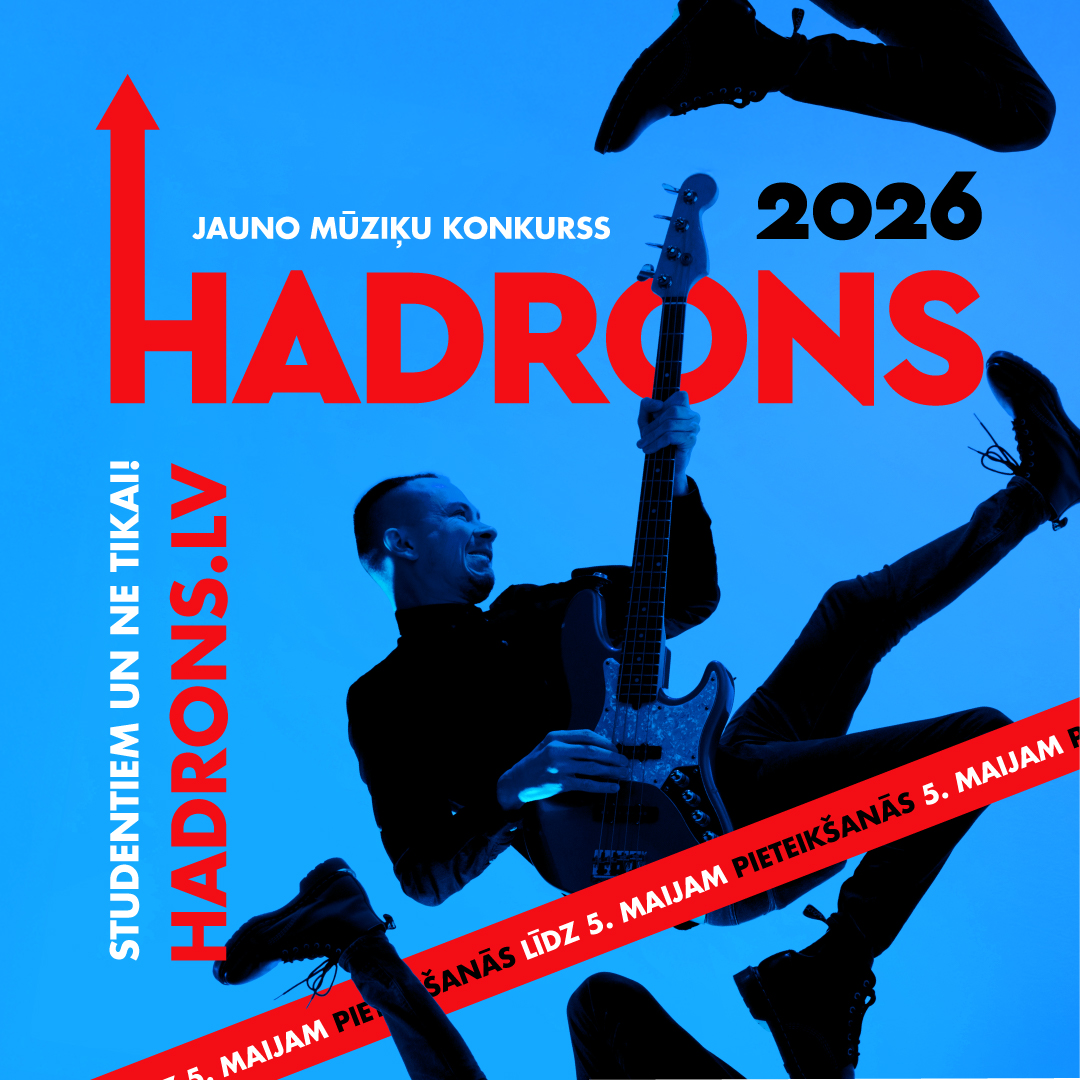
Radio NABA and the University of Latvia Student Council have officially opened applications for “Hadron 2026,” a premier talent incubator seeking bands and solo artists active for less than four years. Running through May 5th, the competition culminates in a live final at Latvian Radio’s Studio 1 on May 21st, offering winners critical industry access including recording time and slots at major festivals like “Good Nature” (Laba Daba). This initiative addresses the perennial supply-chain issue in music: the gap between raw student talent and professional market readiness.

While the global media conglomerates spend Q1 2026 reshuffling C-suite executives—exemplified by Dana Walden’s recent unveiling of a new Disney Entertainment leadership team spanning film, TV, and games—the real innovation often happens far from the boardrooms of Burbank. In Riga, the Hadron 2026 competition is proving that the most viable IP often starts in university dorms, not development hell. As the industry calendar heats up ahead of the summer festival circuit, this contest serves as a critical filtering mechanism for the Baltic music scene.
The mechanics of Hadron are deceptively simple but strategically vital. Organizers are calling for musical associations, individual performers, and creative projects that include at least one currently enrolled student. The constraint of a four-year maximum career span ensures the focus remains on emerging acts rather than established local heroes. From the submitted demos and applications, a jury of industry professionals—comprising musicians, journalists, producers, and Radio NABA representatives—will select six finalists. This curation process is the first real test of brand equity for these artists; they aren’t just being judged on sound, but on marketability.
However, winning a contest is merely the entry fee. The true challenge for these six finalists lies in the transition from “student project” to “commercial entity.” The prize fund, which includes paid studio recording time and performance slots at venues like Vagonu Zāle (Wagon Hall) and the Valmiera Manor festival, provides the initial capital. Yet, without proper legal infrastructure, this exposure can become a liability. Young artists frequently sign away their master rights or agree to unfavorable licensing deals in the excitement of a breakthrough moment.
What we have is where the disconnect between creative ambition and business reality often causes a fracture. When a band suddenly finds itself on the lineup for a major festival like “Good Nature,” the logistical and legal demands spike exponentially. A tour of this magnitude isn’t just a cultural moment; it’s a logistical leviathan. The production is already sourcing massive contracts with regional event security and A/V production vendors, while local luxury hospitality sectors brace for a historic windfall. For a student band, navigating these contracts without representation is a recipe for financial erosion.
“In a year where major studios like Disney are consolidating power under new chairmen like Debra OConnell to oversee all TV brands, the independent sector must be equally rigorous. The difference is that for a student band, one terrible contract can complete a career before it starts. They need specialized intellectual property attorneys to audit their publishing deals before they ever step on the main stage.”
The history of Hadron supports the need for this professionalization. Now in its 21st year, the contest boasts an alumni roster that includes “Aptiekas Bēru Ansamblis” (Pharmacy Funeral Ensemble), “The Movies” (later known as “Tribes of the City”), and “Das Sonntags Legion.” These acts didn’t just win a trophy; they survived the transition. According to the U.S. Bureau of Labor Statistics, occupations in arts and entertainment require not just creative talent but rigorous adherence to occupational requirements regarding contracts and performance standards. The Hadron finalists are essentially entering a microcosm of this broader labor market.
The timeline for the finalists is aggressive. With applications closing on May 5th and the final concert set for May 21st at the Latvian Radio 1 Studio, the turnaround time for production is tight. This pressure cooker environment mimics the SVOD (Subscription Video on Demand) content mills, where speed-to-market is the primary metric. The finalists will be broadcast via video and radio live streams, instantly expanding their audience beyond the physical venue. This digital footprint requires immediate reputation management. When a brand deals with this level of public fallout or sudden visibility, standard statements don’t operate. The studio’s immediate move is to deploy elite crisis communication firms and reputation managers to stop the bleeding, and student bands should adopt a similar, albeit scaled-down, defensive posture regarding their social media narratives.
The Economic Reality of the “Student” Label
There is a misconception that “student” implies “amateur.” In the 2026 landscape, student-led projects are often the most agile content creators, unburdened by the legacy costs of older labels. However, they lack the backend gross participation that established artists negotiate. The Hadron prize of “paid recording time” is significant because studio time is a hard cost that usually eats into an independent artist’s runway. By subsidizing this, Radio NABA is effectively acting as a venture capital firm, investing in the human capital of the Latvian music scene.
Yet, the industry is ruthless. As noted in recent reports regarding Disney Entertainment’s leadership restructuring, the market is demanding cross-platform versatility—spanning film, TV, streaming, and games. The Hadron finalists who succeed will be those who view their music not just as art, but as IP that can be synchronized, licensed, and expanded. The jury, comprising producers and journalists, is likely scouting for this specific type of versatility.
the “Hadron 2026” contest is more than a local competition; it is a stress test for the next generation of cultural exporters. As the application window remains open until early May, the pressure is on these collectives to present a cohesive package. For those who make the cut on May 21st, the real work begins the moment the applause fades. They will need to leverage their momentum into sustainable careers, utilizing the directory of professional services available to them—from legal counsel to event logistics—to ensure their debut isn’t their finale.
The future of the Baltic sound may well be decided in a university practice room this spring, but its longevity will depend on the business acumen applied the moment the spotlight hits. In an era of media consolidation, the independent artist’s greatest asset is no longer just their voice, but their ability to navigate the complex ecosystem that surrounds it.