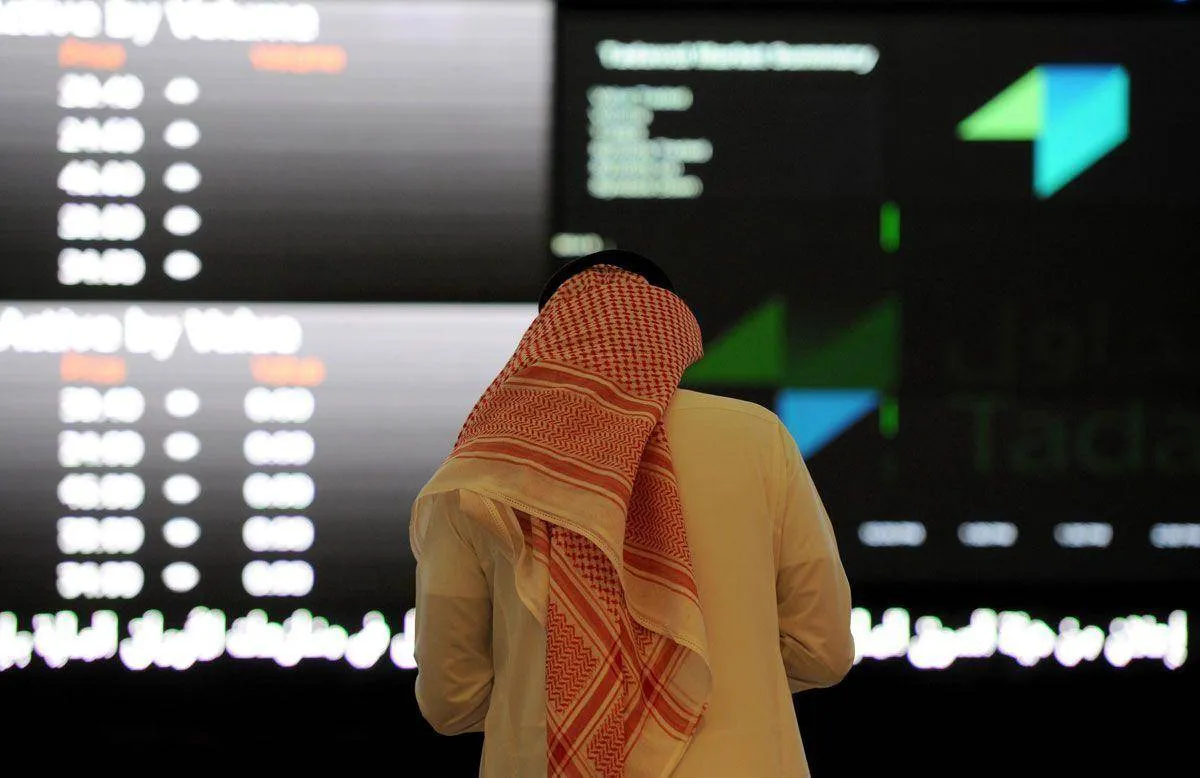
Gulf Equities Face Weekly Declines Amid Regional Tensions
Regional equities across the Gulf faced broad weekly declines as geopolitical confrontations escalated, according to regional reporting. Markets dropped as investors weighed stagnant diplomatic talks between Washington and Tehran alongside rising energy costs and tighter monetary expectations.
Gulf Exchanges Log Weekly Losses Amid Regional Tensions
Gulf exchanges logged synchronized weekly losses amid persistent regional tensions and attacks on energy infrastructure. According to the مجلة البوصلة الاقتصادية, the Saudi benchmark index fell 2.3 percent in Thursday’s session, sliding to its lowest level since March 2021. The index recorded an overall weekly decline of 4.1 percent, marking its eighth weekly loss and its steepest weekly drop in over two years. In the United Arab Emirates, Abu Dhabi’s FTSE index dropped 1.2 percent on Friday to close at a four-month low, while Dubai’s general index retreated 1.4 percent, weighed down by drops in major banking and real estate equities.
Energy markets experienced sharp upward pressure as Brent crude notched weekly gains exceeding 6 percent to reach its highest level in nearly six months. reported that the surge followed renewed threats to tanker traffic through the Strait of Oman and the Persian Gulf, where Islamic Revolutionary Guard Corps naval forces targeted four vessels allegedly involved in illicit oil transport operations.

In Saudi Arabia, market losses extended across major corporate listings. noted that Saudi Aramco shares slipped 0.7 percent. Reporting from الجزيرة نت added that Saudi Aramco instructed employees at its Dhahran headquarters to evacuate and work remotely following security incidents near nearby facilities.
Divergent Economic Developments Outside the Gulf
While Gulf markets absorbed downward pressure, other regional exchanges displayed mixed trajectories. According to الجزيرة نت, the Egyptian blue-chip index advanced 1.5 percent, supported by a 2.5 percent gain in Commercial International Bank shares. Talaat Moustafa Group shares surged 6 percent following an announcement by the Egyptian presidency regarding an 11-trillion-Egyptian-pound agreement to develop four major mixed-use real estate projects. The Egyptian exchange ended the week with a broad decline across its indices, led by the EGX70 EWI falling 7.02 percent, the EGX100 EWI dropping 6.05 percent, the Tamayuz index retreating 5.74 percent, and the EGX33 Shariah index declining 5.35 percent. The EGX30 Capped index ranged between a high of 65,912.59 points and a low of 61,456.78 points before settling at 63,379.43 points, while the Tamayuz index traded between a peak of 41,460.55 points and a trough of 37,919.80 points to close the week at 38,866.32 points.
Corporate earnings and local disruptions dominated European and American trading floors during the same weekly cycle. reported that Wall Street indices opened higher following upbeat quarterly earnings from SpaceX and Super Micro Computer, whereas European equities remained range-bound. The STOXX 600 index settled at 638.80 points, constrained by ongoing public disorder in France that disrupted retail operations and lifted operational costs for major distribution groups like Carrefour.
Broader Middle Eastern Market Movements
Other regional bourses experienced varied weekly outcomes alongside the broader selling pressure. In the United Arab Emirates, Dubai stocks saw gains of 0.4 percent alongside a 1.3 percent rise for Emirates NBD, while Abu Dhabi’s index fell 0.6 percent. Saudi Arabia’s index declined 0.3 percent as Alinma Bank dropped 5 percent following a reported third-quarter profit decline, while Aramco shares gained 0.4 percent. In neighboring markets, Bahrain’s index dipped 0.1 percent, Oman’s index fell 1.5 percent, and Kuwait’s index retreated 0.7 percent. Qatar’s index rose 0.5 percent, halting a five-session losing streak. In Oman, the main market index fell 3.60 percent to 8,278.92 points, while the Main 50 index concluded the week down 4.92 percent at 9,086.19 points. Aramco stock also registered a 0.4 percent increase in separate regional trading sessions. Outside the Gulf, Dubai experienced a 0.4 percent increase in its index, and UAE banking and financial equities showed selective resilience.
