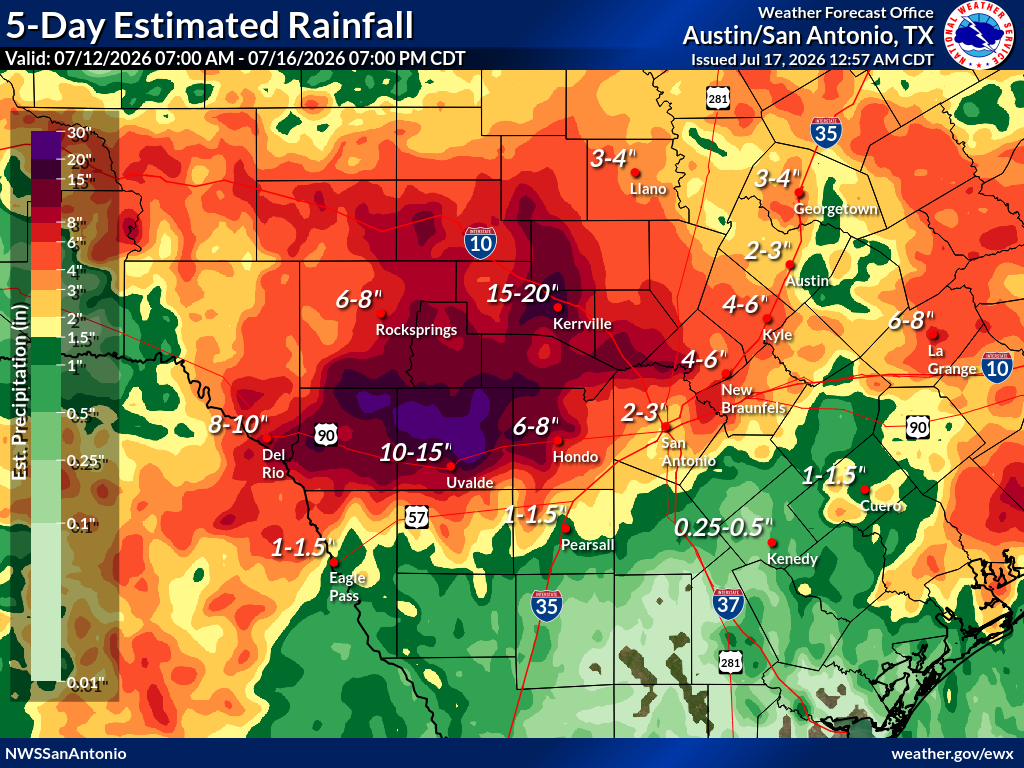
Guadalupe River Basin Rainfall Update and Weekend Forecast
Texas residents in the Guadalupe River basin face a volatile weather transition as the state pivots from recent widespread flooding to a significant shift in atmospheric patterns. While intense rainfall subsided by Thursday, July 16, 2026, the National Weather Service (NWS) Austin/San Antonio office warns that lingering ground saturation and upcoming meteorological instability require continued vigilance from homeowners and municipal infrastructure managers.
The Guadalupe River Basin: Assessing the Post-Flood Landscape
The recent deluge, which saw the heaviest rainfall totals concentrate in the Guadalupe River basin between late Wednesday and early Thursday, has left local water systems at capacity. According to data from the National Weather Service (NWS) Austin/San Antonio, the rapid accumulation of water during this window triggered localized flash flooding that tested the resilience of regional drainage networks.
For many property owners, the immediate concern is not the rain that has already fallen, but the structural integrity of foundations and the potential for long-term water damage. When soil remains hyper-saturated, the risk of shifting foundations increases significantly. Property owners are currently turning to Certified Structural Engineering Firms to conduct thorough post-flood assessments to ensure that properties remain safe for occupancy.
Shifting Weather Patterns and Regional Infrastructure Risks
Meteorological models indicate that the pattern responsible for the midweek instability is breaking down, replaced by a shift that may bring erratic temperature fluctuations and secondary weather events. This transition period is often when municipal infrastructure faces the greatest strain. The saturation of the soil means that even moderate subsequent rainfall events could lead to runoff issues that wouldn’t typically occur under drier conditions.
City planners and regional utility providers are monitoring the situation closely. The Texas Water Development Board maintains oversight of the flood mitigation projects that are intended to protect these basins, but the sheer volume of recent rainfall has pushed these systems to their design limits. For businesses and residents located in low-lying areas, the window for reinforcing property defenses is closing as the new weather pattern takes hold.
“The saturation levels we are seeing across the basin mean that the ground has lost its ability to absorb further moisture. Any significant precipitation in the coming days will likely result in immediate surface runoff, putting additional pressure on local culverts and drainage systems.”
— Analysis from regional meteorological observers monitoring the NWS Austin/San Antonio data feeds.
Managing the Economic and Legal Aftermath
Beyond the physical cleanup, the economic impact of flooding in the Guadalupe River basin involves complex insurance and liability considerations. Property owners often discover that standard policies do not cover the full scope of damage caused by rising water, leading to disputes that require professional intervention. Engaging Insurance Claims Adjusters and Legal Counsel early in the recovery process is often the difference between a mitigated loss and a long-term financial burden.
Furthermore, commercial entities operating near the river basin must navigate stringent environmental regulations following such events. The discharge of debris or hazardous materials into public waterways can trigger federal oversight from the Environmental Protection Agency (EPA). Maintaining compliance during the cleanup phase is a critical operational requirement for businesses looking to avoid punitive fines.
Strategic Recovery and Future-Proofing
As the region moves into the weekend, the forecast suggests a period of relative calm that provides a narrow window for property owners to remediate damage. This is the time to clear debris from drainage paths and inspect sump pumps or backup power systems. Relying on Emergency Restoration Contractors who specialize in water-damaged environments ensures that mold growth and structural decay are addressed before they become chronic issues.
The shifting climate in South Texas suggests that these “extreme event” cycles are becoming more frequent. While the current flooding event is reaching its conclusion, the broader trend of volatile weather necessitates a proactive, rather than reactive, approach to property management. The resilience of the Guadalupe River basin will depend on how effectively local stakeholders integrate these recent lessons into their long-term infrastructure and maintenance strategies.
The storm clouds may be dissipating for now, but the physical and economic reality of the flood’s aftermath remains. Homeowners and business operators who move quickly to secure professional assessments and restoration services are significantly better positioned to weather the next cycle of instability. When the environment dictates the pace of recovery, the only viable path forward is to rely on experts who understand the unique geological and regulatory landscape of the Texas river basins.