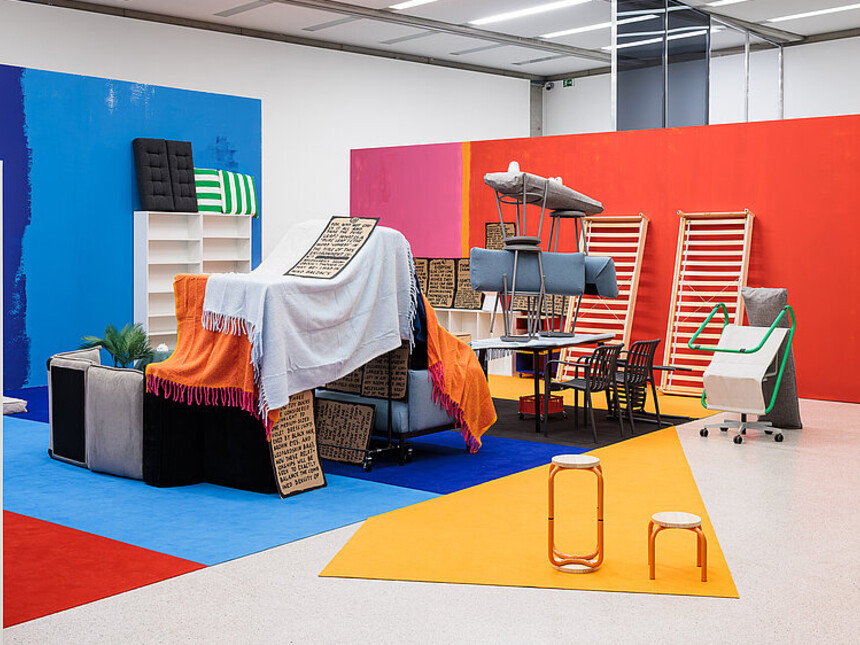
Group Exhibition ‘Push and Pull’ Reimagines Museum as Participatory Space at Mumok
The museum exhibition Push and pull: a furniture comedy at mumok invites visitors to physically rearrange gallery objects, transforming passive spectators into active participants.
This participatory installation, rooted in Allan Kaprow’s 1963 work, challenges the traditional boundaries of institutional preservation by treating furniture as a medium for ongoing, collective creative intervention.
Redefining the Museum Experience
Allan Kaprow, widely recognized as the pioneer of the “Happening” art form, designed Push and pull: a furniture comedy for Hans Hofmann to function as a living, evolving entity.
According to the exhibition description at Meer, the work requires that each new staging reinvent the installation, rejecting the idea of the museum as a static repository for untouchable objects. Instead, the installation functions as a site of negotiation where the act of rearranging furniture constitutes the work itself, as noted by e-flux.
This dynamic approach forces a redistribution of roles within the gallery space. The curators who initially furnish the room effectively become artists, while the visitors who move and compose the materials assume the role of curators, Meer reported.
The exhibition at mumok extends this concept by placing Kaprow’s work alongside other pieces that emphasize the embodied experience of art. Through works like Terminal Piece and Verena Paravel’s Exuviae, the museum explores different modes of attention, from the act of looking to the act of listening, and finally, to the physical act of touching.
The Institutional Shift
By inviting guests to interact directly with the environment, the exhibition makes the mechanics of museum routines visible, e-flux stated. This transparency serves to demystify the “commodity-driven conception of art” that characterized much of the 1960s, a period when artists in Europe and North America began to actively disrupt the status quo of collection and preservation.
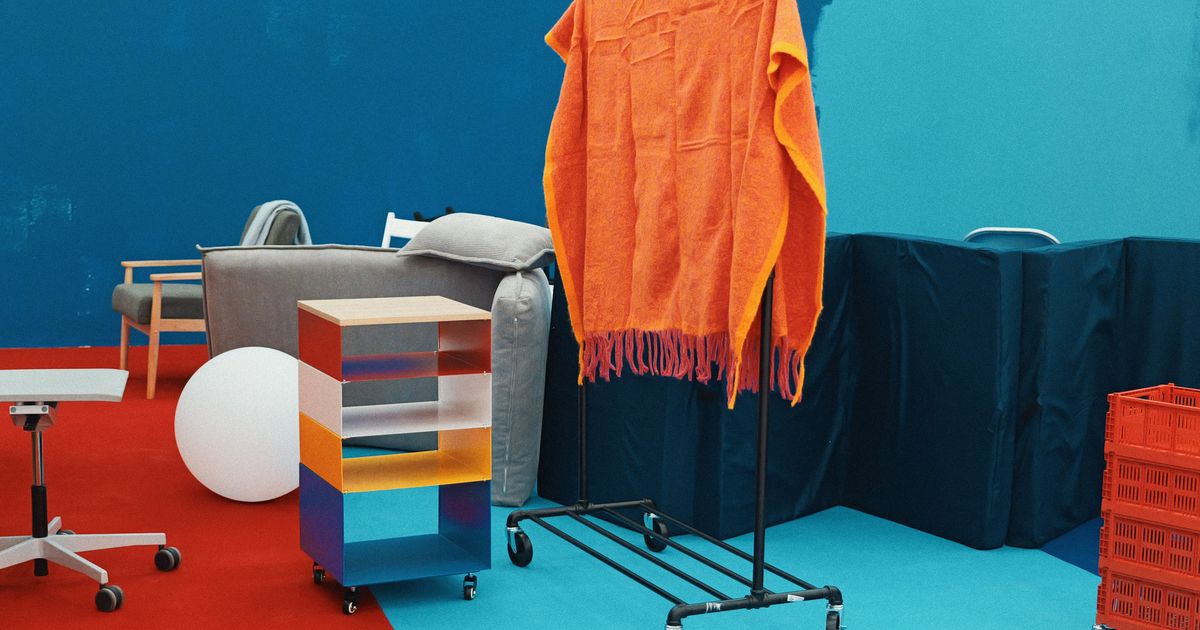
The exhibition features works by a diverse group of artists, including Ant Farm, John Baldessari, Yoko Ono, and Franz West, all of whom engaged with the tensions of their time. These artists often treated art and life as entwined, creating works that relied on the uncertainty of audience interaction.
The Mechanics of Participation
Participation in Push and pull is not intended to be a seamless or comfortable experience. Rather, it is a “process of negotiation that entailed friction and uncertainty,” according to e-flux. This friction is central to the work’s identity, as it forces visitors to confront their own role within the institution.
The exhibition design by Robert Müller supports this by creating a space where the configuration of the furniture is never final, and the “event-like character of everyday life” is elevated to the level of art.
Because the work must be reinvented for each iteration, the museum must carefully follow the original artist's stipulations while allowing for contemporary interventions.
The exhibition continues its exploration of openness and collectivity by inviting visitors to reconsider the relationship between the museum and the world outside its walls. Whether the current configuration of Push and pull will influence future exhibition formats remains to be seen, as the work continues to change with each day of audience intervention. The exhibition is curated by Vanessa Joan Müller and Matthias Michalka.
Mumok, the Museum moderner Kunst Stiftung Ludwig Wien in Vienna, was founded on 21 September 1962 as the Museum of the Twentieth Century in the Swiss Garden, using the Austrian Pavilion from Expo 58 in Brussels.
Its collection of around 10,000 works was significantly shaped by the 1978 acquisition of the Wolfgang Hahn Collection, which brought extensive holdings in nouveau réalisme and Fluxus — movements closely aligned with the participatory ethos of Kaprow’s Happening. Since 2001, the museum has occupied a stone-clad cubic building by Ortner & Ortner in the Museumsquartier, providing 4,800 m² of exhibition space.
Disclaimer: The views and cultural analyses presented in this article are for informational and entertainment purposes only. Information regarding legal disputes or financial data is based on available public records.