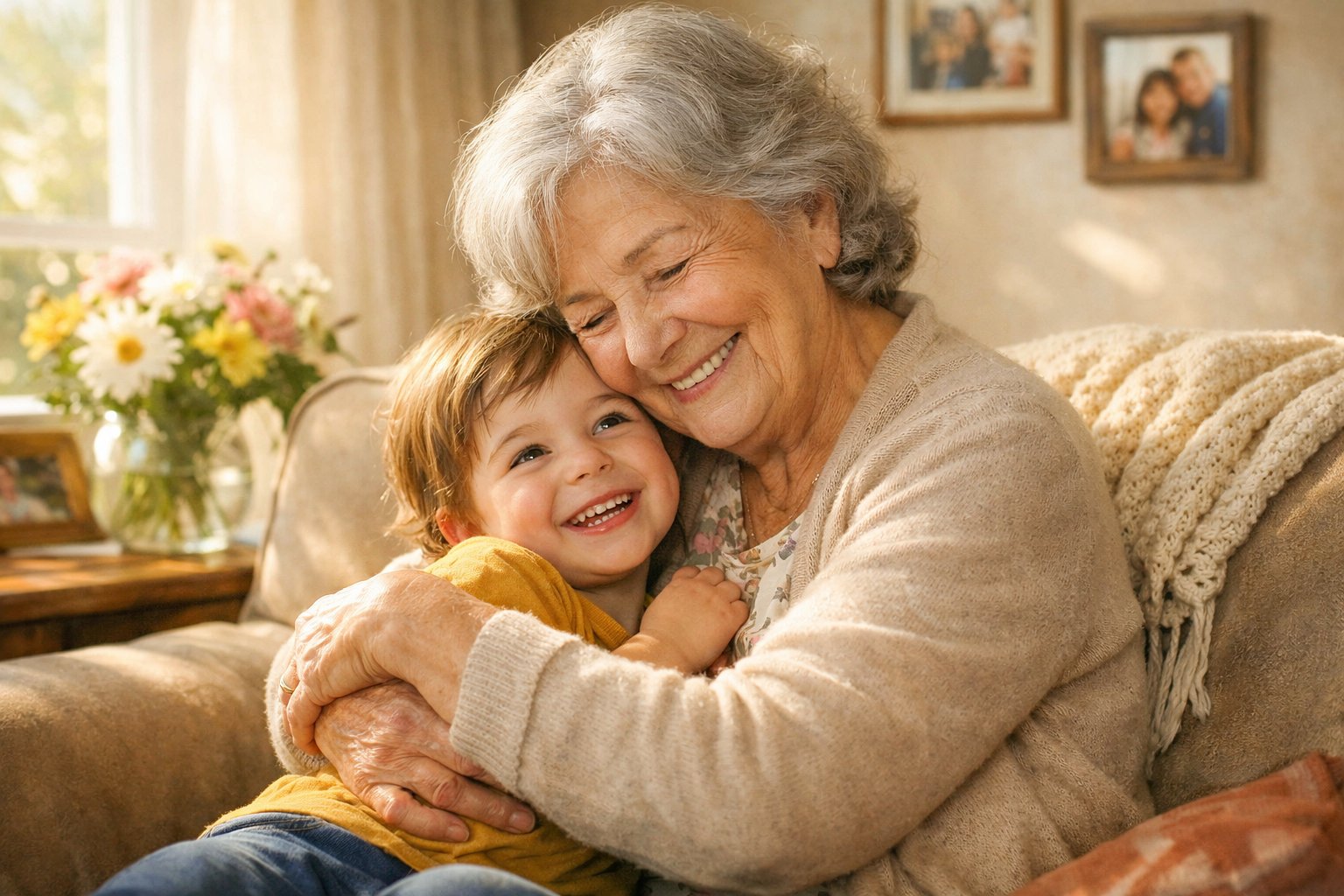
Grandmothers’ brains show unique emotional response to grandkids
The Moment That Changes Everything
Janet Meisel remembers the exact moment she sensed something different. After raising three children and dedicating herself to motherhood, she believed she understood the depth of love. Then her grandsons were born. In her essay, she described the experience as a love so intense it felt as if her heart might overflow, whether with joy or pain. Her words weren’t exaggeration—they reflected a reality now supported by neuroscience.
Dr. James Rilling, a researcher at Emory University, conducted brain scans of 50 grandmothers as they viewed photos of their grandchildren. The findings were revealing. When these women saw images of their grandkids, areas of the brain linked to emotional empathy became active. If the child was happy, the grandmother’s brain mirrored that happiness. If the child was upset, it mirrored distress. This wasn’t just observation—it was a direct, emotional response.
What made the results even more intriguing was the contrast when the same women viewed photos of their own children. In those cases, a different part of the brain activated—one associated with cognitive empathy, the ability to understand emotions without necessarily feeling them. This distinction suggests that while parenting may involve practical responsibilities, the grandparent-grandchild relationship can be characterized by a more immediate emotional connection.
Love on Steroids
Meisel referred to it as an amplified form of love. Nancy Claus, another grandmother, described it as a deep, almost physical sensation. Both were attempting to capture a bond that doesn’t fit neatly into conventional definitions of affection. Rilling’s research provides a scientific basis for these experiences. The brain scans indicate that grandmothers may not simply choose to be emotionally attuned to their grandchildren—their brains may be naturally inclined toward this response.
This doesn’t imply that parental love is any less significant. Cognitive empathy, the type more commonly activated in parents, is essential for guidance, problem-solving, and the daily demands of raising children. Emotional empathy, however, creates a different kind of interaction. It may explain why some grandparents react strongly to a grandchild’s emotions, whether through laughter, concern, or a deep sense of connection. The research doesn’t diminish the role of parents but suggests that the grandparent-grandchild bond may offer something distinct in a child’s life.
The study has its limitations. It focused only on grandmothers, leaving out grandfathers and other caregivers. The sample size was modest, and the research didn’t examine whether this phenomenon varies across cultures or family structures. Still, the findings confirm that for these grandmothers, the connection goes beyond cultural expectations—it has a neurological basis.
The Unanswered Questions
If this neurological response is real, what does it mean for families? It may help explain why grandparents often play a unique role in a child’s emotional growth. A parent might respond to a minor injury with reassurance, while a grandparent might focus on acknowledging the child’s feelings. Neither approach is inherently better—they simply serve different purposes. The grandparent’s response may help a child feel heard and understood.
The research also raises new questions. Could this heightened emotional sensitivity affect grandparents in other ways? Might it influence how they interact with parents or navigate boundaries? And what about grandfathers? Though the study didn’t include them, that doesn’t mean they don’t experience similar responses. Future studies could explore whether this phenomenon is tied to gender, caregiving roles, or simply the transition into grandparenthood itself—whether becoming a grandparent, regardless of gender, changes how the brain processes emotional connections.
For now, the findings offer validation for grandparents who have long described their love for grandchildren as something instinctive. It’s not just sentiment—it’s rooted in how the brain functions.
What Happens Next
Rilling’s research opens the door to further exploration. If emotional empathy is a key feature of the grandparent-grandchild relationship, it could lead to a deeper understanding of family dynamics. Educators, counselors, and others who work with children might consider the role of grandparents not just as caregivers but as important emotional figures. It could also spark discussions about the expectations placed on grandparents—whether they feel pressure to be constantly available or whether their emotional sensitivity makes them more vulnerable to stress.
For families, the message is clear. When a grandmother says her heart feels full to bursting, it’s not just an expression of love—it’s a reflection of how the brain responds to that bond.