
GPIF’s $1.8 Trillion Shift Could Calm Japan’s Volatile Bond Market and Support the Yen
“`html
Japan’s GPIF: A Potential Stabilizer for Bond Markets and the Yen
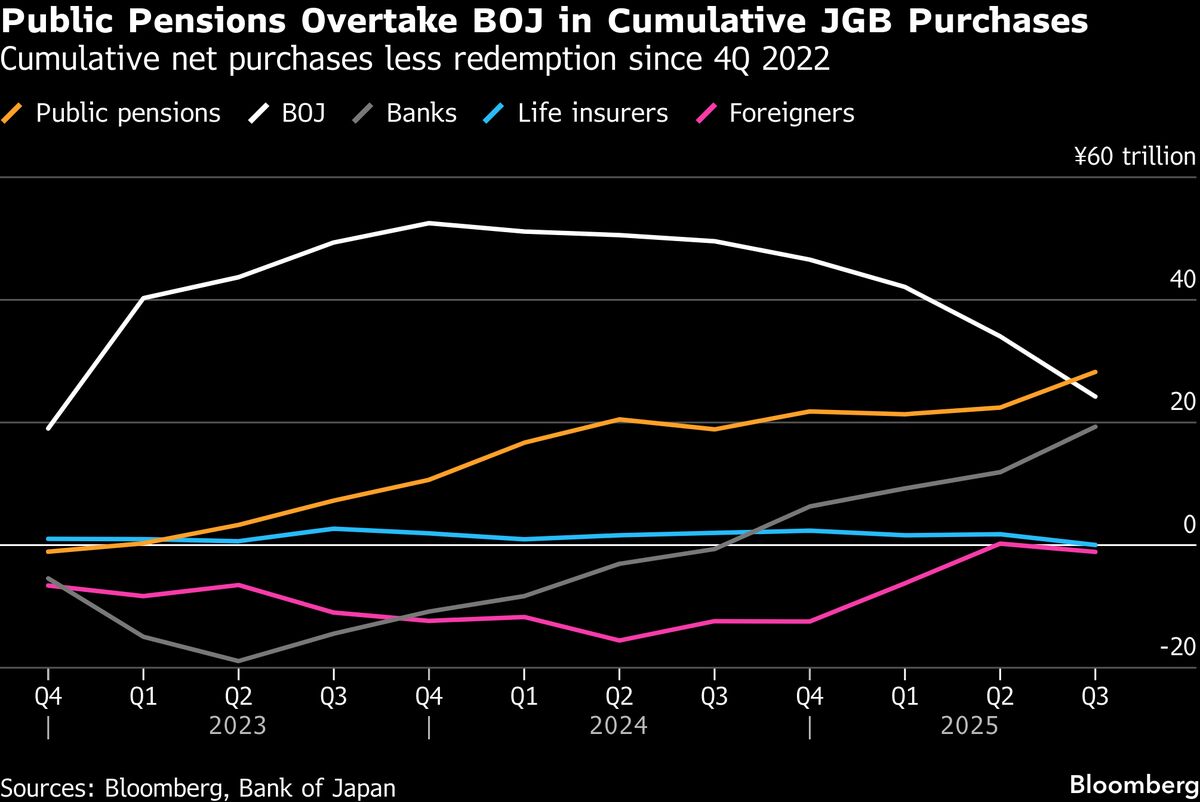
Investors are increasingly focused on the potential role of the Government Pension Investment Fund (GPIF), the world’s largest pension fund with approximately $1.8 trillion in assets under management, as a key instrument for stabilizing Japan’s volatile bond market and bolstering the yen. Recent market fluctuations have prompted speculation about how Japan might intervene to address thes issues, and the GPIF is emerging as a central piece of that puzzle.
The Current Landscape: Volatility and Weakening Yen
Japan’s bond market has experienced significant volatility in recent months, driven by factors including rising global interest rates and shifts in monetary policy. The yen has also weakened considerably against the US dollar,reaching levels not seen in decades. Reuters reports that this depreciation is fueling concerns about imported inflation and its impact on the Japanese economy.
GPIF’s Role and Potential Interventions
The GPIF’s sheer size gives it considerable influence over the Japanese bond market. Analysts suggest several ways the fund could be utilized to exert stabilizing pressure:
- Increased Domestic Bond Holdings: The GPIF could increase its allocation to Japanese government bonds (JGBs), creating demand and potentially pushing down yields. This would help to curb the upward pressure on interest rates.
- Reduced Foreign Asset Exposure: A decrease in the fund’s holdings of foreign assets, particularly US Treasury bonds, could lead to repatriation of capital, strengthening the yen.
- Direct Intervention Support: while the GPIF typically operates independently, it could coordinate with the Bank of Japan (BOJ) to support currency intervention efforts.
However, any intervention by the GPIF is complex and carries potential risks. A significant shift in its investment strategy could disrupt market dynamics and raise questions about the fund’s long-term objectives. Bloomberg highlights the delicate balance the GPIF must maintain between its fiduciary duty to pension beneficiaries and the broader economic goals of the nation.
Past Context: GPIF Interventions
This isn’t the first time the GPIF’s role has been debated during periods of market stress. In the past, the fund has been subtly encouraged to adjust its portfolio to align with government objectives. Such as, during the early 2010s, the GPIF increased its domestic equity holdings in response to government pressure to boost the stock market. Nikkei Asia provides detailed coverage of the GPIF’s past investment decisions and thier impact on the Japanese economy.
Challenges and Considerations
Several challenges complicate the potential use of the GPIF as a market stabilizer:
- Fiduciary Duty: The GPIF has a primary responsibility to maximize returns for its pension beneficiaries.Intervening in the market solely to support the yen or control bond yields could be seen as a breach of that duty.
- Market Distortion: Large-scale interventions by the GPIF could distort market signals and create unintended consequences.
- Limited Ammunition: While $1.8 trillion is a significant sum,the GPIF’s ability to substantially influence global markets is not unlimited.
Key Takeaways
- The GPIF is a massive pension fund with the potential to influence Japanese bond markets and the yen.
- Investors are exploring GPIF intervention as a possible solution to current market volatility.
- Any intervention carries risks,including potential market distortion and challenges to the fund’s fiduciary duty.
- Historical precedent shows the GPIF has responded to government signals in the past.
Publication Date: 2024/02/08 14:35:59
Looking ahead, the extent to which the GPIF will be deployed as a tool for economic stabilization remains uncertain. The BOJ’s monetary policy decisions and global economic conditions will play a crucial role in shaping the fund’s