
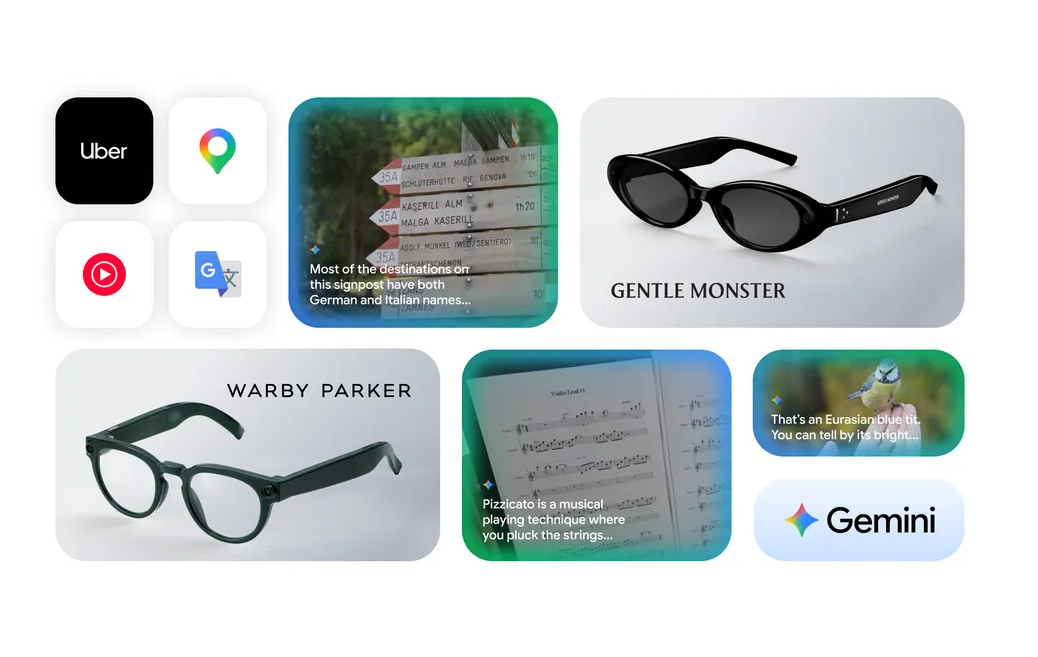
Google’s First AI-Powered Smart Glasses: Android XR Specs & Fall Launch Revealed
Android XR: Evaluating Google’s Pivot to AI-Driven Intelligent Eyewear
Google is attempting to bridge the gap between the failed social experiment of Google Glass and the high-compute requirements of modern spatial computing. By leveraging the Android XR platform and integrating Gemini-class intelligence directly into the user’s sensory loop, the company is moving away from pure heads-up displays toward a multimodal, agentic wearable ecosystem. This isn’t just a hardware refresh; This proves a strategic deployment of an AI-first operating system designed to function within the extreme thermal and power constraints of eyewear.
The Tech TL;DR:
- Platform Shift: Transition from mobile-first Android to Android XR, a specialized OS for spatial computing and intelligent eyewear.
- AI Integration: Direct integration of Gemini models to provide multimodal, “in-ear” and visual intelligence.
- Deployment Timeline: Expected hardware rollout scheduled for this fall, featuring collaborations with Gentle Monster and Warby Parker.
The Architectural Challenge of Wearable Intelligence
The primary bottleneck for any intelligent eyewear is the physics of the “thermal envelope.” Unlike a smartphone or a desktop workstation, smart glasses cannot dissipate heat through large surface areas or active cooling without compromising ergonomics. Running a multimodal LLM like Gemini—which requires significant NPU (Neural Processing Unit) cycles for real-time vision and voice processing—presents a massive compute-latency trade-off. If the inference happens entirely in the cloud, latency spikes render the AR (Augmented Reality) experience jittery and unusable. If it happens on the edge, battery life evaporates in minutes.

According to reports from SiliconANGLE and the official Google blog, the new hardware will run on Android XR. This suggests a highly optimized kernel designed specifically for sensor fusion—the ability to combine data from IMUs (Inertial Measurement Units), cameras, and microphones to create a coherent digital overlay. The partnership with Gentle Monster and Warby Parker indicates that Google is prioritizing form factor and consumer-grade aesthetics to avoid the “uncanny valley” of bulky, industrial-looking headsets.
| Component Requirement | Android XR Specification Goal | Technical Bottleneck |
|---|---|---|
| Compute Engine | High-efficiency SoC with dedicated AI accelerator (NPU) | Thermal throttling in lightweight frames |
| Inference Latency | Sub-50ms for multimodal response | Network jitter in 5G/Wi-Fi environments |
| Sensor Integration | Continuous camera and microphone stream | Privacy-preserving data encryption at the hardware level |
| OS Architecture | Android XR (Spatial-optimized) | Resource contention between background agents and AR overlays |
The Gemini Integration Layer: Beyond Voice Commands
The Times of India notes that the integration of Gemini is intended to be “in your ear,” suggesting a deep coupling between the audio stack and the LLM. This implies a shift from simple intent-based commands (e.g., “Set a timer”) to continuous, contextual awareness. For a developer, Which means interacting with an API that doesn’t just receive text, but receives a continuous stream of multimodal tokens—visual data from the glasses’ cameras paired with ambient audio.
To implement a basic interaction loop with an XR-resident agent, a developer might interact with a multimodal endpoint similar to the following pseudo-code implementation for the Android XR SDK:

# Hypothetical Android XR SDK implementation for Gemini multimodal input import google_xr_sdk as xr async def handle_visual_context(): # Initialize the multimodal stream from the glasses' camera array async with xr.camera.stream() as visual_stream: async for frame in visual_stream: # Send the frame to the Gemini agent for real-time inference # The prompt focuses on low-latency environmental awareness response = await xr.gemini.analyze_context( image_data=frame, prompt="Identify any relevant technical documentation or labels in view.", latency_mode="ultra_low" ) if response.confidence > 0.85: # Overlay the intelligence directly onto the user's field of view await xr.spatial_overlay.display_text( content=response.text, position=response.anchor_coordinates ) # Execute the agentic loop xr.start_agent_service(handle_visual_context) Security, Privacy, and Enterprise Deployment
From a cybersecurity perspective, “always-on” intelligent eyewear introduces a massive expansion of the attack surface. Continuous camera and microphone access creates significant privacy risks, both for the user and for bystanders. For enterprise environments—such as field technicians using XR for remote assistance—the data being streamed to the cloud for Gemini processing must be secured via end-to-end encryption and strictly managed via SOC 2 compliance protocols.
As these devices move from consumer novelty to enterprise tools, IT departments will face new challenges in endpoint management. Organizations cannot simply treat these as mobile devices; they are high-bandwidth, sensor-rich IoT endpoints. Companies should prepare by engaging cybersecurity auditors and penetration testers to evaluate the telemetry data leakage risks associated with multimodal AI agents. Scaling these deployments will require specialized software development agencies capable of writing high-performance, low-latency applications specifically for the Android XR stack.
The Verdict: A High-Stakes Bet on Agentic Computing
Google is betting that the future of computing is not a screen in your pocket, but an intelligent layer over your reality. The success of this fall launch depends on whether Android XR can solve the fundamental tension between the heavy compute requirements of Gemini and the physical limitations of wearable hardware. If Google can deliver a device that feels like standard eyewear but performs like a high-end workstation, they will have successfully bypassed the “Glass flop” and set the standard for the next decade of spatial computing.
Disclaimer: The technical analyses and security protocols detailed in this article are for informational purposes only. Always consult with certified IT and cybersecurity professionals before altering enterprise networks or handling sensitive data.