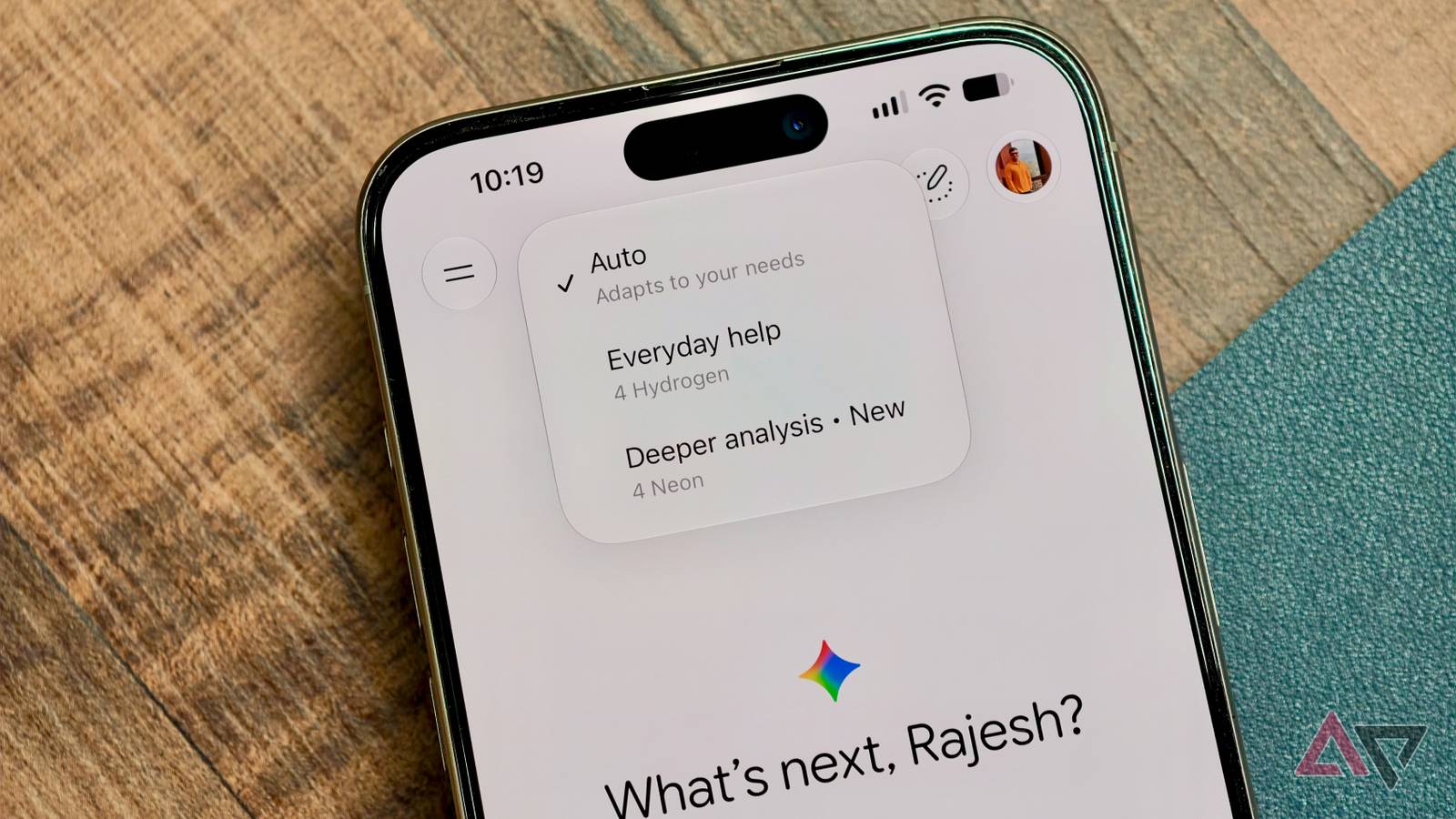
Google’s Confusing Gemini 4 Lineup: Argon, Carbon, Hydrogen, Neon Explained
Google has released four new models under its Gemini 4 family — Argon, Carbon, Hydrogen and Neon — but the company’s periodic-table naming convention offers no clue about which model arrived first, which is fastest or which one the company recommends for everyday use.
Argon debuted first on September 30, with access expanding on October 13. Carbon followed with broader availability on November 10, Hydrogen on November 12 and Neon on November 18. Despite being the newest, Neon is positioned by Google as the balance between Hydrogen and Carbon and is available in the Gemini app for writing, analyzing uploaded documents, researching topics and completing tasks.
Gemini 4 Neon is now rolled out to @GoogleWorkspace customers through the Gemini App! Enjoy 🙂 and thanks to @ChanduThota for pushing to make it happen.
Google’s current documentation assigns each model a distinct role: Hydrogen for speed, Neon for more demanding everyday use and Carbon for the hardest projects. “Hydrogen for speed, Neon for more demanding everyday use, and Carbon for your hardest projects,” the company says in its lineup explainer.
Carbon targets extended research and verification, including complex scientific research and software problems, while Hydrogen is designed for fast everyday assistance, coding and tasks involving tools.
Argon, the first model in the family, was initially recommended for most software engineering and knowledge work. However, Google’s subsequent explainer highlighted Carbon, Neon and Hydrogen while skipping Argon. The company’s documentation now states that Argon will leave Antigravity on November 30, 2026. After that date, Neon will become the default model for eligible users whenever they start a new conversation.
Availability remains tied to subscription tiers. Google’s best model still requires an expensive subscription, and the company’s documentation makes clear that a user’s subscription only tells part of the story when determining which models they can access.